Beethoven Emperor Concerto
Program
JIM STEPHENSON You have reached the city limits (World Premiere)
LUDWIG VAN BEETHOVEN Piano Concerto No. 5, Emperor
Allegro
Adagio un poco mosso
Allegro ma non troppo
INTERMISSION
MAURICE DURUFLÉ Requiem
Introït
Kyrie
Domine Jesu Christe
Sanctus
Pie Jesu
Agnus Dei
Lux aeterna
Libera me
In paradisum
Featuring
Grant Park Orchestra and Chorus
Giancarlo Guerrero, conductor
Christopher Bell, chorus director
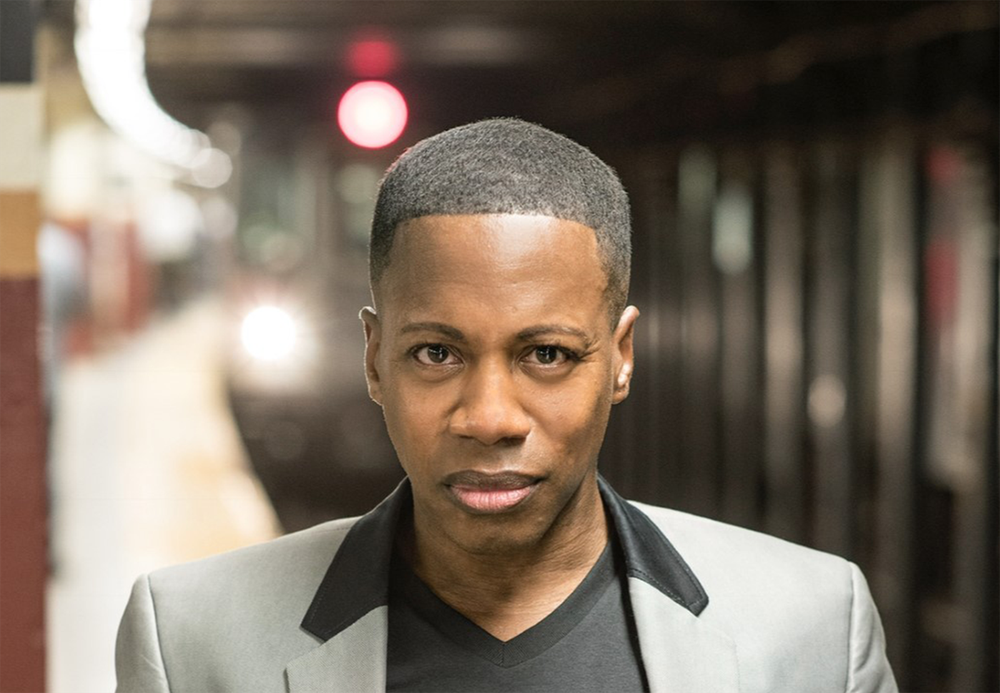
Terrence Wilson, piano
Program Notes
James Stephenson (b. 1969)
You have reached the city limits (Festival Commission)
Scored for: piccolo, two flutes, two oboes, English horn, two clarinets, bass clarinet, two bassoons, contrabassoon, four French horns, three trumpets including cornet and piccolo trumpet, three trombones, tuba, timpani, percussion, harp, piano, and strings
Performance time: 10 minutes
World Premiere performance
A Note from the Composer:
I’m a proud Chicagoan, through and through. I was born here, and later in life, when the opportunity came about to relocate, there was no doubt that the Chicago area would become home.
As such, I’ve been to hear the Grant Park Symphony many times, and when the opportunity arose to write a piece for the festival, I couldn’t have been more thrilled.
I wanted to write a piece that would recognize the venue and orchestra for which I was writing, as well as the city I call home. One can’t help but notice when attending a GPMF concert that any performance might be accompanied by people chatting, sirens wailing, unexpected weather, and more. I wanted to write a piece that might embrace that, rather than worry about it.
Also, I’ve long known (as we all have) that Chicago is well-known for its blues tradition. From the early 1920s with the Red Hot Peppers, through Muddy Waters a few decades later, through today, Chicago is famous for its down-home and gritty blues.
“You have reached the city limits” explores the idea of a young couple deciding to “hit the town”. The protagonist (the solo violin) eggs their partner along to have some fun, and make a night of it. The partner (trumpet) complains and hesitates. Finally, they head out, and dash through the city, and happen upon two blues clubs. The first represents the blues from the 1920s, viewed through a
smoky lens of history. A solo clarinet, piano, trumpet, and trombone remind us of what that might have sounded like.
A little bit later, they enter a club playing the mid-century gritty blues. The music gets a bit edgier, with harmonica-like sounds and again a solo piano representing that era.
Finally they are off again on their own, having a great time, and when the orchestra swells to a giant climax, the truth is revealed that all they needed to do was spend some time together, enjoying one another’s company, to satisfy their urge for fun.
Lastly, I’ll mention that I was delighted to learn that Giancarlo Guerrero would be conducting this premiere. I’ve long admired his work on the podium, and it is a true statement that the energy within this piece was in part due to my imagination of what he would bring to this – as he does to all music – on the podium.
My most sincere thanks to the Grant Park Orchestral Association for this fun opportunity, and to my hometown of Chicago, and all of the people who have made it so, for the inspiration.
Jim Stephenson; March 15, 2024
Ludwig Van Beethoven (1770-1827)
Concerto No. 5 in E-flat major for Piano and Orchestra, op.73, Emperor (1809)
Scored for: two flutes, two oboes, two clarinets, two bassoons, two French horns, two trumpets, timpani, strings, and solo piano
Performance time: 38 minutes
First Grant Park Orchestra performance: August 11, 1948; Nicolai Malko, conductor and Theodore Lettvin, piano
Ludwig van Beethoven would have certainly balked at us using the nickname “Emperor” for his fifth and final piano concerto. The origin of the nickname is unclear. The implausible creation myth is that during the Viennese premiere in 1812, a French officer exclaimed, “C’est l’Empereur!” (“It’s the Emperor!”) when he heard the heroic music. The sobriquet more likely originates from the similarity of the concerto to Beethoven’s Symphony No. 3, Eroica, in both character and key (E-flat major). Beethoven had initially dedicated Eroica to the French revolutionary Napoleon Bonaparte, whose republican ideals Beethoven had admired. However, when word got to Beethoven that Napoleon had declared himself Emperor of France in May 1804, the composer famously tore the title page of his symphony in two and threw it to the floor.
When Beethoven completed his Piano Concerto No. 5 in 1809, Austria was at war with France for the fourth time since 1792. Each successive tussle during the Napoleonic Wars had meant more territorial losses and economic hardship for Austria. In search of financial stability, Beethoven considered accepting a position as court composer to Jerome Bonaparte, Napoleon’s younger brother and the newly installed puppet king of Westphalia, in 1808. When three wealthy Viennese patrons got wind of this, they pooled their resources to ensure Beethoven would stay in the city by offering him a guaranteed income and pension. Beethoven agreed to this arrangement in March 1809, but it did not bring him the stability he desired. Austria declared war on France on April 9, and Napoleon’s troops bombarded Vienna on May 11. Beethoven is said to have sought shelter in a friend’s cellar that night, tying pillows to his head to protect his ears from further hearing loss. The imperial family fled the city, including the most devoted of Beethoven’s three patrons and the dedicatee of Piano Concerto No. 5, Archduke Rudolph. Amid the chaos, the money Beethoven was promised often did not arrive on time or in full. Unsurprisingly, the summer of 1809 was largely unproductive and miserable for Beethoven, as evidenced by what he wrote to his publisher in Leipzig that July: “Nothing but drums, cannons, human misery of every sort!” Fortunately, he had sketched most of the Fifth Piano Concerto before the war broke out, and he managed to regain the concentration to complete it by the end of the year (though continued geopolitical turmoil delayed the premiere for two years).
The opening of Beethoven’s Piano Concerto No. 5 is unique, with three stately chords in the orchestra outlining the harmonic pattern of a cadence. Between each of these pillars of sound, the piano soloist responds with cascades of arpeggios, scales, and trills. Each flourish becomes denser and more virtuosic, recalling cadenzas that typically herald the end of a concerto movement, not the beginning. The third flourish ends quietly, however, making for a surprise when the orchestra charges in with the triumphant main theme. Ornate pianistic passage work continues to characterize the Allegro, establishing the soloist as the hero. That said, Beethoven masterfully balances moments of brilliance with moments of quiet throughout the movement. The lyrical Adagio then takes us to the remote key of B major. The muted strings present a pilgrim’s hymn, to which the piano responds with a pianissimo melody in triplets. Unusually, the soloist preempts the theme of the finale at the end of the Adagio while still in the movement’s slow tempo and soft dynamic. Continuing without a break, the theme emerges fortissimo and at full speed, opening the ebullient finale with a vigorous syncopated dance.
Maurice Duruflé (1902-1986)
Requiem, op.9 (1947)
Scored for: three flutes including piccolo, three oboes including English Horn, three clarinets including bass clarinet, two bassoons, four French horns, three trumpets, three trombones, tuba, timpani, percussion, harp, celesta, organ, strings, and chorus
Performance time: 45 minutes
First Grant Park Orchestra performance: July 12, 1986; Thomas Peck, conductor and chorus director; director and Barbara Pearson, soprano; Philip Kraus, baritone; Thomas Peck, director
French organist, composer, and teacher Maurice Duruflé only published fourteen works during his career. This small compositional output is attributable to both his skill as an improviser and his crippling self-doubt. He even considered retracting his Requiem from publication. Organist Marie-Claire Alain recalled him saying, “Oh what a disaster that I let [the Requiem] be published! The Pie Jesu is a complete failure! . . . an unsuccessful and detestable work.” Fortunately, Duruflé did not deprive us of this profound masterpiece. Had he done so, he probably would not be remembered today outside of France or organist circles. Given his perfectionism, the few works he did leave are therefore of the utmost quality and demonstrate a distinctive compositional voice.
How the Requiem came to be is a bit contentious. The Duruflé Association maintains that the Requiem was commissioned by Duruflé’s publisher, Éditions Durand. However, musicologists uncovered a slightly different story in the early 2000s. In the late 1930s, France’s economy was in shambles. In a radical move to relieve unemployment, the Fine Arts Administration began awarding commissions to incentivize composers to produce new works. This program continued even after France fell to Nazi Germany and the Vichy government was established in July 1940. In May 1941, Duruflé was one of many composers to accept a commission to compose a symphonic poem for the sum of 10,000 francs. It took Duruflé over six years to complete the commissioned work, submitting it to the Fine Arts Administration in January 1948—well after the war had ended and a new French government was in place. The resulting piece was also no longer a symphonic poem but a Requiem. He was paid 30,000 francs for his efforts—ultimately a paltry sum as inflation had skyrocketed in the intervening years. Duruflé’s Requiem is the only “Vichy commission” to remain in the repertory.
While this origin story is uncomfortable, it is an example of how French composers at the time were often simply trying to make a living under desperate circumstances. Plus, the fact that Duruflé did not complete or submit the Requiem until the end of the war further frees him from implications of being a German sympathizer or collaborator. Regardless of the circumstances of the commission, the French people heard Duruflé’s poignant Requiem as an expression of French mourning when it premiered on national radio on All Souls’ Day (November 2), 1947.
Duruflé received his early musical training at a choir school in Rouen. There, he encountered the tradition of Gregorian chant, which became a lifelong compositional influence. At the time of commission, Duruflé had been working on an organ suite based on the plainchant of the Mass for the Dead as outlined in the Liber Usualis. He transformed these organ works into the Requiem, with each of the nine movements using the chant and modal scale assigned to the corresponding text to some extent. Sometimes, these quotes are presented in full and in the original mode, as in the opening statement by the tenors and basses of “Requiem aeternam” in the “Introit.” Other times, the chants are treated more freely with rhythmic variation, ornamentation, or transposition. In any case, he captures the lightness and rhythmic flexibility essential to Gregorian chant throughout. Uniquely, these ancient melodies appear against the backdrop of modern harmonies and colorful orchestration inspired by composers like Fauré, Debussy, and Ravel. This combination of seemingly disparate elements gives Duruflé his distinctive voice and places the Requiem simultaneously within its era and outside the bounds of time.
Duruflé’s masterpiece has often drawn comparisons with Fauré’s Requiem, and for good reason. Both follow French tradition and the Catholic liturgy in the selection and organization of the movements. Both also omit the harrowing “Dies Irae” that evokes the terror of the Last Judgement, placing them in opposition with famous examples by Mozart, Verdi, and Berlioz. Instead, Duruflé and Fauré’s Requiems are more comforting, reinforcing a kinder image of God and portraying peacefulness in death, not torment. While there are other similarities between the two pieces, including their use of high-voiced soloists for the tender “Pie Jesu” movements, they differ chiefly in Duruflé’s extensive quotation of plainchant, larger orchestration, and greater musical contrasts and stylistic diversity.
Program Notes by Katherine Buzard
Event Sponsors
This program is generously supported as part of the Dehmlow Choral Music Series.
The appearance of Giancarlo Guerrero is graciously underwritten by Lori Julian for the Julian Family Foundation.
Artistic Leadership
-
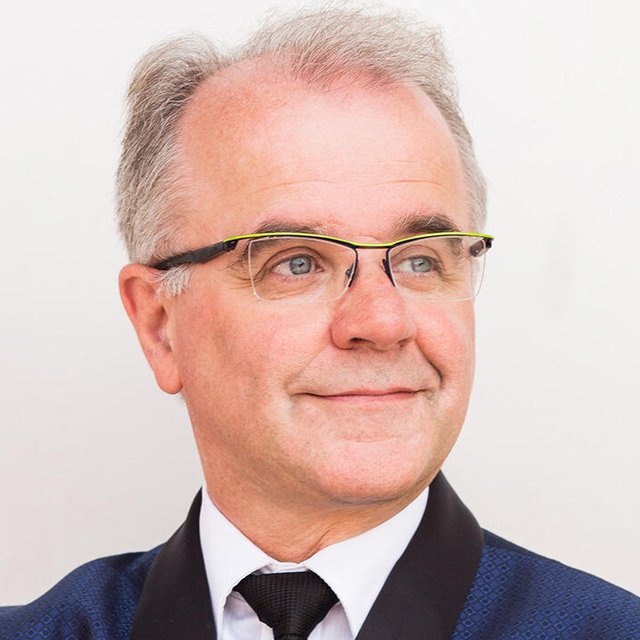
Christopher Bell
Chorus Director

Support The Festival
Grant Park Orchestra
* denotes leave-of-absence † one-year position
Jeremy Black, concertmaster
Jennifer Cappelli
Injoo Choi
Dima Dimitrova
Erica Hudson
Hyewon Kim
Matthew Lehmann
Jayna Park
Rika Seko
Karen Sinclair
Bonnie Terry
Trista Wong
Jonathan Yi
Krzysztof Zimowski
Liba Shacht, principal
Laura Miller, assistant principal
Ying Chai
Ran Cheng
Karl Davies
Likai He
Tiffany Kang
Ann Lehmann
Cristina Muresan
Kjersti Nostbakken
Irene Radetzky
Jeanine Wynton
Thomas Yang
Terri Van Valkinburgh, principal
Yoshihiko Nakano, assistant principal
Patrick Brennan*
Elizabeth Breslin
Beatrice Chen
Amy Hess
Christopher McKay†
Rebecca Swan
Chloé Thominet
Walter Haman, principal
Peter Szczepanek, assistant principal
Calum Cook
Larry Glazier
Steven Houser
Eric Kutz
Eran Meir
Linc Smelser*
Colin Corner, principal
Peter Hatch, assistant principal
Andrew Anderson
Alexander Horton
Christian Luevano†
Isaac Polinksy†
Timothy Shaffer*
Chunyang Wang
Chris White
Mary Stolper, principal
Jennifer Debiec Lawson, assistant principal
Jennifer Debiec Lawson
Alyce Johnson
Mitchell Kuhn, principal
Alex Liedtke
Anne Bach, assistant principal
Anne Bach
Dario Brignoli, principal
Trevor O’Riordan
Eric Hall, principal
Nicole Haywood, assistant principal
William Ramos
Jonathan Boen, principal
Stephanie Blaha, assistant principal*
Fritz Foss†
Samuel Hamzem†
Brett Hodge*
Neil Kimel
David Gordon, principal
Mike Brozick, acting assistant principal
Michael Brozick
William Denton
Daniel Cloutier, principal*
Jeremy Moeller, acting principal
Alexander Mullins
Andrew Smith, principal
Daniel Karas, principal
Josh Jones, principal
Joel Cohen, assistant principal
Doug Waddell
Kayo Ishimaru-Fleisher, principal
Christopher Guzman
Alba Layana Izurieta, Violin
Janani Sivakumar, Violin
Harper Randolph, Viola
Gabriel Hightower, Cello
Grant Park Chorus
* denotes leave-of-absence † one-year position
Taylor Adams
Summer Aebker
Kristina Bachrach
Madalynn Baez
Megan E. Bell
Alyssa Bennett
Anna Joy Buegel
Laura Bumgardner
Elisabeth Burmeister
Katherine Buzard
Bethany Clearfield
Nathalie Colas
Corinne Costell
Carolyne DalMonte
Rebecca Fitzpatrick
Megan Fletcher
Kaitlin Foley
Saira Frank
Katherine Gray-Noon
Kimberly Gunderson
Alexandra Ioan
Alexandra Kassouf
Darlene Kelsey
Olivia Knutsen
Marybeth Kurnat
Catherine Larson
Katelyn Lee
Rosalind Lee
Rena Maduro
Hannah Dixon McConnell
Marie McManama
Meganna Miller
Kathleen Monson
Emily Mwila
Susan Nelson
Evangeline Ng
Karen R. Nussbaum
Máire O’Brien
Laura Perkett
Molly Phelan
Angela Presutti Korbitz
Alexia Rivera
Veronica Samiec
Whitney Shurtliff
Emily Sinclair
Tiana Sorenson
Christine Steyer
Diana Stoic
Karlie Traversa
Sarah van der Ploeg
Lydia Walsh-Rock
Sherry Watkins
Tara Wheeker
Emily Lyday Yiannias
Christina Adams
Melissa Arning
Christina Bernardoni
Christine Boddicker
Bethany Brewer
Jean Broekhuizen
Anna De Ocampo Kain
Julie DeBoer
Leah Dexter
Katrina Dubbs
Stacy Eckert
Margaret Fox
Elizabeth Frey
Liana German
Catarine Hancock
Ruth Ginelle Heald
Nina Heebink
Miya Higashiyama
Carla Janzen
Amy Allyssa Johnson
Kathryn Kinjo Duncan
Amanda Koopman
Jeannette Lee
Hannah Little
Thereza Lituma
Chelsea Lyons
Victoria Marshall
Jessica McCarthy
Greta McNamee
Quinn Middleman
Sarah Ponder
Emily Price
Lauren Randolph
Grace Ryan
Stephanie Schoenhofer
Suzanne A. Shields
Emlynn Shoemaker
Cassidy Smith
Emma Sorenson
Aidan Spencer
Alannah Spencer
Carolyn Sundlof Boudreau
Gabrielle Timofeev López
Corinne Wallace-Crane
A.J. Wester
Debra Wilder
Pamela Williams
Avery Winick
Enrico Giuseppe Bellomo
Justin Berkowitz
Madison Bolt
Eric Botto
Hoss Brock
Steven Caldicott Wilson
Joseph Cloonan
Damon Cole
John J. Concepción
Matthew Cummings
Micah A. Dingler
Howard Eckdahl
Jared V. Esguerra
Andrew Fisher
Ryan Frenk
Ace Gangoso
Klaus Georg
Nikhil Harle
Jianghai Ho
Max Hosmer
Cameo T. Humes
Paul Hunter
Garrett Johannsen
William Johnson
James Judd
Tejas Kishan Gururaja
Tim Lambert
Tyler Lee
Mason Montuoro
Stephen D. Noon
Brett Potts
Nicholas Pulikowski
Brian Rasmussen
Patrick Reardon
Peder Reiff
Matthew W. Schlesinger
Silfredo Serrano
Joe Shadday
Aaron Short
Matthew Sink
Brian Skoog
Michael St. Peter
Ryan Townsend Strand
Brett Sweeney
Alan Taylor
Keven Washburn
Sean J. Watland
Walter Aldrich
Evan Bravos
Matthew Brennan
Tabes Bridges
Michael Cavalieri
Stephen Clark
David Corlew
Michael D. Costello
Philip Courington
Ryan J. Cox
Ed Frazier Davis
Wesley Diener
Chris DiMarco
Christopher Filipowicz
Gabriel Garcia
Dimitri German
Dominic German
David Govertsen
David Hartley
Matthew Hunt
Brian Hupp
Jan Jarvis
Jess Koehn
Zachary Mendenhall
Eric Miranda
Ron Mitchell
Ian Morris
Ian Murrell
Chiemerie Obianom
John E. Orduña
Wilbur Pauley
Douglas Peters
Jackson Pierzina
Anthony Pilcher
Martin Lowen Poock
Ian Prichard
Gabriel Reitemeier
Dan Richardson
Stephen Richardson
Benjamin D. Rivera
Joseph Ryan
Ivo Suarez
Avery Sujkowski
Scott Uddenberg
Vince Wallace
Nicholas Ward
Aaron Wardell
Ronald Watkins
Jonathon Weller
Peter Wesoloski
Max Wier
Jonathan Wilson
Chuck Foster
John Goodwin
Veronica Mak, soprano
Emily Amesquita, alto
Alexi Ortega Chavez, tenor
Lifan Deng, bass