Beethoven Fifth Symphony
Program
EDVARD GRIEG Holberg Suite
Prelude
Sarabande
Gavotte and Musette
Air
Rigaudon
NATHALIE JOACHIM Cocoon (World Premiere)
LUDWIG VAN BEETHOVEN Symphony No. 5
Allegro con brio
Andante con moto
Allegro
Allegro
Featuring
Grant Park Orchestra
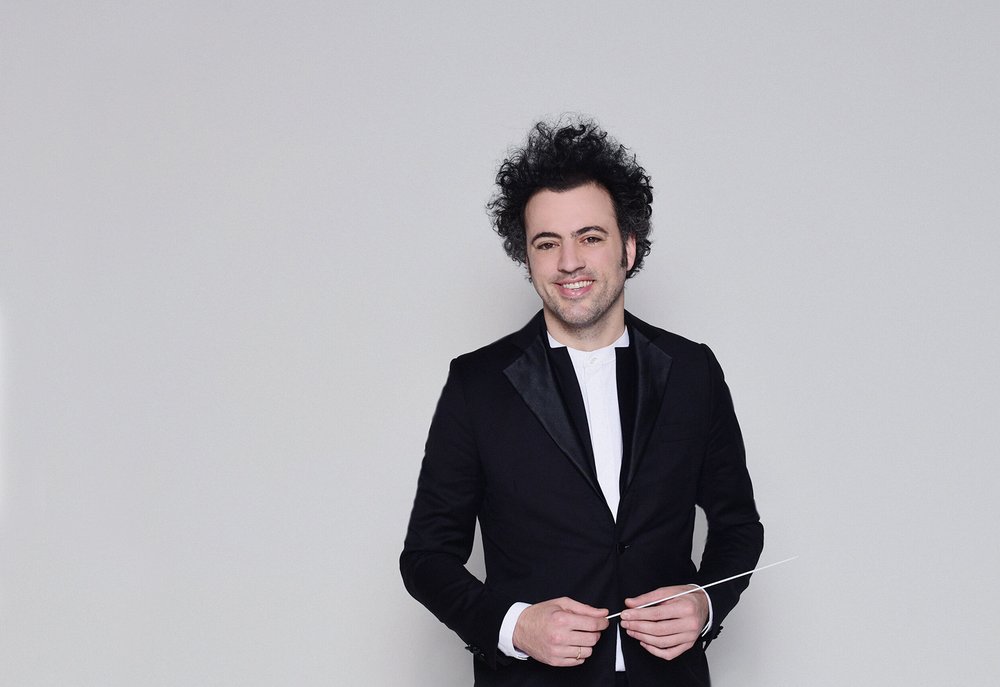
Eric Jacobsen, conductor
Program Notes
Edvard Grieg (1843-1907)
Holberg Suite (From Holberg’s Time), op.40 (1884)
Scored for: strings
Performance time: 21 minutes
First Grant Park Orchestra performance: July 9, 2018; Jeremy Black, leader
Edvard Grieg is practically synonymous with Norwegian music. The most prominent Scandinavian composer of his generation, he brought Norwegian folk music to the masses. While the Holberg Suite is not explicitly based on any Norwegian folksongs, it was written to honor a seminal figure in Norwegian literature, Ludvig Holberg (1684–1754). Several commissions sprung out of the bicentennial celebrations of Holberg’s birth in 1884. Grieg’s contributions included a cantata for low voices and Fra Holbergs Tid (“From Holberg’s Time”), now commonly referred to as the Holberg Suite. Holberg and Grieg were both born in Bergen, a city on the west coast of Norway. An icon of the Scandinavian Enlightenment, Holberg was most known for writing comedies and satire, earning him the moniker “the Molière of the North.”
To capture the sound world of Holberg’s time, Grieg turned to the form of a French baroque dance suite. Originally scored for piano, the Holberg Suite proved such a success that Grieg rearranged it for string orchestra shortly after the premiere. The arrangement for strings is now the most frequently played version. Writing for string orchestra was popular in the 1880s, with notable Serenades for Strings by Dvořák and Tchaikovsky appearing around the same time. Enchanted with the rich array of colors a large group of strings afforded, Grieg specified the Holberg Suite be played by the entire string section of a symphony orchestra and not a smaller string or chamber ensemble.
The suite opens with the “Praeludium,” a movement thrumming with optimism. An elegant violin melody soars over a softly galloping accompaniment, imitating the constant repetition needed to sustain tones on a harpsichord. The “Sarabande” is a stately baroque dance in triple meter characterized by stable four-bar phrases. Grieg adds textural contrast with a poignant cello trio in the B section. The middle section of the pastoral “Gavotte” features a musette, a rustic dance traditionally accompanied by the drone of a bagpipe. Grieg deploys the full richness of the string section in the solemn “Air.” The exquisite melody is ornamented with stylistic turns, and suspensions in the underlying harmonies create tension by delaying harmonic resolution. Finally, the “Rigaudon” is a merry folk dance in duple meter. A solo violin and viola introduce the spritely melody over lightly plucked accompaniment, while the elegiac middle section evokes the seriousness of the previous movement.
Nathalie Joachim
Cocoon (Festival Commission)
Scored for: three flutes, three oboes, three clarinets, three bassoons, four French horns, three trumpets, three trombones, tuba, timpani, percussion, harp, and strings
Performance time: 5 minutes
World premiere performance
A cocoon by definition is something that envelops or surrounds an object in a protective or comforting way. It can also be the act of retreating from the stressful conditions of public life into a cozy private world. A way of quietly disappearing with hopes of returning renewed. This work is a sonic invitation into these dualities – the quiet power found by secluding oneself with restorative intentions and the violent energetic shifts that accompany necessary growth. The short work is an expression of expansion, beginning in a delicate space held together by extremes – a contemplative song in the low strings and clarinets that calls forth a sparkling melody in the piccolo and celesta. It feels utterly lonely and warm all at once. Then the violins begin to unfurl a broadening that continues to shimmer as it glides forward towards a newly found heartbeat in the percussion section and building chorales and rally cries in the brass and woodwinds. A sudden interjection of a tutti section showcasing high pitched kinetic energy with rhythmic mayhem in the drums leads to the works’ smoothly cinematic and triumphant peak. This comforting arrival ultimately gives way to one final moment of uncomfortable chaos
before settling into reassured reflection. Cocoon in many ways is about process, in life and in music. It’s about embracing ease and disorder all at once, and trusting that what awaits on the other side is usually well worth it.
– Nathalie Joachim, composer
Ludwig Van Beethoven (1770-1827)
Symphony No.5 in C minor, op.67 (1807)
Scored for: three flutes including piccolo, two oboes, two clarinets, three bassoons including contrabassoon, two French horns, two trumpets, three trombones, timpani, and strings
Performance time: 31 minutes
First Grant Park Orchestra performance: August 26, 1936; Dino Bigalli, conductor
Fate knocking at the door. In Morse code, “V” for “Victory” (conveniently also the Roman numeral for five). However you hear the famous opening motif of Beethoven’s Fifth Symphony, those first four notes have embedded themselves in our collective psyche, becoming the most recognized figure in all classical music. Because the opening is so well known, it is easy to forget just how innovative Beethoven’s Fifth Symphony was at the time. With his Third Symphony, Eroica, in 1803, Beethoven had forged a new “symphonic ideal” to which generations of composers would aspire. This new symphonic model was characterized by unprecedented scope, thematic evolution across movements, and a sense of a heroic journey from darkness into light. After changing the game with Eroica, Beethoven solidified this idea with his Fifth Symphony.
Beethoven began sketching the Fifth Symphony in 1804, shortly after completing Eroica. He returned to it sporadically over the coming years during a period of intense creative productivity, completing the majority of it in 1807 and finishing it in early 1808. In the interim, he had also composed his Fourth Symphony, Violin Concerto, and Fourth Piano Concerto, among other works. To showcase his new compositions, he organized a benefit concert on December 22, 1808, at the Theater an der Wien. The all-Beethoven program featured a staggering four hours of music, including the premieres of the Fifth Symphony and the highly contrasting Sixth Symphony (Pastoral). The concert was not an unmitigated success, partially due to its length and unfamiliar music, but also because the theater’s heating system was broken, leaving patrons shivering in their seats.
The Fifth Symphony was revolutionary in several ways—“revolutionary” being the key word. Beethoven was inspired by the egalitarian ideals of the French Revolution and the triumphant music that emerged from it. These feelings became complicated when Napoleon declared himself emperor and invaded Vienna during the Napoleonic Wars. Plus, Beethoven relied on patronage from members of the aristocracy, so any affinity he might have had for the revolutionaries had to be expressed covertly. Conductor Sir John Eliot Gardiner argues that the opening theme derives from Luigi Cherubini’s Hymne du Panthéon, echoing the rhythm and melodic outline of the lyrics that translate to, “We swear, sword in hand, to die for the Republic and for the rights of man.”
Musically, the opening is unusual in that it starts with a downbeat of rest. Then, the first three eighth notes act as an anacrusis to the long note marked with a fermata. Who else would open a piece with such a short figure only to halt it as soon as it’s begun? Also revolutionary is how this motif pervades practically the entire Allegro and lurks under the surface in the subsequent movements. The shortness of this musical idea, paired with the limited harmonic scope of the first movement, adds to the feeling of compression. While the Andante provides consolation and respite with a flexible treatment of a Classical theme and variations, a militaristic affect sneaks in during brief brass interludes.
The drama of the first movement returns in the Scherzo, and almost immediately, we are reminded of the rhythm of the opening with a declamation in the brass. After a vigorous fugato in the Trio section, the Scherzo returns as expected, but Beethoven does not let it run its natural course. Instead, he takes the listener through a tunnel, the melody groping around in the dark before finally emerging into the daylight of C major as the finale begins. The triumphant finale is made even more brilliant with the addition of trombones (the first time trombones appeared in any symphony), piccolo, and contrabassoon. Though now we are accustomed to these sounds, it would have been more shocking to an early-nineteenth-century audience. At the end of the development, we hear strains of the Scherzo version of the opening motif, making it clear that the finale is the inevitable resolution of the struggle that preceded it.
Program Notes by Katherine Buzard
Event Sponsors
This concert is generously sponsored by Capital One.
The world premiere by Nathalie Joachim is graciously supported
by the Robert and Isabelle Bass Foundation, Inc.
Artistic Leadership
-
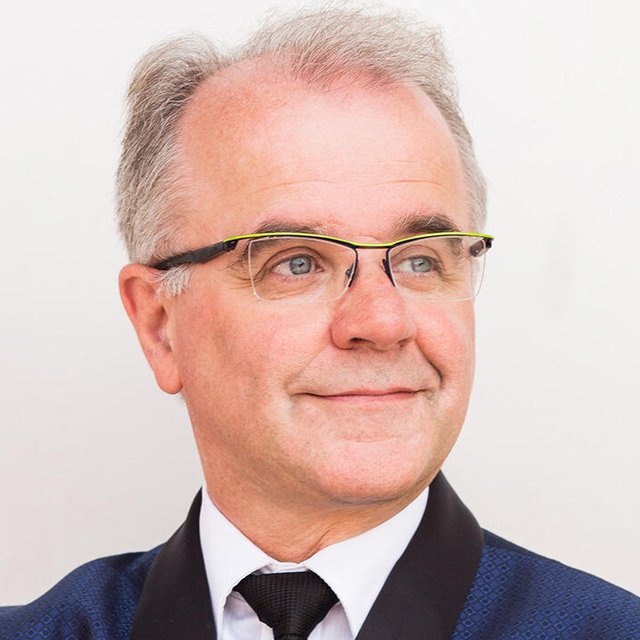
Christopher Bell
Chorus Director

Support The Festival
Grant Park Orchestra
* denotes leave-of-absence † one-year position
Jeremy Black, concertmaster
Jennifer Cappelli
Injoo Choi
Dima Dimitrova
Erica Hudson
Hyewon Kim
Matthew Lehmann
Jayna Park
Rika Seko
Karen Sinclair
Bonnie Terry
Trista Wong
Jonathan Yi
Krzysztof Zimowski
Liba Shacht, principal
Laura Miller, assistant principal
Ying Chai
Ran Cheng
Karl Davies
Likai He
Tiffany Kang
Ann Lehmann
Cristina Muresan
Kjersti Nostbakken
Irene Radetzky
Jeanine Wynton
Thomas Yang
Terri Van Valkinburgh, principal
Yoshihiko Nakano, assistant principal
Patrick Brennan*
Elizabeth Breslin
Beatrice Chen
Amy Hess
Christopher McKay†
Rebecca Swan
Chloé Thominet
Walter Haman, principal
Peter Szczepanek, assistant principal
Calum Cook
Larry Glazier
Steven Houser
Eric Kutz
Eran Meir
Linc Smelser*
Colin Corner, principal
Peter Hatch, assistant principal
Andrew Anderson
Alexander Horton
Christian Luevano†
Isaac Polinksy†
Timothy Shaffer*
Chunyang Wang
Chris White
Mary Stolper, principal
Jennifer Debiec Lawson, assistant principal
Jennifer Debiec Lawson
Alyce Johnson
Mitchell Kuhn, principal
Alex Liedtke
Anne Bach, assistant principal
Anne Bach
Dario Brignoli, principal
Trevor O’Riordan
Eric Hall, principal
Nicole Haywood, assistant principal
William Ramos
Jonathan Boen, principal
Stephanie Blaha, assistant principal*
Fritz Foss†
Samuel Hamzem†
Brett Hodge*
Neil Kimel
David Gordon, principal
Mike Brozick, acting assistant principal
Michael Brozick
William Denton
Daniel Cloutier, principal*
Jeremy Moeller, acting principal
Alexander Mullins
Andrew Smith, principal
Daniel Karas, principal
Josh Jones, principal
Joel Cohen, assistant principal
Doug Waddell
Kayo Ishimaru-Fleisher, principal
Christopher Guzman
Alba Layana Izurieta, Violin
Janani Sivakumar, Violin
Harper Randolph, Viola
Gabriel Hightower, Cello
Grant Park Chorus
* denotes leave-of-absence † one-year position
Taylor Adams
Summer Aebker
Kristina Bachrach
Madalynn Baez
Megan E. Bell
Alyssa Bennett
Anna Joy Buegel
Laura Bumgardner
Elisabeth Burmeister
Katherine Buzard
Bethany Clearfield
Nathalie Colas
Corinne Costell
Carolyne DalMonte
Rebecca Fitzpatrick
Megan Fletcher
Kaitlin Foley
Saira Frank
Katherine Gray-Noon
Kimberly Gunderson
Alexandra Ioan
Alexandra Kassouf
Darlene Kelsey
Olivia Knutsen
Marybeth Kurnat
Catherine Larson
Katelyn Lee
Rosalind Lee
Rena Maduro
Hannah Dixon McConnell
Marie McManama
Meganna Miller
Kathleen Monson
Emily Mwila
Susan Nelson
Evangeline Ng
Karen R. Nussbaum
Máire O’Brien
Laura Perkett
Molly Phelan
Angela Presutti Korbitz
Alexia Rivera
Veronica Samiec
Whitney Shurtliff
Emily Sinclair
Tiana Sorenson
Christine Steyer
Diana Stoic
Karlie Traversa
Sarah van der Ploeg
Lydia Walsh-Rock
Sherry Watkins
Tara Wheeker
Emily Lyday Yiannias
Christina Adams
Melissa Arning
Christina Bernardoni
Christine Boddicker
Bethany Brewer
Jean Broekhuizen
Anna De Ocampo Kain
Julie DeBoer
Leah Dexter
Katrina Dubbs
Stacy Eckert
Margaret Fox
Elizabeth Frey
Liana German
Catarine Hancock
Ruth Ginelle Heald
Nina Heebink
Miya Higashiyama
Carla Janzen
Amy Allyssa Johnson
Kathryn Kinjo Duncan
Amanda Koopman
Jeannette Lee
Hannah Little
Thereza Lituma
Chelsea Lyons
Victoria Marshall
Jessica McCarthy
Greta McNamee
Quinn Middleman
Sarah Ponder
Emily Price
Lauren Randolph
Grace Ryan
Stephanie Schoenhofer
Suzanne A. Shields
Emlynn Shoemaker
Cassidy Smith
Emma Sorenson
Aidan Spencer
Alannah Spencer
Carolyn Sundlof Boudreau
Gabrielle Timofeev López
Corinne Wallace-Crane
A.J. Wester
Debra Wilder
Pamela Williams
Avery Winick
Enrico Giuseppe Bellomo
Justin Berkowitz
Madison Bolt
Eric Botto
Hoss Brock
Steven Caldicott Wilson
Joseph Cloonan
Damon Cole
John J. Concepción
Matthew Cummings
Micah A. Dingler
Howard Eckdahl
Jared V. Esguerra
Andrew Fisher
Ryan Frenk
Ace Gangoso
Klaus Georg
Nikhil Harle
Jianghai Ho
Max Hosmer
Cameo T. Humes
Paul Hunter
Garrett Johannsen
William Johnson
James Judd
Tejas Kishan Gururaja
Tim Lambert
Tyler Lee
Mason Montuoro
Stephen D. Noon
Brett Potts
Nicholas Pulikowski
Brian Rasmussen
Patrick Reardon
Peder Reiff
Matthew W. Schlesinger
Silfredo Serrano
Joe Shadday
Aaron Short
Matthew Sink
Brian Skoog
Michael St. Peter
Ryan Townsend Strand
Brett Sweeney
Alan Taylor
Keven Washburn
Sean J. Watland
Walter Aldrich
Evan Bravos
Matthew Brennan
Tabes Bridges
Michael Cavalieri
Stephen Clark
David Corlew
Michael D. Costello
Philip Courington
Ryan J. Cox
Ed Frazier Davis
Wesley Diener
Chris DiMarco
Christopher Filipowicz
Gabriel Garcia
Dimitri German
Dominic German
David Govertsen
David Hartley
Matthew Hunt
Brian Hupp
Jan Jarvis
Jess Koehn
Zachary Mendenhall
Eric Miranda
Ron Mitchell
Ian Morris
Ian Murrell
Chiemerie Obianom
John E. Orduña
Wilbur Pauley
Douglas Peters
Jackson Pierzina
Anthony Pilcher
Martin Lowen Poock
Ian Prichard
Gabriel Reitemeier
Dan Richardson
Stephen Richardson
Benjamin D. Rivera
Joseph Ryan
Ivo Suarez
Avery Sujkowski
Scott Uddenberg
Vince Wallace
Nicholas Ward
Aaron Wardell
Ronald Watkins
Jonathon Weller
Peter Wesoloski
Max Wier
Jonathan Wilson
Chuck Foster
John Goodwin
Veronica Mak, soprano
Emily Amesquita, alto
Alexi Ortega Chavez, tenor
Lifan Deng, bass