Brahms Double Concerto
Program
ELENA KATS-CHERNIN Mythic
JOHANNES BRAHMS Double Concerto
Allegro
Andante
Vivace non troppo
INTERMISSION
CLAUDE DEBUSSY Ibéria
In the Streets and Byways
The Fragrances of the Night
The Morning of a Festival Day
MAURICE RAVEL Rapsodie espagnole
Prélude a la nuit
Malagueña
Habanera
Feria
Featuring
Grant Park Orchestra
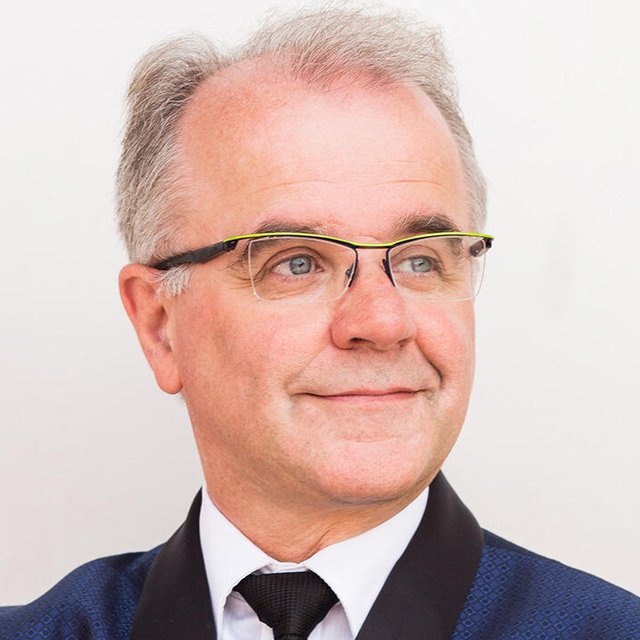
Carlos Kalmar, conductor
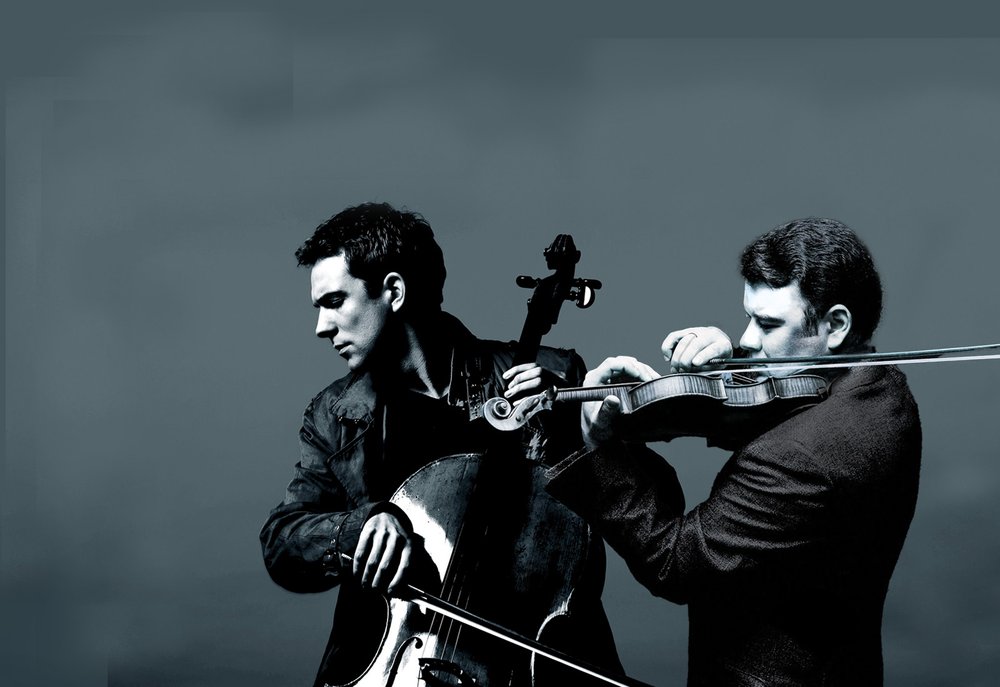
Vadim Gluzman, violin
Johannes Moser, cello
Program Notes
Elena Kats-Chernin (b. 1957)
Mythic (2004)
Scored for: two flutes including piccolo, two oboes, two clarinets, two bassoons, four French horns, two trumpets, three trombones, tuba, timpani, percussion, harp, and strings
Performance time: 12 minutes
First Grant Park Orchestra performance
Elena Kats-Chernin is one of Australia’s leading composers. Originally from Tashkent, Uzbekistan, she emigrated from the former Soviet Union to Australia at 17 to study at the Sydney Conservatorium of Music. She continued her studies and cultivated her early career in Germany, where she wrote extensively for the ballet and the theater. She returned to Australia in 1994 and has remained there ever since. Shortly after her return, the Tasmanian Symphony Orchestra commissioned several works from her, including Mythic in 2004.
“I wanted to attempt a direction I had not explored previously, and that was to stay in a slow, dark mood for a lengthy period and to see where that took me,” Kats-Chernin writes in her program note for Mythic. She often takes inspiration from a single idea, such as a chord, progression, or rhythm, and pushes it to its limits. In the case of Mythic, that was a “passacaglia-like chordal progression” that had captured her imagination. A passacaglia is a Baroque musical form based on a repeated bassline, usually of a serious character. She continues, “Eventually it grew into a kind of a hymn with variations, sometimes almost romantic, that made extensive use of the orchestra’s brass section.” Kats-Chernin’s musical influences are broad and varied, ranging from klezmer to jazz and Russian Romanticism to minimalism. She often builds upon short musical ideas in a collage-like manner instead of exposing them to traditional developmental techniques. This approach can lead to extreme juxtapositions, giving her music an inherent theatricality perfect for evoking the image of entering the large, mythical cave in Mythic.
Johannes Brahms (1833-1897)
Concerto in A minor for Violin, Violoncello, & Orchestra, op.102, Double Concerto (1887)
Scored for: two flutes, two oboes, two clarinets, two bassoons, four French horns, two trumpets, timpani, strings, solo violin, and solo cello
Performance time: 32 minutes
First Grant Park Orchestra performance: August 19, 1942; Frederick Stock, conductor; John Weicher, violin;
Edmund Kurtz, cello
What lengths would you go to to mend a broken friendship? Instead of sending flowers or a card, Johannes Brahms extended a concerto as an olive branch. Brahms had been close friends and colleagues with violinist Joseph Joachim since 1853. Throughout their friendship, Brahms often relied on Joachim’s expertise when composing for the violin, and Joachim premiered many of Brahms’ chamber works and his Violin Concerto in 1878. But their relationship soured in 1884 when Joachim and his wife, contralto Amalie Weiss, were going through divorce proceedings. Joachim had always been the jealous type and suspected Amalie of having an affair with Brahms’ publisher, Fritz Simrock. Brahms sent a letter to Amalie expressing his sympathy and affirming his belief in her innocence, which Amalie presented in court. Understandably, Joachim broke off his friendship with Brahms due to the perceived betrayal. Brahms attempted to mend fences with the violinist, and Joachim continued to perform Brahms’ compositions, but no real inroads were made until 1887 when Brahms enticed him with a Double Concerto for violin and cello.
Now, Brahms was killing two birds with one stone with the Double Concerto. He wrote the solo cello part for Joachim’s quartet-mate Robert Hausman, who had been probing him for a cello concerto since 1884. Brahms had composed several sonatas for him but never a concerto, fearing a solo cello concerto would never work. In September 1887, Joachim acquiesced to workshopping the Double Concerto with Brahms, Hausman, and Clara Schumann in the resort town of Baden-Baden. Schumann wrote in her diary, “The Concerto is a work of reconciliation. Joachim and Brahms have spoken to one another again.” Though the experience brought the two back on speaking terms, they never regained the closeness they once shared.
Rather inexplicably, Brahms used the terms “funny,” “amusing,” and “prank” to describe the Double Concerto, his last orchestral composition. These words may apply to the Finale, but overall, it is an imposing, hefty work. After a stern announcement of the main theme from the full orchestra, the cello follows with an extended unaccompanied recitative. A short commentary from the winds leads the violin to take up its own recitative, eventually rousing the cello into a double cadenza. After this lengthy introduction, the movement can begin in earnest. Throughout, Brahms delineates the different personalities of the two solo instruments but still allows them to weave seamlessly in and out of each other. The violin and cello appear in parallel octaves sparingly, most notably in the folksong-like melody of the slow movement. Brahms’ fondness for Hungarian Romani music is evident in the vibrant Finale. In truth, Brahms does inject some humor into the concerto here, witnessed in the lively and sometimes adversarial interplay between the soloists. Brahms briefly pulls in the reins near the end with delicate fleet-fingered passages for the soloists before building back up to a forceful close.
Claude Debussy (1862-1918)
Ibéria, No.2 from Images (1905)
Scored for: four flutes including piccolo, three oboes including English Horn, three clarinets, four bassoons including contrabassoon, four French horns, three trumpets, three trombones, tuba, timpani, percussion, two harps, celesta, and strings
Performance time: 20 minutes
First Grant Park Orchestra performance
Claude Debussy spent minimal time in Spain, but the country still had a magnetic pull on his imagination. His only visit was a day trip to the border town of San Sebastián to see a bullfight, returning to France by nightfall. Nevertheless, Spanish composer Manuel de Falla praised the Frenchman’s evocation of the Iberian Peninsula in Ibéria, writing, “Claude Debussy wrote Spanish music without knowing Spain, that is to say without knowing the land of Spain, which is a different matter. Debussy knew Spain from his reading, from pictures, from songs, and from dances with songs danced by true Spanish dancers.” Instead of quoting authentic Spanish folk music, he uses fundamental elements of it to give an impression filtered through his French sensibilities and distinctive orchestration.
Ibéria is the central panel in Debussy’s triptych Images pour orchestre, initially conceived as a cycle for two pianos to follow his solo-piano books of Images. Ibéria is itself in three movements. “Along the Streets and Byways” paints the image of a bustling town drenched in sunlight. After a sharp declamatory chord, the castanets outline a rhythmic figure that will dominate the entire movement. A jaunty clarinet melody passes around the orchestra in different forms in playful juxtaposition with the triplets of the accompanimental rhythm. The horns announce the passing of a marching band, but the prevailing atmosphere quickly returns. “Perfumes of the Night” delights in the sweet scents of a Spanish garden. Marking the score “Slow and dreamy,” Debussy creates an enchanting soundscape with high muted strings, winds, xylophone, celesta, and tambourine. Against this backdrop, a sensuous oboe melody appears, hesitant at first but gradually building in confidence. After the distant tolling of bells, dawn gradually breaks in “Morning of a Festival Day.” Once everyone is awake, joyful chaos ensues, with street vendors, marching bands, and dancers aplenty. Of this movement, Debussy wrote, “It sounds like music that has not been written down—the whole feeling of rising, of people and nature waking. There is a watermelon vendor and children whistling—I see them all clearly!”
Maurice Ravel (1875-1937)
Rapsodie espagnole (1907)
Scored for: four flutes including piccolo, three oboes including English Horn, three clarinets including bass clarinet, four bassoons, four French horns, three trumpets, three trombones, tuba, timpani, percussion, two harps, celesta, and strings
Performance time: 16 minutes
First Grant Park Orchestra performance: August 11, 1942; Hans Lange, conductor
Maurice Ravel (1875–1937) followed in the well-trod footsteps of French composers looking to Spain for musical inspiration. But rather than exoticize Spanish musical traditions, as many of his predecessors and contemporaries did, Ravel treats the source material in a way that Spanish composer Manuel de Falla praised as “subtly genuine.” Although Ravel did not visit Spain as an adult until 1924, he grew up in the Basque town of Cibourne in southwest France, and his mother was raised in Spain. In 1907, long before composing his most famous Spanish-inflected work, Boléro (1928), Ravel produced a series of works on Spanish themes, including Vocalise-étude en forme de Habanera, the one-act opera L’Heure espagnole, and Rapsodie espagnole.
Rapsodie espagnole was Ravel’s first published work for orchestra, and its immediate success established him as a master orchestrator. Throughout the four-movement piece, Ravel filters the characteristic rhythms, melodies, modes, and ornamental figures of Spanish popular and folk music through his own compositional lens. The first movement, “Prélude à la nuit,” offers an atmospheric impression of Spain at night, with a haunting four-note motif that recurs throughout the work. The muted strings, limited dynamic range, and economy of orchestration capture the closeness of a warm Andalusian night. Rhythm and percussion drive the second movement, “Malagueña,” until a sumptuous English horn solo disrupts the momentum. Ravel based the third movement, “Habanera,” on a piece he had written for two pianos in 1895. In the manuscript, Ravel gives this movement the romantic subtitle “In the fragrant land caressed by the sun.” Finally, “Feria” launches into the joyful commotion of a Spanish festival with dazzling orchestral effects and colors.
Program Notes by Katherine Buzard
Event Sponsors
This concert is generously supported by the Sage Foundation
and Phoebe and Fred Boelter.
The Grant Park Music Festival gratefully acknowledges support from the Illinois Arts Council.
Artistic Leadership

Support The Festival
Grant Park Orchestra
* denotes leave-of-absence † one-year position
Jeremy Black, concertmaster
Jennifer Cappelli
Injoo Choi
Dima Dimitrova
Erica Hudson
Hyewon Kim
Matthew Lehmann
Jayna Park
Rika Seko
Karen Sinclair
Bonnie Terry
Trista Wong
Jonathan Yi
Krzysztof Zimowski
Liba Shacht, principal
Laura Miller, assistant principal
Ying Chai
Ran Cheng
Karl Davies
Likai He
Tiffany Kang
Ann Lehmann
Cristina Muresan
Kjersti Nostbakken
Irene Radetzky
Jeanine Wynton
Thomas Yang
Terri Van Valkinburgh, principal
Yoshihiko Nakano, assistant principal
Patrick Brennan*
Elizabeth Breslin
Beatrice Chen
Amy Hess
Christopher McKay†
Rebecca Swan
Chloé Thominet
Walter Haman, principal
Peter Szczepanek, assistant principal
Calum Cook
Larry Glazier
Steven Houser
Eric Kutz
Eran Meir
Linc Smelser*
Colin Corner, principal
Peter Hatch, assistant principal
Andrew Anderson
Alexander Horton
Christian Luevano†
Isaac Polinksy†
Timothy Shaffer*
Chunyang Wang
Chris White
Mary Stolper, principal
Jennifer Debiec Lawson, assistant principal
Jennifer Debiec Lawson
Alyce Johnson
Mitchell Kuhn, principal
Alex Liedtke
Anne Bach, assistant principal
Anne Bach
Dario Brignoli, principal
Trevor O’Riordan
Eric Hall, principal
Nicole Haywood, assistant principal
William Ramos
Jonathan Boen, principal
Stephanie Blaha, assistant principal*
Fritz Foss†
Samuel Hamzem†
Brett Hodge*
Neil Kimel
David Gordon, principal
Mike Brozick, acting assistant principal
Michael Brozick
William Denton
Daniel Cloutier, principal*
Jeremy Moeller, acting principal
Alexander Mullins
Andrew Smith, principal
Daniel Karas, principal
Josh Jones, principal
Joel Cohen, assistant principal
Doug Waddell
Kayo Ishimaru-Fleisher, principal
Christopher Guzman
Alba Layana Izurieta, Violin
Janani Sivakumar, Violin
Harper Randolph, Viola
Gabriel Hightower, Cello
Grant Park Chorus
* denotes leave-of-absence † one-year position
Taylor Adams
Summer Aebker
Kristina Bachrach
Madalynn Baez
Megan E. Bell
Alyssa Bennett
Anna Joy Buegel
Laura Bumgardner
Elisabeth Burmeister
Katherine Buzard
Bethany Clearfield
Nathalie Colas
Corinne Costell
Carolyne DalMonte
Rebecca Fitzpatrick
Megan Fletcher
Kaitlin Foley
Saira Frank
Katherine Gray-Noon
Kimberly Gunderson
Alexandra Ioan
Alexandra Kassouf
Darlene Kelsey
Olivia Knutsen
Marybeth Kurnat
Catherine Larson
Katelyn Lee
Rosalind Lee
Rena Maduro
Hannah Dixon McConnell
Marie McManama
Meganna Miller
Kathleen Monson
Emily Mwila
Susan Nelson
Evangeline Ng
Karen R. Nussbaum
Máire O’Brien
Laura Perkett
Molly Phelan
Angela Presutti Korbitz
Alexia Rivera
Veronica Samiec
Whitney Shurtliff
Emily Sinclair
Tiana Sorenson
Christine Steyer
Diana Stoic
Karlie Traversa
Sarah van der Ploeg
Lydia Walsh-Rock
Sherry Watkins
Tara Wheeker
Emily Lyday Yiannias
Christina Adams
Melissa Arning
Christina Bernardoni
Christine Boddicker
Bethany Brewer
Jean Broekhuizen
Anna De Ocampo Kain
Julie DeBoer
Leah Dexter
Katrina Dubbs
Stacy Eckert
Margaret Fox
Elizabeth Frey
Liana German
Catarine Hancock
Ruth Ginelle Heald
Nina Heebink
Miya Higashiyama
Carla Janzen
Amy Allyssa Johnson
Kathryn Kinjo Duncan
Amanda Koopman
Jeannette Lee
Hannah Little
Thereza Lituma
Chelsea Lyons
Victoria Marshall
Jessica McCarthy
Greta McNamee
Quinn Middleman
Sarah Ponder
Emily Price
Lauren Randolph
Grace Ryan
Stephanie Schoenhofer
Suzanne A. Shields
Emlynn Shoemaker
Cassidy Smith
Emma Sorenson
Aidan Spencer
Alannah Spencer
Carolyn Sundlof Boudreau
Gabrielle Timofeev López
Corinne Wallace-Crane
A.J. Wester
Debra Wilder
Pamela Williams
Avery Winick
Enrico Giuseppe Bellomo
Justin Berkowitz
Madison Bolt
Eric Botto
Hoss Brock
Steven Caldicott Wilson
Joseph Cloonan
Damon Cole
John J. Concepción
Matthew Cummings
Micah A. Dingler
Howard Eckdahl
Jared V. Esguerra
Andrew Fisher
Ryan Frenk
Ace Gangoso
Klaus Georg
Nikhil Harle
Jianghai Ho
Max Hosmer
Cameo T. Humes
Paul Hunter
Garrett Johannsen
William Johnson
James Judd
Tejas Kishan Gururaja
Tim Lambert
Tyler Lee
Mason Montuoro
Stephen D. Noon
Brett Potts
Nicholas Pulikowski
Brian Rasmussen
Patrick Reardon
Peder Reiff
Matthew W. Schlesinger
Silfredo Serrano
Joe Shadday
Aaron Short
Matthew Sink
Brian Skoog
Michael St. Peter
Ryan Townsend Strand
Brett Sweeney
Alan Taylor
Keven Washburn
Sean J. Watland
Walter Aldrich
Evan Bravos
Matthew Brennan
Tabes Bridges
Michael Cavalieri
Stephen Clark
David Corlew
Michael D. Costello
Philip Courington
Ryan J. Cox
Ed Frazier Davis
Wesley Diener
Chris DiMarco
Christopher Filipowicz
Gabriel Garcia
Dimitri German
Dominic German
David Govertsen
David Hartley
Matthew Hunt
Brian Hupp
Jan Jarvis
Jess Koehn
Zachary Mendenhall
Eric Miranda
Ron Mitchell
Ian Morris
Ian Murrell
Chiemerie Obianom
John E. Orduña
Wilbur Pauley
Douglas Peters
Jackson Pierzina
Anthony Pilcher
Martin Lowen Poock
Ian Prichard
Gabriel Reitemeier
Dan Richardson
Stephen Richardson
Benjamin D. Rivera
Joseph Ryan
Ivo Suarez
Avery Sujkowski
Scott Uddenberg
Vince Wallace
Nicholas Ward
Aaron Wardell
Ronald Watkins
Jonathon Weller
Peter Wesoloski
Max Wier
Jonathan Wilson
Chuck Foster
John Goodwin
Veronica Mak, soprano
Emily Amesquita, alto
Alexi Ortega Chavez, tenor
Lifan Deng, bass