Dvořák Cello Concerto
Program
Anna Clyne - Masquerade
Antonin Dvorak Cello Concerto in B Minor
Allegro
Adagio ma non troppo
Finale: Allegro moderato
Benjamin Britten Young Person's Guide to the Orchestra
Variations and Fugue on a Them of Purcell
Featuring
Grant Park Orchestra
Carlos Kalmar, conductor
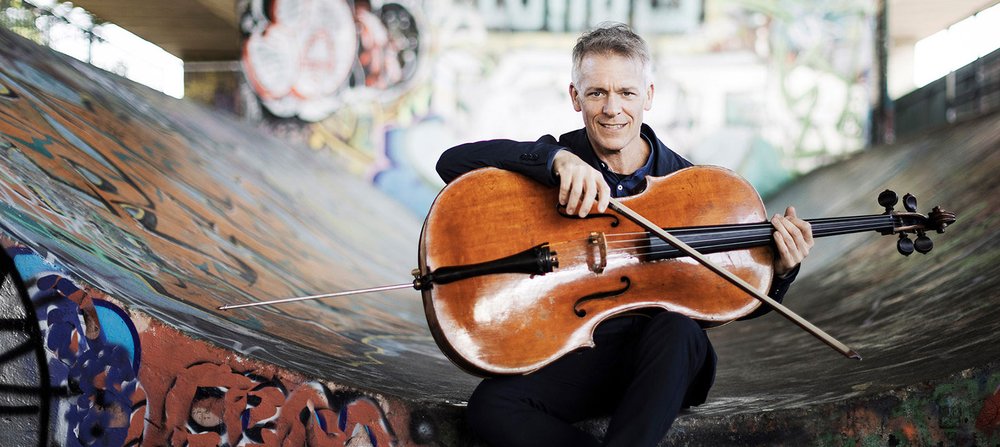
Alban Gerhardt, cello
Irika Sargent, narrator
Program Notes
Anna Clyne (b. 1980)
Masquerade (2013)
Scored for: three flutes including piccolo, three oboes including English Horn, three clarinets including bass clarinet, three bassoons including contrabassoon, four French horns, three trumpets, three trombones, tuba, timpani, percussion, and strings
Performance time: 5 minutes
First Grant Park Orchestra performance
When London-born composer Anna Clyne was commissioned to write a piece for the Last Night of the Proms in 2013, she looked to the festival’s origins for inspiration. The BBC Proms, an annual summer music series held at the Royal Albert Hall, grew out of “promenade” concerts held in the pleasure gardens of London in the eighteenth and nineteenth centuries. Pleasure gardens were outdoor spaces dedicated to entertainment that drew diverse crowds, from the glittering elite and rising urban middle class to the city’s seedy underbelly. As Danielle Thom of the Museum of London explains, “Simultaneously an art gallery, a restaurant, a brothel, a concert hall and a park, the pleasure garden was the place where Londoners confronted their very best, and very worst, selves.”
It is this colorful, swirling atmosphere that inspired Masquerade. “The work derives its material from two melodies,” the composer explains in her program note. “For the main theme, I imagined a chorus welcoming the audience and inviting them into their imaginary world. The second theme, Juice of Barley, is an old English country dance melody and drinking song, which first appeared in John Playford’s 1695 edition of The English Dancing Master.”
Antonin Dvorák (1841-1904)
Concerto in B minor for Violoncello & Orchestra, op.104, B.191 (1894)
Scored for: two flutes including piccolo, two oboes, two clarinets, two bassoons, three French horns, two trumpets, three trombones, tuba, timpani, percussion, strings, and solo cello
Performance time: 40 minutes
First Grant Park Orchestra performance: July 31, 1953; Thor Johnson, conductor and Paul Olefsky, cello
Antonín Dvořák’s Cello Concerto is one of the most beloved concertos in the orchestral canon and one of Dvořák’s most enduring works. But you may be surprised to learn that the composer initially wasn’t so keen on the idea of the cello as a solo instrument. He wrote, “The cello is a beautiful instrument, but its place is in the orchestra and in chamber music. As a solo instrument, it isn’t much good” because “the upper voice squeals and the lower growls.”
It wasn’t until Dvořák’s tenure teaching at the newly established National Conservatory of Music in New York City in the 1890s that he realized the cello’s potential after hearing a cello concerto by Victor Herbert at a concert in Brooklyn. New York’s landscape also was an influential factor. On a visit to Niagara Falls in 1892, Dvořák reportedly exclaimed, “My word, that is going to be a symphony in B minor!” Though he never did write a symphony in that key, the Cello Concerto in B minor is certainly symphonic in scope.
Dvořák began work on the concerto in the spring of 1894 while on a brief visit home to Bohemia, completing it in February the following year in New York. Upon returning to Prague that April, he entrusted his cellist friend Hanuš Wihan with editing the solo cello part. However, Dvořák later discarded many of Wihan’s ideas, particularly the traditional fiery cadenza at the end of the third movement, opting instead for an ending that is more contemplative than joyous. As you can imagine, this rubbed Wihan the wrong way, and even though the published score is dedicated to him, he refused to play the premiere.
But Dvořák had his reasons for the change of mood. While composing the concerto, he received a letter that his sister-in-law, Josefina Čermáková, was dying. Before Dvořák married her sister, Anna, he had been hopelessly in love with Josefina, but this love was unrequited. They had stayed close, so he was devastated upon receiving the letter. In an act of dedication, he quotes Josefina’s favorite song of his, “Lass mich allein in meinen Träumen geh’n” (“Leave me to walk alone in my dreams”), in the Adagio movement. The Adagio also contains a discreet funeral march with a triplet figure in the horns under the cantabile theme. The contemplative mood of the ending, too, is in reverence to her memory. One month after Dvořák returned home, Josefina died.
When submitting the score to his publisher, Dvořák was adamant that the ending not be changed, even though it flouted tradition in its lack of a cadenza. He wrote, “My finale closes gradually, diminuendo, like a sigh, with reminiscences of the first and second movements; the solo dies down to pianissimo, then swells again, and the last bars are taken up by the orchestra and the whole concludes in a stormy mood. This is my idea and I cannot depart from it!” Cellist Leo Stern premiered the concerto in 1896 with the composer at the podium to great critical acclaim. Johannes Brahms, not usually one to give high praise to other composers, even wrote Dvořák to congratulate him, saying, “How could I not have known that one can write a cello concerto like this? If I had known, I would have written one long ago!”
Benjamin Britten (1913-1976)
Young Person’s Guide to the Orchestra, op.34 (Variations and Fugue on a Theme of Purcell) (1946)
Scored for: three flutes including piccolo, two oboes, two clarinets, two bassoons, four French horns, two trumpets, three trombones, tuba, timpani, percussion, harp, and strings
Performance time: 18 minutes
First Grant Park Orchestra performance: August 13, 1948; Nicolai Malko, conductor
Buoyed by the success of his 1945 opera Peter Grimes, Benjamin Britten approached A Young Person’s Guide to the Orchestra the following year with renewed creativity and confidence. The British Ministry of Education had commissioned him to write music for an educational film called Instruments of the Orchestra (1946). Britten could have easily phoned it in and written something perfunctory. Instead, the resulting work is of such quality that it has become a concert work in its own right, appealing to young and old alike.
Britten turned to a favorite source of inspiration for the opening theme: baroque composer Henry Purcell (1659–1695). Throughout his career, Britten often wove Purcell’s melodies and compositional techniques into his own works, even arranging a set of Purcell songs for piano accompaniment. Here, he borrows the Rondeau from Purcell’s incidental music for the play Abdelazar or The Moor’s Revenge. The full orchestra introduces the stately dance theme, which is then repeated by each section, beginning with the woodwinds and ending with the percussion. After a repeat of the main theme in full orchestra, Britten features the individual instruments within each section to highlight their unique characteristics. A series of highly contrasting variations on the main theme ensues, beginning with the highest instrument in each section down to the lowest. For instance, in the woodwind section, we first hear the piccolos followed by the flutes, oboes, clarinets, and bassoons. The true genius of the piece comes in the final section, where Britten layers each individual instrument in a grand fugue, each entering in the order in which we heard them in the previous section. Finally, Purcell’s Rondeau returns in glory in the brass, this time in heroic D major.
Program Notes by Katherine Buzard
Event Sponsors
This program is generously supported by Nancy Dehmlow and the Sage Foundation.
Tonight’s concert is being broadcast and streamed live on 98.7 WFMT/wfmt.com
Thank you to Joe Janes, script writer
Artistic Leadership
-
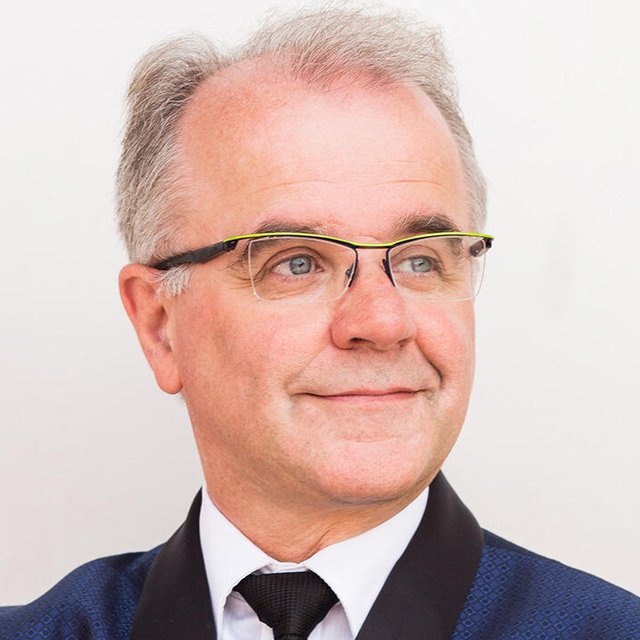
Christopher Bell
Chorus Director

Support The Festival
Grant Park Orchestra
* denotes leave-of-absence † one-year position
Jeremy Black, concertmaster
Jennifer Cappelli
Injoo Choi
Dima Dimitrova
Erica Hudson
Hyewon Kim
Matthew Lehmann
Jayna Park
Rika Seko
Karen Sinclair
Bonnie Terry
Trista Wong
Jonathan Yi
Krzysztof Zimowski
Liba Shacht, principal
Laura Miller, assistant principal
Ying Chai
Ran Cheng
Karl Davies
Likai He
Tiffany Kang
Ann Lehmann
Cristina Muresan
Kjersti Nostbakken
Irene Radetzky
Jeanine Wynton
Thomas Yang
Terri Van Valkinburgh, principal
Yoshihiko Nakano, assistant principal
Patrick Brennan*
Elizabeth Breslin
Beatrice Chen
Amy Hess
Christopher McKay†
Rebecca Swan
Chloé Thominet
Walter Haman, principal
Peter Szczepanek, assistant principal
Calum Cook
Larry Glazier
Steven Houser
Eric Kutz
Eran Meir
Linc Smelser*
Colin Corner, principal
Peter Hatch, assistant principal
Andrew Anderson
Alexander Horton
Christian Luevano†
Isaac Polinksy†
Timothy Shaffer*
Chunyang Wang
Chris White
Mary Stolper, principal
Jennifer Debiec Lawson, assistant principal
Jennifer Debiec Lawson
Alyce Johnson
Mitchell Kuhn, principal
Alex Liedtke
Anne Bach, assistant principal
Anne Bach
Dario Brignoli, principal
Trevor O’Riordan
Eric Hall, principal
Nicole Haywood, assistant principal
William Ramos
Jonathan Boen, principal
Stephanie Blaha, assistant principal*
Fritz Foss†
Samuel Hamzem†
Brett Hodge*
Neil Kimel
David Gordon, principal
Mike Brozick, acting assistant principal
Michael Brozick
William Denton
Daniel Cloutier, principal*
Jeremy Moeller, acting principal
Alexander Mullins
Andrew Smith, principal
Daniel Karas, principal
Josh Jones, principal
Joel Cohen, assistant principal
Doug Waddell
Kayo Ishimaru-Fleisher, principal
Christopher Guzman
Alba Layana Izurieta, Violin
Janani Sivakumar, Violin
Harper Randolph, Viola
Gabriel Hightower, Cello
Grant Park Chorus
* denotes leave-of-absence † one-year position
Taylor Adams
Summer Aebker
Kristina Bachrach
Madalynn Baez
Megan E. Bell
Alyssa Bennett
Anna Joy Buegel
Laura Bumgardner
Elisabeth Burmeister
Katherine Buzard
Bethany Clearfield
Nathalie Colas
Corinne Costell
Carolyne DalMonte
Rebecca Fitzpatrick
Megan Fletcher
Kaitlin Foley
Saira Frank
Katherine Gray-Noon
Kimberly Gunderson
Alexandra Ioan
Alexandra Kassouf
Darlene Kelsey
Olivia Knutsen
Marybeth Kurnat
Catherine Larson
Katelyn Lee
Rosalind Lee
Rena Maduro
Hannah Dixon McConnell
Marie McManama
Meganna Miller
Kathleen Monson
Emily Mwila
Susan Nelson
Evangeline Ng
Karen R. Nussbaum
Máire O’Brien
Laura Perkett
Molly Phelan
Angela Presutti Korbitz
Alexia Rivera
Veronica Samiec
Whitney Shurtliff
Emily Sinclair
Tiana Sorenson
Christine Steyer
Diana Stoic
Karlie Traversa
Sarah van der Ploeg
Lydia Walsh-Rock
Sherry Watkins
Tara Wheeker
Emily Lyday Yiannias
Christina Adams
Melissa Arning
Christina Bernardoni
Christine Boddicker
Bethany Brewer
Jean Broekhuizen
Anna De Ocampo Kain
Julie DeBoer
Leah Dexter
Katrina Dubbs
Stacy Eckert
Margaret Fox
Elizabeth Frey
Liana German
Catarine Hancock
Ruth Ginelle Heald
Nina Heebink
Miya Higashiyama
Carla Janzen
Amy Allyssa Johnson
Kathryn Kinjo Duncan
Amanda Koopman
Jeannette Lee
Hannah Little
Thereza Lituma
Chelsea Lyons
Victoria Marshall
Jessica McCarthy
Greta McNamee
Quinn Middleman
Sarah Ponder
Emily Price
Lauren Randolph
Grace Ryan
Stephanie Schoenhofer
Suzanne A. Shields
Emlynn Shoemaker
Cassidy Smith
Emma Sorenson
Aidan Spencer
Alannah Spencer
Carolyn Sundlof Boudreau
Gabrielle Timofeev López
Corinne Wallace-Crane
A.J. Wester
Debra Wilder
Pamela Williams
Avery Winick
Enrico Giuseppe Bellomo
Justin Berkowitz
Madison Bolt
Eric Botto
Hoss Brock
Steven Caldicott Wilson
Joseph Cloonan
Damon Cole
John J. Concepción
Matthew Cummings
Micah A. Dingler
Howard Eckdahl
Jared V. Esguerra
Andrew Fisher
Ryan Frenk
Ace Gangoso
Klaus Georg
Nikhil Harle
Jianghai Ho
Max Hosmer
Cameo T. Humes
Paul Hunter
Garrett Johannsen
William Johnson
James Judd
Tejas Kishan Gururaja
Tim Lambert
Tyler Lee
Mason Montuoro
Stephen D. Noon
Brett Potts
Nicholas Pulikowski
Brian Rasmussen
Patrick Reardon
Peder Reiff
Matthew W. Schlesinger
Silfredo Serrano
Joe Shadday
Aaron Short
Matthew Sink
Brian Skoog
Michael St. Peter
Ryan Townsend Strand
Brett Sweeney
Alan Taylor
Keven Washburn
Sean J. Watland
Walter Aldrich
Evan Bravos
Matthew Brennan
Tabes Bridges
Michael Cavalieri
Stephen Clark
David Corlew
Michael D. Costello
Philip Courington
Ryan J. Cox
Ed Frazier Davis
Wesley Diener
Chris DiMarco
Christopher Filipowicz
Gabriel Garcia
Dimitri German
Dominic German
David Govertsen
David Hartley
Matthew Hunt
Brian Hupp
Jan Jarvis
Jess Koehn
Zachary Mendenhall
Eric Miranda
Ron Mitchell
Ian Morris
Ian Murrell
Chiemerie Obianom
John E. Orduña
Wilbur Pauley
Douglas Peters
Jackson Pierzina
Anthony Pilcher
Martin Lowen Poock
Ian Prichard
Gabriel Reitemeier
Dan Richardson
Stephen Richardson
Benjamin D. Rivera
Joseph Ryan
Ivo Suarez
Avery Sujkowski
Scott Uddenberg
Vince Wallace
Nicholas Ward
Aaron Wardell
Ronald Watkins
Jonathon Weller
Peter Wesoloski
Max Wier
Jonathan Wilson
Chuck Foster
John Goodwin
Veronica Mak, soprano
Emily Amesquita, alto
Alexi Ortega Chavez, tenor
Lifan Deng, bass