Haydn London Symphony
Program
Clarice Assad Water Nymphs (world premiere)
Richard Strauss Suite from Der Rosenkavalier
Franz Joseph Haydn Symphony No. 104, London
Adagio – Allegro
Andante
Menuet: Allegro
Spiritoso
Featuring
Grant Park Orchestra
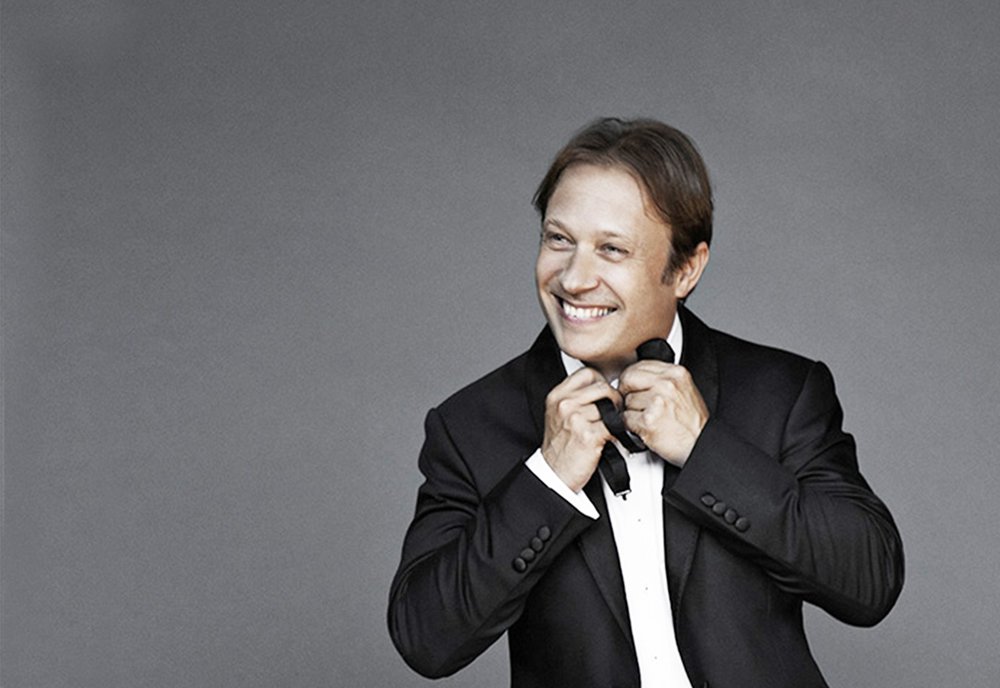
Ludovic Morlot, conductor
Program Notes
Clarice Assad
Water Nymphs (Festival Commission)
Scored for: two flutes, two oboes, two clarinets, two bassoons, four French horns, two trumpets, two trombones, tuba, timpani, percussion, harp, piano, and strings
Performance time: 5 minutes
World premiere performance
“Water Nymphs draws inspiration from the enchanting mythical beings, also known as naiads, that have captivated humanity for centuries. The piece is a musical journey that explores the beauty, mystery, and power of these feminine spirits. The music ebbs and flows—at times gentle and shimmering, at others powerful and tempestuous—mirroring the capricious nature of the water nymphs themselves. Ethereal moments are juxtaposed with passages of intense energy, reflecting the duality of these beings as both alluring and sometimes dangerous. Water Nymphs pays homage to the enduring significance of these mythical creatures and serves as a reminder of the importance of cherishing our precious freshwater resources.”
— Clarice Assad, composer
Richard Strauss (arr. unknown, 1945) (1864-1949)
Suite from Der Rosenkavalier, TrV 227, op.59 (1909)
Scored for: three flutes including piccolo, three oboes including English Horn, four clarinets including bass clarinet, three bassoons including contrabassoon, four French horns, three trumpets, three trombones, tuba, timpani, percussion, two harps, celesta, and strings
Performance time: 22 minutes
First Grant Park Orchestra performance: June 22, 1996; James Sedares, conductor
After mastering the late-Romantic orchestral tone poem in the 1880s, Richard Strauss dedicated much of his compositional energy in the twentieth century to opera. Establishing himself as a serious operatic composer with Salome (1905) and Elektra (1909), Strauss saw even greater success with Der Rosenkavalier. Composed in 1909–1910, Der Rosenkavalier eschews the dissonance of the previous two operas in favor of a mix of past musical styles. Just as the libretto by Hugo von Hofmannsthal intentionally references plays by Beaumarchais, Molière, Hogarth, and others (including notable parallels with Da Ponte’s Le Nozze di Figaro), Strauss’ score mixes elements of Mozart, Verdi, and Johann Strauss, Jr. Particularly, Strauss’ extensive use of the waltz grounds the opera in its Viennese setting and acts as a shorthand for the elegance of a bygone age. These historical references add another dimension to the opera, which itself is preoccupied with the passing of time and transformation.
In the opera, Octavian, a young nobleman (played by a mezzo-soprano to emphasize his youth), is having an affair with an older married woman, the Marschallin. Baron Ochs, the Marschallin’s cousin, wants to marry the ingenue, Sophie. The Marschallin suggests Octavian act as the go-between for the proposal by presenting Sophie with a silver rose on Ochs’ behalf. Of course, Octavian and Sophie immediately fall in love and conspire to get rid of Baron Ochs so they can be together. In the ultimate act of love, the Marschallin puts Octavian’s happiness above her own and lets him go so he can be with Sophie.
When Der Rosenkavalier premiered in Dresden in 1911, it was such a triumph that it saw over fifty performances in Dresden that year alone and soon made its way to theaters worldwide. Like any commercial success, the score was coopted for other purposes. That year, Strauss excerpted a waltz sequence from Act III for concert performance. Soon after, Otto Singer created a popular piano suite, which Strauss detested. Facing financial hardship due to the war, Strauss gave the New York Philharmonic his blessing to create a new suite from Der Rosenkavalier in 1944. Though the score bears no arranger’s name, it was likely the handiwork of Artur Rodziński, the conductor of the Philharmonic, perhaps with help from then-assistant conductor Leonard Bernstein.
Though the Suite from Der Rosenkavalier does not follow the opera chronologically, it opens in the same way, with the leaping motif in the horns and bassoons suggesting Octavian’s raging hormones and the writhing chromaticism giving way to release as the curtain rises on the couple in bed after a night of passion. This scene segues into the Presentation of the Rose in Act II, where we hear the leitmotif of the silver rose in the glistening chords of the flutes, harps, celesta, and solo violins. Turbulent music ensues as Ochs discovers Octavian’s deceit in pursuing Sophie behind his back, followed by a series of waltzes as Ochs tries to win over Sophie. After the introduction to Act II comes the transcendent trio and duet that close the opera. This glimpse of heaven gives way to joyful, boisterous music as Baron Ochs is chased offstage by his creditors.
Franz Joseph Haydn (1732-1809)
Symphony No.104 in D major London/Salomon (1795)
Scored for: two flutes, two oboes, two clarinets, two bassoons, two French horns, two trumpets, timpani, and strings
Performance time: 29 minutes
First Grant Park Orchestra performance: June 30, 1948; Nikolai Malko, conductor
When Prince Nikolaus Esterházy died and his heir, Anton, dissolved the court’s musical establishment in 1790, Franz Joseph Haydn found himself essentially a free agent, having worked as Kapellmeister of Prince Esterházy’s court for nearly thirty years. Johan Peter Salomon, a German-born violinist and concert producer based in London, invited Haydn to the city with the promise of numerous commissions for Salomon’s concert series. Haydn’s works were already immensely popular there, though he had not yet visited, much to Londoners’ dismay. In January 1785, The Gazetteer & New Daily Advertiser jokingly suggested that “some aspiring youths” kidnap Haydn from his post at Esterházy and bring him to the English capital.
Haydn arrived in England on New Year’s Day 1791, making the biggest splash in London’s vibrant music scene since Handel’s operas debuted there. Haydn’s secluded life at the Esterházy court could scarcely prepare him for the barrage of visitors and social invitations that greeted him. He wrote, “My arrival caused a great sensation . . . Everyone wants to know me.” He continued, “If I wanted, I could dine out every day; but first I must consider my health, and second my work. Except for the nobility, I admit no callers until 2 o’clock.” After two exciting and prosperous seasons, Haydn returned to Vienna to fulfill his remaining obligations to Prince Anton. He returned to London for another two seasons in 1794, during which point he wrote the last six of his twelve “London” symphonies.
The last of these—and Haydn’s final offering in the genre—was Symphony No. 104. Nicknamed the “London” Symphony, it premiered at the King’s Theatre on May 4, 1795, in a farewell benefit concert for the composer. Whether he knew this would be his last symphony, Symphony No. 104 nonetheless has an air of finality. Haydn even wrote at the bottom of the manuscript, “Fine Laus Deo,” or “The End, Praise God.” The grandest of his symphonies in terms of orchestration and proportion, it is an apt pinnacle of achievement for the man deemed the “Father of the Symphony.” The work begins with a stentorian declamation in unison. This dotted motif outlining the interval of the fifth (D–A) suffuses the whole movement. After this bold statement and mournful Adagio comes a joyful Allegro, presenting a surprising contrast in mood (a Haydn specialty). The Andante reverses the framework of the first movement, beginning with a graceful G-major melody in the first violins, followed by an explosion of fury in full orchestra. Next, a cheeky Menuetto and Trio show Haydn at his most playful. Finally, the nickname “London” Symphony comes not from the city of its composition but the main theme of the finale, which audiences misidentified as the London street cry “Live cod!” or “Hot Cross Buns.” In reality, the tune, set over a rustic drone in the horns, is a Croatian ballad called “Oj Jelena,” which Haydn heard while in Eisenstadt serving the Esterházy court.
Program Notes by Katherine Buzard
Event Sponsor
Tonight’s concert is being broadcast and streamed live on 98.7 WFMT/wfmt.com
Artistic Leadership

Support The Festival
Grant Park Orchestra
* denotes leave-of-absence † one-year position
Jeremy Black, concertmaster
Jennifer Cappelli
Injoo Choi
Dima Dimitrova
Erica Hudson
Hyewon Kim
Matthew Lehmann
Jayna Park
Rika Seko
Karen Sinclair
Bonnie Terry
Trista Wong
Jonathan Yi
Krzysztof Zimowski
Liba Shacht, principal
Laura Miller, assistant principal
Ying Chai
Ran Cheng
Karl Davies
Likai He
Tiffany Kang
Ann Lehmann
Cristina Muresan
Kjersti Nostbakken
Irene Radetzky
Jeanine Wynton
Thomas Yang
Terri Van Valkinburgh, principal
Yoshihiko Nakano, assistant principal
Patrick Brennan*
Elizabeth Breslin
Beatrice Chen
Amy Hess
Christopher McKay†
Rebecca Swan
Chloé Thominet
Walter Haman, principal
Peter Szczepanek, assistant principal
Calum Cook
Larry Glazier
Steven Houser
Eric Kutz
Eran Meir
Linc Smelser*
Colin Corner, principal
Peter Hatch, assistant principal
Andrew Anderson
Alexander Horton
Christian Luevano†
Isaac Polinksy†
Timothy Shaffer*
Chunyang Wang
Chris White
Mary Stolper, principal
Jennifer Debiec Lawson, assistant principal
Jennifer Debiec Lawson
Alyce Johnson
Mitchell Kuhn, principal
Alex Liedtke
Anne Bach, assistant principal
Anne Bach
Dario Brignoli, principal
Trevor O’Riordan
Eric Hall, principal
Nicole Haywood, assistant principal
William Ramos
Jonathan Boen, principal
Stephanie Blaha, assistant principal*
Fritz Foss†
Samuel Hamzem†
Brett Hodge*
Neil Kimel
David Gordon, principal
Mike Brozick, acting assistant principal
Michael Brozick
William Denton
Daniel Cloutier, principal*
Jeremy Moeller, acting principal
Alexander Mullins
Andrew Smith, principal
Daniel Karas, principal
Josh Jones, principal
Joel Cohen, assistant principal
Doug Waddell
Kayo Ishimaru-Fleisher, principal
Christopher Guzman
Alba Layana Izurieta, Violin
Janani Sivakumar, Violin
Harper Randolph, Viola
Gabriel Hightower, Cello
Grant Park Chorus
* denotes leave-of-absence † one-year position
Taylor Adams
Summer Aebker
Kristina Bachrach
Madalynn Baez
Megan E. Bell
Alyssa Bennett
Anna Joy Buegel
Laura Bumgardner
Elisabeth Burmeister
Katherine Buzard
Bethany Clearfield
Nathalie Colas
Corinne Costell
Carolyne DalMonte
Rebecca Fitzpatrick
Megan Fletcher
Kaitlin Foley
Saira Frank
Katherine Gray-Noon
Kimberly Gunderson
Alexandra Ioan
Alexandra Kassouf
Darlene Kelsey
Olivia Knutsen
Marybeth Kurnat
Catherine Larson
Katelyn Lee
Rosalind Lee
Rena Maduro
Hannah Dixon McConnell
Marie McManama
Meganna Miller
Kathleen Monson
Emily Mwila
Susan Nelson
Evangeline Ng
Karen R. Nussbaum
Máire O’Brien
Laura Perkett
Molly Phelan
Angela Presutti Korbitz
Alexia Rivera
Veronica Samiec
Whitney Shurtliff
Emily Sinclair
Tiana Sorenson
Christine Steyer
Diana Stoic
Karlie Traversa
Sarah van der Ploeg
Lydia Walsh-Rock
Sherry Watkins
Tara Wheeker
Emily Lyday Yiannias
Christina Adams
Melissa Arning
Christina Bernardoni
Christine Boddicker
Bethany Brewer
Jean Broekhuizen
Anna De Ocampo Kain
Julie DeBoer
Leah Dexter
Katrina Dubbs
Stacy Eckert
Margaret Fox
Elizabeth Frey
Liana German
Catarine Hancock
Ruth Ginelle Heald
Nina Heebink
Miya Higashiyama
Carla Janzen
Amy Allyssa Johnson
Kathryn Kinjo Duncan
Amanda Koopman
Jeannette Lee
Hannah Little
Thereza Lituma
Chelsea Lyons
Victoria Marshall
Jessica McCarthy
Greta McNamee
Quinn Middleman
Sarah Ponder
Emily Price
Lauren Randolph
Grace Ryan
Stephanie Schoenhofer
Suzanne A. Shields
Emlynn Shoemaker
Cassidy Smith
Emma Sorenson
Aidan Spencer
Alannah Spencer
Carolyn Sundlof Boudreau
Gabrielle Timofeev López
Corinne Wallace-Crane
A.J. Wester
Debra Wilder
Pamela Williams
Avery Winick
Enrico Giuseppe Bellomo
Justin Berkowitz
Madison Bolt
Eric Botto
Hoss Brock
Steven Caldicott Wilson
Joseph Cloonan
Damon Cole
John J. Concepción
Matthew Cummings
Micah A. Dingler
Howard Eckdahl
Jared V. Esguerra
Andrew Fisher
Ryan Frenk
Ace Gangoso
Klaus Georg
Nikhil Harle
Jianghai Ho
Max Hosmer
Cameo T. Humes
Paul Hunter
Garrett Johannsen
William Johnson
James Judd
Tejas Kishan Gururaja
Tim Lambert
Tyler Lee
Mason Montuoro
Stephen D. Noon
Brett Potts
Nicholas Pulikowski
Brian Rasmussen
Patrick Reardon
Peder Reiff
Matthew W. Schlesinger
Silfredo Serrano
Joe Shadday
Aaron Short
Matthew Sink
Brian Skoog
Michael St. Peter
Ryan Townsend Strand
Brett Sweeney
Alan Taylor
Keven Washburn
Sean J. Watland
Walter Aldrich
Evan Bravos
Matthew Brennan
Tabes Bridges
Michael Cavalieri
Stephen Clark
David Corlew
Michael D. Costello
Philip Courington
Ryan J. Cox
Ed Frazier Davis
Wesley Diener
Chris DiMarco
Christopher Filipowicz
Gabriel Garcia
Dimitri German
Dominic German
David Govertsen
David Hartley
Matthew Hunt
Brian Hupp
Jan Jarvis
Jess Koehn
Zachary Mendenhall
Eric Miranda
Ron Mitchell
Ian Morris
Ian Murrell
Chiemerie Obianom
John E. Orduña
Wilbur Pauley
Douglas Peters
Jackson Pierzina
Anthony Pilcher
Martin Lowen Poock
Ian Prichard
Gabriel Reitemeier
Dan Richardson
Stephen Richardson
Benjamin D. Rivera
Joseph Ryan
Ivo Suarez
Avery Sujkowski
Scott Uddenberg
Vince Wallace
Nicholas Ward
Aaron Wardell
Ronald Watkins
Jonathon Weller
Peter Wesoloski
Max Wier
Jonathan Wilson
Chuck Foster
John Goodwin
Veronica Mak, soprano
Emily Amesquita, alto
Alexi Ortega Chavez, tenor
Lifan Deng, bass