Mahler Symphony No. 8
Program
GUSTAV MAHLER Symphony No. 8, Symphony of a Thousand
Part I: Hymn, Veni, creator spirtus
Part II: Final Scene from Goethe’s Faust
Featuring
Grant Park Orchestra
Grant Park Chorus
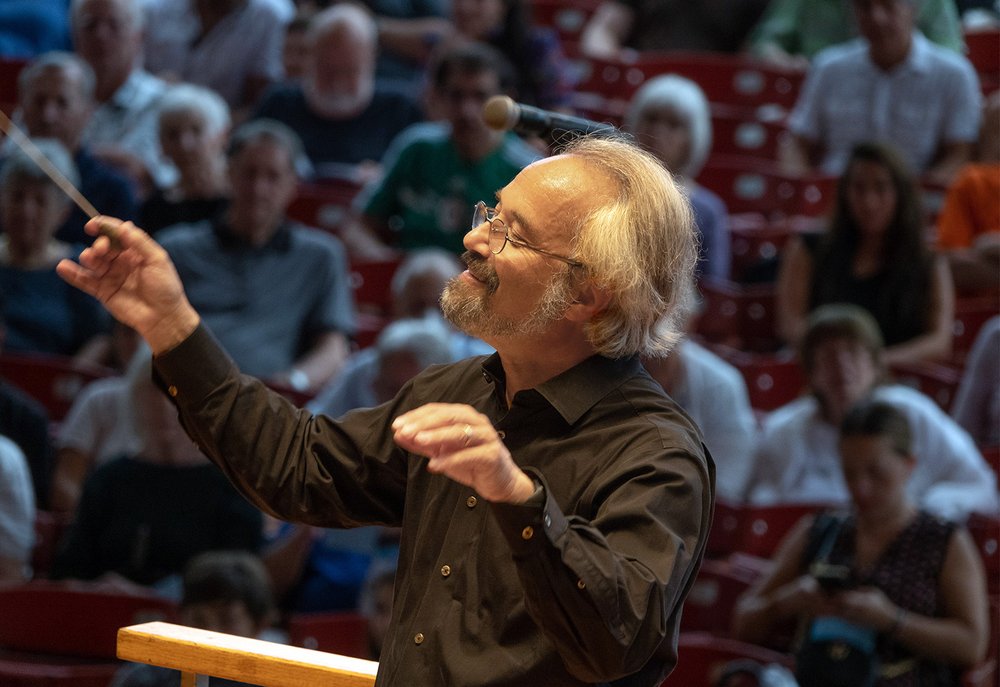
Carlos Kalmar, conductor
Christopher Bell, chorus director
Maeve Höglund, soprano
Jane Archibald, soprano
Gemma Nha, soprano
Kayleigh Decker, mezzo-soprano
Susan Platts, mezzo-soprano
John Matthew Meyers, tenor
Rod Gilfry, baritone
Kevin Short, bass-baritone
Gumpoldskirchner Spatzen Children’s Choir
Katja Kalmar, choir director
Program Notes
Gustav Mahler (1860-1911)
Symphony No.8 in E-flat major (Symphony of a Thousand) (1906)
Scored for: six flutes including piccolo, five oboes including English Horn, six clarinets including bass clarinet, five bassoons including contrabassoon, eight French horns, eight trumpets, seven trombones, tuba, timpani, percussion, two harps, strings, children’s chorus, chorus, three solo sopranos, two solo mezzo-sopranos, solo tenor, solo baritone, and solo bass
Performance time: 79 minutes
First Grant Park Orchestra performance
While tonight’s concert may not have 1,000 performers, the premiere of Gustav Mahler’s Eighth Symphony, the so-called “Symphony of a Thousand,” certainly did. The premiere in Munich on September 12, 1910, boasted 850 choristers (including 350 children), 171 instrumentalists, and eight vocal soloists, for a total of 1,030 performers, if you include Mahler on the podium. Understandably, the magnitude and complexity of the high-profile event unnerved Mahler—so much so that he almost pulled out of what he predicted would be a “catastrophic Barnum-and-Bailey performance.” Mahler also disapproved of the sobriquet “Symphony of a Thousand” that impresario Emil Gutmann devised as a marketing ploy. Nevertheless, Gutmann’s tactic worked. The packed audience of over 3,000 not only included the Bavarian royal family and other dignitaries but also such cultural luminaries as composers Richard Strauss, Anton Webern, and Camille Saint-Saëns and writer Thomas Mann. The audience roared with applause, cheers, and foot-stomping during the 30-minute ovation. The successful premiere marked the pinnacle of Mahler’s career and solidified him as a composer of consequence.
During his life, Mahler was better known as a conductor than a composer, earning most of his income on the podium. Amid his busy schedule at the Vienna Court Opera, he could only devote his summers to composition, secluding himself in the Austrian countryside to write without distractions. However, the summer of 1906 presented Mahler with a case of writer’s block. His wife, Alma Mahler, described what happened: “After we arrived at Maiernigg . . . he was haunted by the specter of failing inspiration. Then one morning, just as he crossed the threshold of his studio up in the wood, it came to him—‘Veni Creator Spiritus.’” Mahler later recalled that once the idea for the symphony finally hit him, it came all at once and fully formed—he simply had to write it down as if it were being dictated to him. He composed the majority of the epic symphony in just eight weeks, completing it the following year.
Though this apocryphal story likely over-romanticizes how Mahler’s Eighth Symphony came to be, it is fitting given the text of the first section of the symphony, “Veni Creator Spiritus.” The ninth-century Latin hymn is traditionally sung during the Feast of Pentecost, which commemorates the Holy Spirit’s descent upon the Virgin Mary and the Apostles. It is also commonly sung at coronations, ordinations, and consecrations of bishops and popes. Aptly, the hymn asks the Holy Spirit for inspiration, grace, and strength. Although Mahler does not use the traditional Gregorian chant as the melodic basis for his symphony, he does turn to musical forms of the past, harnessing the dense polyphonic style of Bach within the scope of Classical sonata form.
After a resounding E-flat-major organ chord, the chorus declaims the opening text in fervent homophony. The opening section sees the two choruses engaged in dense contrapuntal dialogue. At “Imple superna gratia” (“Fill them with heavenly grace”), most of the orchestra melts away, and the soloists slowly emerge, passing the lyrical second theme fluidly between them in a more intimate expression of the opening plea. While using singers in symphonies was nothing new (Beethoven’s Ninth was nearly a century old at this point), Mahler stressed that this work was a symphony for voices, not merely with voices. As such, he treats the voices as instruments, using them to develop melodic material symphonically instead of just to set a mood or express a specific idea in words. Mahler set out to write “a ‘pure’ symphony in which the most beautiful instrument in the world is given its true place—and not simply as one sonority among others, for in my symphony the human voice is after all the bearer of the whole poetic idea.”
Despite the intensity of Part I, it is only an introduction to the main affair. The second part proceeds in a very different manner from the first. Here, Mahler sets the final scene of Goethe’s epic drama-in-verse Faust, Part II (published in 1832), which depicts Faust’s divine redemption after death despite his earthly failings. Now, Mahler was the king of unexpected juxtapositions, often blending the tragic and the frivolous in his symphonies. However, the disparity between the two texts and between Mahler’s musical treatment of the two parts is on another level. Perhaps conscious of the seemingly random assemblage of source material, Mahler underscores their ideological unity through thematic recollection. For instance, the first notes of Part II—the falling interval first heard in the cellos and basses—mirror the initial “Veni” subject. The following ascending phrase then recalls the “Accende lumen sensibus” theme of Part I and can be heard in different guises throughout the symphony, as Mahler considered this phrase the crux of the hymn. Mahler musically highlights similar themes in the text as well. For instance, the melody associated with “Infirma nostri corporis” (“Our feeble flesh”) comes back in Part II when the More Perfect Angels discuss how humanity’s suffering pains them.
Whereas Part I is highly compressed, Part II is more expansive and freeform, traversing multiple musical genres, from solo songs and recitatives to strophic hymns and chorales. An extended orchestral prelude sets the eerie scene among rocky ravines and forests. A group of hermits (Pater Ecstaticus, Pater Profundus, and Doctor Marianus), throngs of angels of different orders, and three penitent women each offer their unique reflections and prayers. The angels soar above carrying Faust’s “immortal essence” after rescuing it from Mephistopheles’ clutches. Gretchen, Faust’s spurned lover, appears as another penitent woman, Una Poenitentium. Though Faust betrayed her in life, she welcomes him into heaven with open arms and prays to the Mater Gloriosa for his salvation. By linking “Veni Creator” with this scene, Mahler makes the philosophical connection between the early Christian expression of the grace of the Holy Spirit and Goethe’s vision of the redemptive power of love and love’s ability to lead us toward the divine. Despite the disparity in language, cultural context, and intended use of these two texts, Mahler makes a convincing musical case for their pairing through his daring and often poignant symphony.
Program Notes by Katherine Buzard
Event Sponsors
This program is generously supported as part of the Dehmlow Choral Music Series graciously sponsored by the Sage Foundation.
Organ provided by Triune Music/S.B. Smith & Associates.
Tonight’s concert is being broadcast and streamed live on 98.7WFMT and wfmt.com
Artistic Leadership
-
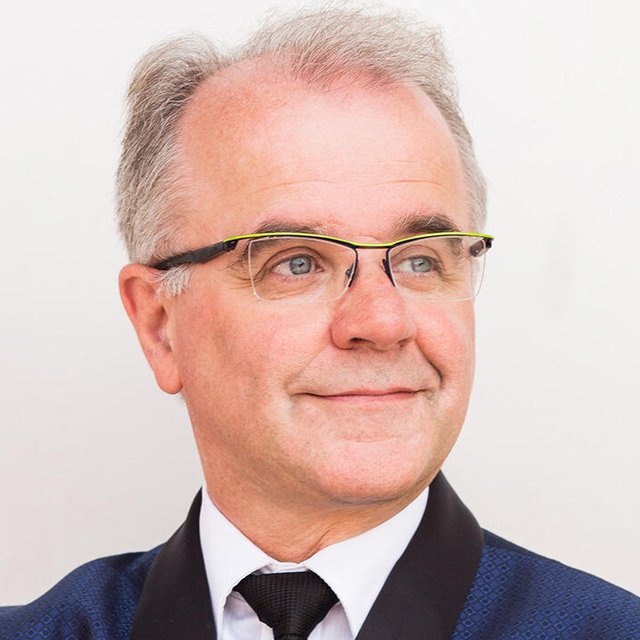
Christopher Bell
Chorus Director

Support The Festival
Grant Park Orchestra
* denotes leave-of-absence † one-year position
Jeremy Black, concertmaster
Jennifer Cappelli
Injoo Choi
Dima Dimitrova
Erica Hudson
Hyewon Kim
Matthew Lehmann
Jayna Park
Rika Seko
Karen Sinclair
Bonnie Terry
Trista Wong
Jonathan Yi
Krzysztof Zimowski
Liba Shacht, principal
Laura Miller, assistant principal
Ying Chai
Ran Cheng
Karl Davies
Likai He
Tiffany Kang
Ann Lehmann
Cristina Muresan
Kjersti Nostbakken
Irene Radetzky
Jeanine Wynton
Thomas Yang
Terri Van Valkinburgh, principal
Yoshihiko Nakano, assistant principal
Patrick Brennan*
Elizabeth Breslin
Beatrice Chen
Amy Hess
Christopher McKay†
Rebecca Swan
Chloé Thominet
Walter Haman, principal
Peter Szczepanek, assistant principal
Calum Cook
Larry Glazier
Steven Houser
Eric Kutz
Eran Meir
Linc Smelser*
Colin Corner, principal
Peter Hatch, assistant principal
Andrew Anderson
Alexander Horton
Christian Luevano†
Isaac Polinksy†
Timothy Shaffer*
Chunyang Wang
Chris White
Mary Stolper, principal
Jennifer Debiec Lawson, assistant principal
Jennifer Debiec Lawson
Alyce Johnson
Mitchell Kuhn, principal
Alex Liedtke
Anne Bach, assistant principal
Anne Bach
Dario Brignoli, principal
Trevor O’Riordan
Eric Hall, principal
Nicole Haywood, assistant principal
William Ramos
Jonathan Boen, principal
Stephanie Blaha, assistant principal*
Fritz Foss†
Samuel Hamzem†
Brett Hodge*
Neil Kimel
David Gordon, principal
Mike Brozick, acting assistant principal
Michael Brozick
William Denton
Daniel Cloutier, principal*
Jeremy Moeller, acting principal
Alexander Mullins
Andrew Smith, principal
Daniel Karas, principal
Josh Jones, principal
Joel Cohen, assistant principal
Doug Waddell
Kayo Ishimaru-Fleisher, principal
Christopher Guzman
Alba Layana Izurieta, Violin
Janani Sivakumar, Violin
Harper Randolph, Viola
Gabriel Hightower, Cello
Grant Park Chorus
* denotes leave-of-absence † one-year position
Taylor Adams
Summer Aebker
Kristina Bachrach
Madalynn Baez
Megan E. Bell
Alyssa Bennett
Anna Joy Buegel
Laura Bumgardner
Elisabeth Burmeister
Katherine Buzard
Bethany Clearfield
Nathalie Colas
Corinne Costell
Carolyne DalMonte
Rebecca Fitzpatrick
Megan Fletcher
Kaitlin Foley
Saira Frank
Katherine Gray-Noon
Kimberly Gunderson
Alexandra Ioan
Alexandra Kassouf
Darlene Kelsey
Olivia Knutsen
Marybeth Kurnat
Catherine Larson
Katelyn Lee
Rosalind Lee
Rena Maduro
Hannah Dixon McConnell
Marie McManama
Meganna Miller
Kathleen Monson
Emily Mwila
Susan Nelson
Evangeline Ng
Karen R. Nussbaum
Máire O’Brien
Laura Perkett
Molly Phelan
Angela Presutti Korbitz
Alexia Rivera
Veronica Samiec
Whitney Shurtliff
Emily Sinclair
Tiana Sorenson
Christine Steyer
Diana Stoic
Karlie Traversa
Sarah van der Ploeg
Lydia Walsh-Rock
Sherry Watkins
Tara Wheeker
Emily Lyday Yiannias
Christina Adams
Melissa Arning
Christina Bernardoni
Christine Boddicker
Bethany Brewer
Jean Broekhuizen
Anna De Ocampo Kain
Julie DeBoer
Leah Dexter
Katrina Dubbs
Stacy Eckert
Margaret Fox
Elizabeth Frey
Liana German
Catarine Hancock
Ruth Ginelle Heald
Nina Heebink
Miya Higashiyama
Carla Janzen
Amy Allyssa Johnson
Kathryn Kinjo Duncan
Amanda Koopman
Jeannette Lee
Hannah Little
Thereza Lituma
Chelsea Lyons
Victoria Marshall
Jessica McCarthy
Greta McNamee
Quinn Middleman
Sarah Ponder
Emily Price
Lauren Randolph
Grace Ryan
Stephanie Schoenhofer
Suzanne A. Shields
Emlynn Shoemaker
Cassidy Smith
Emma Sorenson
Aidan Spencer
Alannah Spencer
Carolyn Sundlof Boudreau
Gabrielle Timofeev López
Corinne Wallace-Crane
A.J. Wester
Debra Wilder
Pamela Williams
Avery Winick
Enrico Giuseppe Bellomo
Justin Berkowitz
Madison Bolt
Eric Botto
Hoss Brock
Steven Caldicott Wilson
Joseph Cloonan
Damon Cole
John J. Concepción
Matthew Cummings
Micah A. Dingler
Howard Eckdahl
Jared V. Esguerra
Andrew Fisher
Ryan Frenk
Ace Gangoso
Klaus Georg
Nikhil Harle
Jianghai Ho
Max Hosmer
Cameo T. Humes
Paul Hunter
Garrett Johannsen
William Johnson
James Judd
Tejas Kishan Gururaja
Tim Lambert
Tyler Lee
Mason Montuoro
Stephen D. Noon
Brett Potts
Nicholas Pulikowski
Brian Rasmussen
Patrick Reardon
Peder Reiff
Matthew W. Schlesinger
Silfredo Serrano
Joe Shadday
Aaron Short
Matthew Sink
Brian Skoog
Michael St. Peter
Ryan Townsend Strand
Brett Sweeney
Alan Taylor
Keven Washburn
Sean J. Watland
Walter Aldrich
Evan Bravos
Matthew Brennan
Tabes Bridges
Michael Cavalieri
Stephen Clark
David Corlew
Michael D. Costello
Philip Courington
Ryan J. Cox
Ed Frazier Davis
Wesley Diener
Chris DiMarco
Christopher Filipowicz
Gabriel Garcia
Dimitri German
Dominic German
David Govertsen
David Hartley
Matthew Hunt
Brian Hupp
Jan Jarvis
Jess Koehn
Zachary Mendenhall
Eric Miranda
Ron Mitchell
Ian Morris
Ian Murrell
Chiemerie Obianom
John E. Orduña
Wilbur Pauley
Douglas Peters
Jackson Pierzina
Anthony Pilcher
Martin Lowen Poock
Ian Prichard
Gabriel Reitemeier
Dan Richardson
Stephen Richardson
Benjamin D. Rivera
Joseph Ryan
Ivo Suarez
Avery Sujkowski
Scott Uddenberg
Vince Wallace
Nicholas Ward
Aaron Wardell
Ronald Watkins
Jonathon Weller
Peter Wesoloski
Max Wier
Jonathan Wilson
Chuck Foster
John Goodwin
Veronica Mak, soprano
Emily Amesquita, alto
Alexi Ortega Chavez, tenor
Lifan Deng, bass