Rachmaninov Rhapsody on a Theme of Paganini
Program
MAURICE RAVEL Le tombeau de Couperin
Prélude
Forlane
Menuet
Rigaudon
SERGEI RACHMANINOV Rhapsody on a Theme of Paganini, op. 43
PAUL HINDEMITH Symphonic Metamorphosis on Themes of Carl Maria von Weber
Allegro
Turandot: Scherzo
Andantino
March
Featuring
Grant Park Orchestra
Eric Jacobsen, conductor
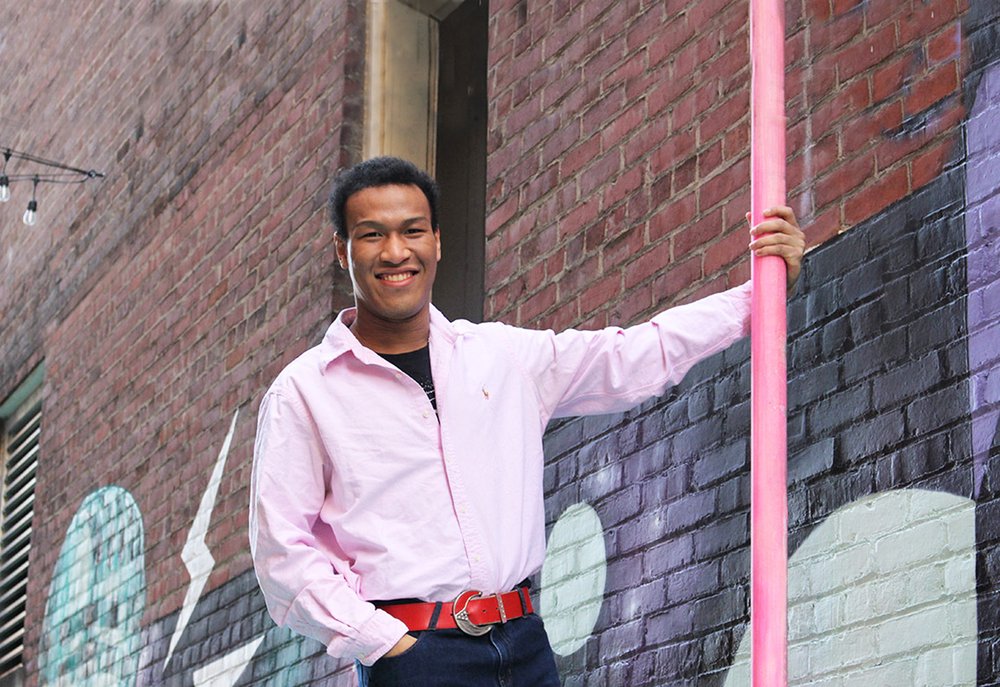
Clayton Stephenson, piano
Program Notes
Maurice Ravel (Originally for piano; orchestrated by the composer, 1919) (1875-1937)
Le Tombeau de Couperin (1914)
Scored for: two flutes including piccolo, two oboes including English Horn, two clarinets, two bassoons, two French horns, one trumpet, harp, and strings
Performance time: 17 minutes
First Grant Park Orchestra performance: August 10, 1977; John Nelson, conductor
As a young man, Maurice Ravel had been exempted from conscription in the army given his small stature. (He was reportedly five-foot-three and just over a hundred pounds.) Nevertheless, when war broke out in 1914, the 40-year-old composer was determined to serve. He applied numerous times to become a pilot but was rejected over his age and a newly diagnosed heart condition. His friend and colleague Igor Stravinsky said, “At his age and with his name he could have had an easier place, or done nothing.” But Ravel persisted, the war having sapped him of his creative energies. He eventually headed to the front lines in March 1916, serving as a truck driver in the Army Motor Transport Corps. This dangerous job required transporting munitions and fuel under heavy German bombardment. In September 1916, he contracted dysentery and was sent to a hospital in Paris to recover. While still recuperating in the hospital that winter, Ravel learned that his mother had died. The news sent him into a downward spiral, and after a brief return to his military post, he was eventually discharged following a mental breakdown. He waited out the remainder of the conflict in a village in Normandy, where he returned to compositions he had set aside during the war.
One of these compositions was a piano suite based on baroque dance forms. Initially titled Suite française, the piece was inspired by the composer and keyboard virtuoso François Couperin (1668–1733). Ravel takes Couperin as a stylistic touchpoint, fusing his own contemporary harmonic language with the rhythms, cadences, and ornamentation of Couperin’s time. But what began as a celebration of French musical history became a commemoration of those who had died in the war. Retitling the work Le Tombeau de Couperin (“Memorial for Couperin”), Ravel dedicated each movement to a friend who had perished in the conflict. That said, the work is surprisingly upbeat for a memorial, which Ravel explained by saying, “The dead are sad enough, in their eternal silence.”
The six-movement piano suite premiered in 1919. That same year, Ravel turned it into an orchestral suite, removing two movements and reordering the remaining four. In the “Prélude,” the swirling opening motif evokes the perpetual motion of Couperin’s harpsichord music. Here, Ravel demonstrates his mastery of colorful and clear orchestration, passing the melody between different combinations of wind instruments before building up layers of sound with the strings. “Forlane,” a Venetian folk dance that gained popularity in the courts of eighteenth-century France, skips along coyly, and the introspective “Menuet” nods to Couperin in the oboe’s graceful ornamentation. The contrasting middle section recalls a somber musette, a rustic dance traditionally accompanied by the drone of a bagpipe. Like “Menuet,” the otherwise playful “Rigaudon” features a dark yet pastoral middle section. “Rigaudon” is dedicated to Ravel’s childhood friends Pierre and Pascal Gaudin, two brothers who were killed by the same shell on their first day at the front.
Sergei Rachmaninov (1873-1943)
Rhapsody on a Theme of Paganini, op.43 (1934)
Scored for: three flutes including piccolo, three oboes including English Horn, two clarinets, two bassoons, four French horns, two trumpets, three trombones, tuba, timpani, percussion, harp, strings, and solo piano
Performance time: 22 minutes
First Grant Park Orchestra performance: August 1, 1958; Milton Katims, conductor and Agustin Anievas, piano
Niccolò Paganini’s Caprice No. 24 contains one of the most recognizable themes in all classical music, having inspired countless variations by composers such as Schumann, Liszt, and Brahms. In Rhapsody on a Theme of Paganini, Sergei Rachmaninov’s (1873–1943) ingenuity reaches a whole other level. For instance, by simply turning Paganini’s famous theme upside down, he crafts a melody that would become instantly recognizable and beloved in its own right. Appearing in Variation 18, this rapturous theme recalls Rachmaninov’s expansive pre-war lyricism. Noting its populist appeal, the composer quipped, “This one is for my agent.”
Paganini wrote his set of 24 Caprices for Solo Violin in 1805. Each Caprice demonstrates a different technical skill he had cultivated as the foremost violin virtuoso of his day. As a set, they revolutionized people’s ideas of what the violin was capable of. In fact, Paganini was so wickedly talented that rumors circulated that he had sold his soul to the devil, earning him the moniker “The Devil’s Violinist.” Just as Paganini’s 24 Caprices challenge the violinist, Rhapsody on a Theme of Paganini puts the pianist through their paces in a rapid-fire set of variations on the final Caprice. “Rhapsody” is a bit of a misnomer, suggesting lengthy exposition. After receiving scathing criticisms for the length of his Fourth Piano Concerto in 1927, Rachmaninov began tightening up his compositions. In Rhapsody on a Theme of Paganini, composed in 1934, most of the twenty-four variations are under one minute, and some are as brief as twenty seconds. In addition to rejecting the sprawling forms he had used pre-war, his late style employs more dissonance and sharper rhythms.
In what is likely a reference to the finale of Beethoven’s Eroica Symphony, Rachmaninov opens the Rhapsody not with a statement of the titular theme but with a variation on it. Then, when he finally states the theme, he gives it to the violin section, not the piano soloist, who instead plays skeletal single notes. Rachmaninov introduces a secondary theme in Variation 7—the “Dies irae” (“Day of Wrath”) chant from the Latin Requiem Mass—played in slow chords in the piano under a plaintive rendition of Paganini’s theme in the bassoon. A particular favorite of Rachmaninov’s, the medieval chant has crept into countless works of classical music as a harbinger of death. Perhaps this quotation is a nod to Paganini’s “devilish” reputation. The “Dies irae” infiltrates the rest of the work, recurring in Variations 10 and 12 and in the finale in stentorian brass.
Though Rachmaninov composed Rhapsody on a Theme of Paganini at his summer home in Switzerland, his time spent in New York City is evident in the grittier variations. When Rachmaninov and his family settled in New York in 1918, the hustle and bustle of the city began to infiltrate his musical language; you can almost hear the car horns in variation 9. What’s more, Rachmaninov was known to hit up clubs in Harlem to hear jazz legends such as Art Tatum and Fats Waller. In awe of Tatum’s technical facility, Rachmaninov said, “If this man decided to play classical music, we’re all in trouble.” You can hear the jazz pianist’s fleet-fingered technique in the swirling sixteenth notes of Variation 15.
Paul Hindemith (1895-1963)
Symphonic Metamorphosis of Themes by Carl Maria von Weber (1943)
Scored for: three flutes including piccolo, three oboes including English Horn, three clarinets including bass clarinet, three bassoons including contrabassoon, four French horns, two trumpets, three trombones, tuba, timpani, percussion, and strings
Performance time: 21 minutes
First Grant Park Orchestra performance: July 15, 1960; Theodore Bloomfield, conductor
German composer Paul Hindemith took a more literal approach to his inspiration for Symphonic Metamorphosis on Themes after Carl Maria von Weber than Maurice Ravel did for Le Tombeau de Couperin. Whereas Ravel nods obliquely to the style of the French baroque composer, Hindemith takes themes almost exactly as Weber wrote them, along with much of the surrounding formal structure. In a way, the title is a misnomer in that the piece draws on whole works by Weber, not just themes. Yet, Symphonic Metamorphosis sounds nothing like Weber. Hindemith alters almost everything around the borrowed material, inserting different harmonies and countermelodies and extending phrases.
Despite his short life, Carl Maria von Weber (1786–1826) was a seminal figure in the Romantic era, particularly in the development of German opera. Though his works are not performed so much these days, he inspired generations of German composers, Hindemith included. In 1940, choreographer Léonide Massine suggested Hindemith write a ballet for his dance company based on themes by Weber. Though they ultimately abandoned the project over artistic differences, Hindemith resurrected the score in 1943, turning it into an orchestral suite in four movements.
The opening Allegro is full of militaristic bombast. Yet, its bravado feels off-kilter, with multiple gear shifts and a blithe oboe solo in the contrasting middle section. The movement draws on Weber’s Eight Pieces for Piano Four Hands, Op. 60, No. 4. The following Scherzo is based on the incidental music to Friedrich Schiller’s play Turandot (the very same play Puccini’s opera is based on). To evoke the ancient Chinese setting, Weber took a supposedly authentic Chinese melody from Jean-Jacques Rousseau’s 1767 Dictionaire de Musique. Hindemith alters the theme significantly with chromatic inflections and syncopation, but he uses it incessantly, as Weber does in his incidental music. The effect is like a round, with the theme passing between different instruments and the texture building with each repetition. After the brass take up the theme as a jazzy fugue subject, a bevy of percussion instruments close out the movement, ultimately fading to nothing. The Andantino is relatively straightforward in comparison. The main theme comes from Weber’s Six Pieces for Two Pianos, Op. 10a, No. 2, while the flute solo that flits above the warm string sonorities is entirely Hindemith’s creation. Taking its Weberian material again from the Op. 60 piano duets, the final March is a bold fanfare that recalls the energy of the Allegro. Full of drama, the finale ends with a cinematic finish that just begs for a rousing ovation.
Program Notes by Katherine Buzard
Artistic Leadership
-
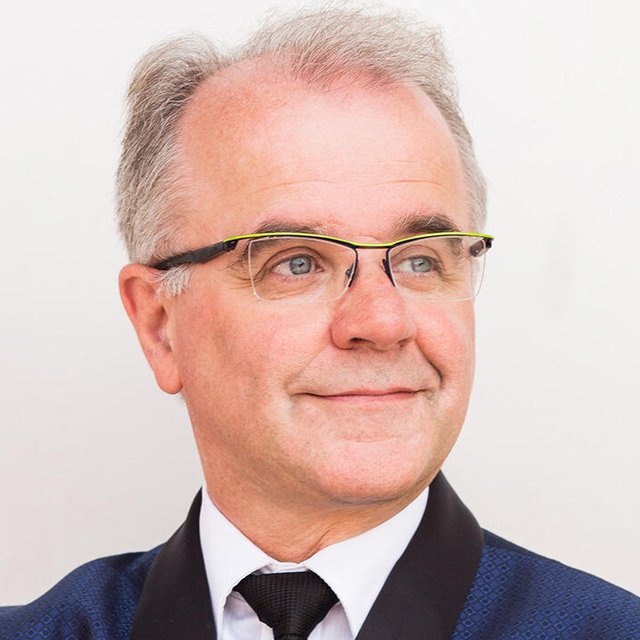
Christopher Bell
Chorus Director

Support The Festival
Grant Park Orchestra
* denotes leave-of-absence † one-year position
Jeremy Black, concertmaster
Jennifer Cappelli
Injoo Choi
Dima Dimitrova
Erica Hudson
Hyewon Kim
Matthew Lehmann
Jayna Park
Rika Seko
Karen Sinclair
Bonnie Terry
Trista Wong
Jonathan Yi
Krzysztof Zimowski
Liba Shacht, principal
Laura Miller, assistant principal
Ying Chai
Ran Cheng
Karl Davies
Likai He
Tiffany Kang
Ann Lehmann
Cristina Muresan
Kjersti Nostbakken
Irene Radetzky
Jeanine Wynton
Thomas Yang
Terri Van Valkinburgh, principal
Yoshihiko Nakano, assistant principal
Patrick Brennan*
Elizabeth Breslin
Beatrice Chen
Amy Hess
Christopher McKay†
Rebecca Swan
Chloé Thominet
Walter Haman, principal
Peter Szczepanek, assistant principal
Calum Cook
Larry Glazier
Steven Houser
Eric Kutz
Eran Meir
Linc Smelser*
Colin Corner, principal
Peter Hatch, assistant principal
Andrew Anderson
Alexander Horton
Christian Luevano†
Isaac Polinksy†
Timothy Shaffer*
Chunyang Wang
Chris White
Mary Stolper, principal
Jennifer Debiec Lawson, assistant principal
Jennifer Debiec Lawson
Alyce Johnson
Mitchell Kuhn, principal
Alex Liedtke
Anne Bach, assistant principal
Anne Bach
Dario Brignoli, principal
Trevor O’Riordan
Eric Hall, principal
Nicole Haywood, assistant principal
William Ramos
Jonathan Boen, principal
Stephanie Blaha, assistant principal*
Fritz Foss†
Samuel Hamzem†
Brett Hodge*
Neil Kimel
David Gordon, principal
Mike Brozick, acting assistant principal
Michael Brozick
William Denton
Daniel Cloutier, principal*
Jeremy Moeller, acting principal
Alexander Mullins
Andrew Smith, principal
Daniel Karas, principal
Josh Jones, principal
Joel Cohen, assistant principal
Doug Waddell
Kayo Ishimaru-Fleisher, principal
Christopher Guzman
Alba Layana Izurieta, Violin
Janani Sivakumar, Violin
Harper Randolph, Viola
Gabriel Hightower, Cello
Grant Park Chorus
* denotes leave-of-absence † one-year position
Taylor Adams
Summer Aebker
Kristina Bachrach
Madalynn Baez
Megan E. Bell
Alyssa Bennett
Anna Joy Buegel
Laura Bumgardner
Elisabeth Burmeister
Katherine Buzard
Bethany Clearfield
Nathalie Colas
Corinne Costell
Carolyne DalMonte
Rebecca Fitzpatrick
Megan Fletcher
Kaitlin Foley
Saira Frank
Katherine Gray-Noon
Kimberly Gunderson
Alexandra Ioan
Alexandra Kassouf
Darlene Kelsey
Olivia Knutsen
Marybeth Kurnat
Catherine Larson
Katelyn Lee
Rosalind Lee
Rena Maduro
Hannah Dixon McConnell
Marie McManama
Meganna Miller
Kathleen Monson
Emily Mwila
Susan Nelson
Evangeline Ng
Karen R. Nussbaum
Máire O’Brien
Laura Perkett
Molly Phelan
Angela Presutti Korbitz
Alexia Rivera
Veronica Samiec
Whitney Shurtliff
Emily Sinclair
Tiana Sorenson
Christine Steyer
Diana Stoic
Karlie Traversa
Sarah van der Ploeg
Lydia Walsh-Rock
Sherry Watkins
Tara Wheeker
Emily Lyday Yiannias
Christina Adams
Melissa Arning
Christina Bernardoni
Christine Boddicker
Bethany Brewer
Jean Broekhuizen
Anna De Ocampo Kain
Julie DeBoer
Leah Dexter
Katrina Dubbs
Stacy Eckert
Margaret Fox
Elizabeth Frey
Liana German
Catarine Hancock
Ruth Ginelle Heald
Nina Heebink
Miya Higashiyama
Carla Janzen
Amy Allyssa Johnson
Kathryn Kinjo Duncan
Amanda Koopman
Jeannette Lee
Hannah Little
Thereza Lituma
Chelsea Lyons
Victoria Marshall
Jessica McCarthy
Greta McNamee
Quinn Middleman
Sarah Ponder
Emily Price
Lauren Randolph
Grace Ryan
Stephanie Schoenhofer
Suzanne A. Shields
Emlynn Shoemaker
Cassidy Smith
Emma Sorenson
Aidan Spencer
Alannah Spencer
Carolyn Sundlof Boudreau
Gabrielle Timofeev López
Corinne Wallace-Crane
A.J. Wester
Debra Wilder
Pamela Williams
Avery Winick
Enrico Giuseppe Bellomo
Justin Berkowitz
Madison Bolt
Eric Botto
Hoss Brock
Steven Caldicott Wilson
Joseph Cloonan
Damon Cole
John J. Concepción
Matthew Cummings
Micah A. Dingler
Howard Eckdahl
Jared V. Esguerra
Andrew Fisher
Ryan Frenk
Ace Gangoso
Klaus Georg
Nikhil Harle
Jianghai Ho
Max Hosmer
Cameo T. Humes
Paul Hunter
Garrett Johannsen
William Johnson
James Judd
Tejas Kishan Gururaja
Tim Lambert
Tyler Lee
Mason Montuoro
Stephen D. Noon
Brett Potts
Nicholas Pulikowski
Brian Rasmussen
Patrick Reardon
Peder Reiff
Matthew W. Schlesinger
Silfredo Serrano
Joe Shadday
Aaron Short
Matthew Sink
Brian Skoog
Michael St. Peter
Ryan Townsend Strand
Brett Sweeney
Alan Taylor
Keven Washburn
Sean J. Watland
Walter Aldrich
Evan Bravos
Matthew Brennan
Tabes Bridges
Michael Cavalieri
Stephen Clark
David Corlew
Michael D. Costello
Philip Courington
Ryan J. Cox
Ed Frazier Davis
Wesley Diener
Chris DiMarco
Christopher Filipowicz
Gabriel Garcia
Dimitri German
Dominic German
David Govertsen
David Hartley
Matthew Hunt
Brian Hupp
Jan Jarvis
Jess Koehn
Zachary Mendenhall
Eric Miranda
Ron Mitchell
Ian Morris
Ian Murrell
Chiemerie Obianom
John E. Orduña
Wilbur Pauley
Douglas Peters
Jackson Pierzina
Anthony Pilcher
Martin Lowen Poock
Ian Prichard
Gabriel Reitemeier
Dan Richardson
Stephen Richardson
Benjamin D. Rivera
Joseph Ryan
Ivo Suarez
Avery Sujkowski
Scott Uddenberg
Vince Wallace
Nicholas Ward
Aaron Wardell
Ronald Watkins
Jonathon Weller
Peter Wesoloski
Max Wier
Jonathan Wilson
Chuck Foster
John Goodwin
Veronica Mak, soprano
Emily Amesquita, alto
Alexi Ortega Chavez, tenor
Lifan Deng, bass