Songs of Freedom
Program
Ludwig van Beethoven Overture to Fidelio
Margaret Bonds The Montgomery Variations
Decision
Prayer Meeting
March
Dawn in Dixie
One Sunday in the South
Lament
Benediction
Jessie Montgomery Five Freedom Songs
My Lord, What a Morning
I Want to Go Home
Lay dis Body Down
My Father, How Long?
The Day of Judgement
Featuring
Grant Park Orchestra
Carlos Kalmar, conductor
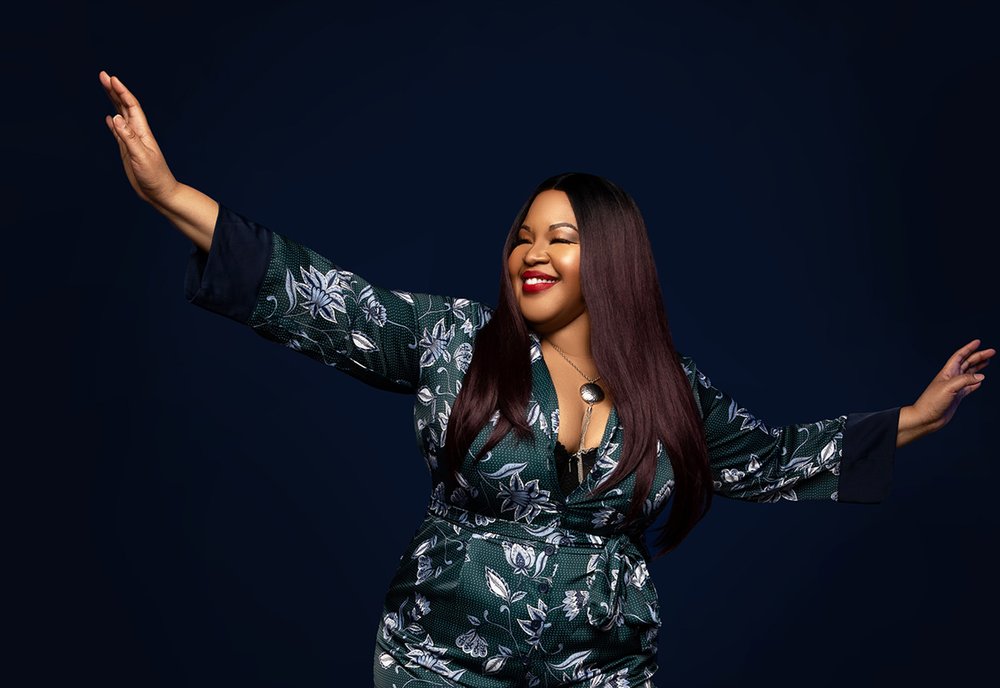
Karen Slack, soprano
Program Notes
Ludwig Van Beethoven (1770-1827)
Overture to Fidelio, op.72c (1814)
Scored for: two flutes, two oboes, two clarinets, two bassoons, four French horns, two trumpets, two trombones, timpani, and strings
Performance time: 6 minutes
First Grant Park Orchestra performance: July 19, 1980; David Zinman, conductor
Leonore Overture no.3, op.72b (1805)
Scored for: two flutes, two oboes, two clarinets, two bassoons, four French horns, two trumpets, three trombones, timpani, and strings
Performance time: 14 minutes
First Grant Park Orchestra performance: July 24, 1935; Ebba Sundstrom, conductor
Writing of his only opera, Fidelio, Ludwig van Beethoven said, “It is the work that caused me the worst birth pangs, the one that brought me the most sorrow, and for that reason, it is the one most dear to me.” Beethoven makes no exaggeration, as it took the composer over a decade and multiple rewrites before achieving the operatic success he had long sought. This is why four different overtures to the opera exist. The final version, written for the 1814 production of the opera, is known as “Overture to Fidelio,” while the overture written for the 1806 revision of the original 1805 opera is known as “Leonore Overture No. 3.” (Leonore was Beethoven’s preferred title of the opera and is used to distinguish between the 1805/6 versions and the more familiar 1814 version, Fidelio.)
The plot of Fidelio is said to be based on a true story from the French Revolution. The heroic tale provides a powerful endorsement of democracy and freedom—themes that are just as relevant today as they were during the Napoleonic Wars that were raging at the time of Beethoven’s composition. In the opera, a nobleman named Florestan is wrongfully imprisoned by his political rival, Don Pizarro, a prison governor. Florestan’s wife, Leonore, disguises herself as a young man named Fidelio and infiltrates the prison as an errand boy. She earns the trust of the jailer, Rocco, whom Pizarro has instructed to starve Florestan to death. When news reaches the prison that a government official named Don Fernando is coming to investigate allegations of cruelty, Pizarro decides to hasten Florestan’s demise and execute him himself. He orders Rocco and “Fidelio” to dig a grave for Florestan. As Pizarro advances to strike Florestan dead, Leonore leaps between them with a pistol drawn, revealing her true identity. At that moment, Don Fernando arrives, and Rocco explains Pizarro’s murderous plot. Fernando imprisons Pizarro, and Leonore and Florestan rejoice in their reunion.
While Overture to Fidelio is more concise and appropriate in the context of an opera, Leonore Overture No. 3 is the grandest and most imposing of the four overtures. Using Mozart’s opera overtures as a guide, Beethoven maps out the entirety of the opera’s drama so effectively that the overture holds up on its own as a concert piece. The emotional journey is one of darkness to light, from Florestan’s dank dungeon cell to Leonore’s heroic rescue and Don Fernando’s arrival, marked by off-stage trumpet calls.
Margaret Allison Bonds (1913-1972)
The Montgomery Variations (1964)
Scored for: three flutes including piccolo and alto flute, three oboes including English Horn, three clarinets including bass clarinet, three bassoons including contrabassoon, four French horns, three trumpets, three trombones, tuba, timpani, percussion, harp, and strings
Performance time: 24 minutes
First Grant Park Orchestra performance
Margaret Bonds grew up in an affluent Black family in Chicago. Her mother opened their home to young Black artists, writers, and musicians in the community, including composer Florence Price, who would later become Margaret’s teacher. Growing up in this environment, Bonds demonstrated musical talent early on. While a student at Northwestern University, she was already making a name for herself. She won the Wanamaker Prize in 1932 for her song “Sea Ghost” and was the first African American soloist with the Chicago Symphony Orchestra when she performed Price’s Piano Concerto at the World’s Fair in 1933.
Although Bonds is best known for her vocal music, especially her arrangements of traditional spirituals, her wide-ranging compositions included jazz arrangements, film music, popular songs, musicals, and orchestral pieces. Harlem Renaissance poet Langston Hughes was a profound influence. Bonds faced intense racial prejudice while at Northwestern, where she was forbidden to use the library, dining hall, and other facilities. Discovering Hughes’ work during this time was a lifeline. They soon struck up a deep creative partnership and friendship, and he encouraged her to move to New York City. In addition to composing, Bonds was an active performer. She also served as music director for musical theater institutions, taught music to children living in underserved communities, and organized a chamber society to promote the work of Black composers.
Bonds composed The Montgomery Variations after visiting Montgomery, Alabama, and the surrounding area in 1963 while on tour with Eugene Brice and the Manhattan Melodaires. Dedicated to Dr. Martin Luther King, Jr., The Montgomery Variations were written in the wake of the horrific firebombing of the 16th Street Baptist Church in Birmingham, which claimed the lives of four little girls and injured dozens more. Melodically based on the spiritual “I Want Jesus to Walk with Me,” the variations ruminate on Montgomery’s history as a central hub of the Civil Rights Movement.
Sadly, Bonds never heard this work performed. However, she did provide her own program notes for each variation, reproduced below.
I. Decision
Under the leadership of Martin Luther King, Jr., and SCLC [Southern Christian Leadership Conference], Negroes in Montgomery decided to boycott the bus company and to fight for their rights as citizens.
II. Prayer Meeting
True to custom, prayer meetings precede their action. Prayer meetings start quietly with humble petitions to God. During the course of the meeting, members seized with religious fervor shout and dance. Oblivious to their fellow worshippers, they exhibit their love of God and their Faith in Deliverance by gesticulation, clapping, and beating their feet.
III. March
The Spirit of the Nazarene marching with them, the Negroes of Montgomery walked to their work rather than be segregated on the buses. The entire world, symbolically with them, marches.
IV. Dawn in Dixie
Dixie, the home of the Camellias known as “pink perfection,” magnolias, jasmine, and Spanish moss, awakened to the fact that something new was happening in the South.
V. One Sunday in the South
Children were in Sunday School learning about Jesus, the Prince of Peace. Southern “die-hards” planted a bomb and several children were killed.
VI. Lament
The world was shaken by the cruelty of the Sunday School bombing. Negroes, as usual, leaned on their Jesus to carry them through this crisis of grief and humiliation.
VII. Benediction
A benign God, Father and Mother to all people, pours forth Love to His children—the good and the bad alike.
Jessie Montgomery (b. 1981)
Five Freedom Songs
Scored for: percussion, strings, and solo soprano
Performance time: 20 minutes
First Grant Park Orchestra performance
Jessie Montgomery will be familiar to many Chicago classical music fans. Currently the Mead Composer-in-Residence of the Chicago Symphony Orchestra, Montgomery has already established herself as a composer of international renown. She captures the 21st-century American experience in her music by mixing elements of vernacular music, improvisation, poetry, and social awareness into classical frameworks.
Conceived in collaboration with soprano Julia Bullock in 2017–2018, Five Freedom Songs sources music from the historical anthology Slave Songs of the United States. Published shortly after the Civil War in 1867, this anthology of over 136 lyrics and melodies was made by educators and musicologists who traveled the South transcribing music from people in newly freed communities. They also included notes on performance practice and stories about the contexts in which these songs were performed. Some of them were sung during times of rebellion, others during worship, and others while working in the fields. Bullock noted a commonality underlying the diverse experiences these songs captured: “After going through all of these songs, which, yes, acknowledge the violence and the trauma and the oppression that was very much a reality at that time, what was deeply inspiring for me to read and also to vocalize is an affirmation of life.” Montgomery and Bullock set aside the title Five Slave Songs in favor of Five Freedom Songs to capture this sense of aspiration.
“We wanted to create a song cycle that honors our shared African-American heritage and the tradition of the Negro spiritual, while also experimenting with non-traditional stylistic contexts,” Montgomery explains in her program note. Setting both well-known and more obscure spirituals from the anthology, Montgomery used the contexts behind each song to inform her musical treatment. For instance, the transcription of “I Want to Go Home” as a seven-note melody free from any rhythmic indications led her to incorporate elements of Gregorian chant, which is also sung without a regular beat. In “My Father, How Long?,” which emerged from a jail in Georgetown, South Carolina, at the outbreak of the Great Rebellion, the strings evoke the sound of a chain gang with percussive sounds. The funeral song “Lay dis Body Down” calls upon the musicians to improvise their lines at their own pace but in relation to the surrounding textures, creating what Montgomery calls a “swirling meditation.” “My Lord What a Morning” paints the image of the stars as they “begin to fall”—an image that reoccurs in the final song of the set, “The Day of Judgment.” This song, which originated around Louisiana, “is set as an uneasy celebration over the refrain of a traditional West African drumming pattern,” Montgomery explains.
Program Notes by Katherine Buzard
Event Sponsors
This concert is generously supported by American Accents Series Sponsor AbelsonTaylor Group.
Tonight’s concert is being broadcast and streamed live on 98.7WFMT and wfmt.com
Artistic Leadership
-
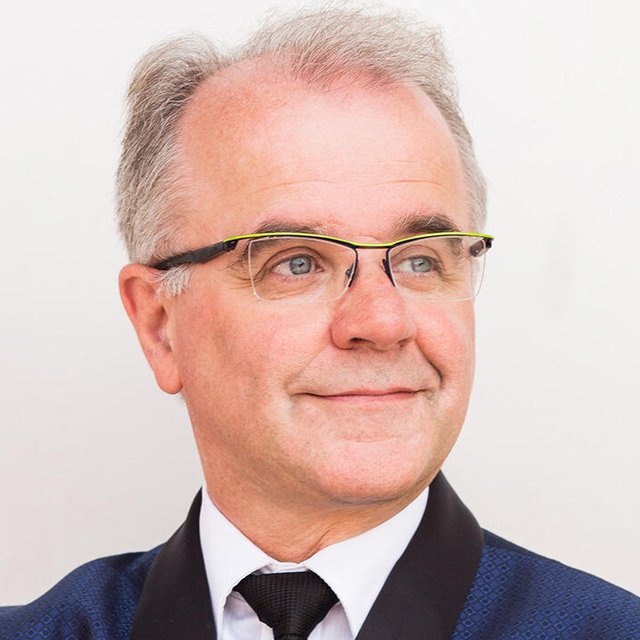
Christopher Bell
Chorus Director

Support The Festival
Grant Park Orchestra
* denotes leave-of-absence † one-year position
Jeremy Black, concertmaster
Jennifer Cappelli
Injoo Choi
Dima Dimitrova
Erica Hudson
Hyewon Kim
Matthew Lehmann
Jayna Park
Rika Seko
Karen Sinclair
Bonnie Terry
Trista Wong
Jonathan Yi
Krzysztof Zimowski
Liba Shacht, principal
Laura Miller, assistant principal
Ying Chai
Ran Cheng
Karl Davies
Likai He
Tiffany Kang
Ann Lehmann
Cristina Muresan
Kjersti Nostbakken
Irene Radetzky
Jeanine Wynton
Thomas Yang
Terri Van Valkinburgh, principal
Yoshihiko Nakano, assistant principal
Patrick Brennan*
Elizabeth Breslin
Beatrice Chen
Amy Hess
Christopher McKay†
Rebecca Swan
Chloé Thominet
Walter Haman, principal
Peter Szczepanek, assistant principal
Calum Cook
Larry Glazier
Steven Houser
Eric Kutz
Eran Meir
Linc Smelser*
Colin Corner, principal
Peter Hatch, assistant principal
Andrew Anderson
Alexander Horton
Christian Luevano†
Isaac Polinksy†
Timothy Shaffer*
Chunyang Wang
Chris White
Mary Stolper, principal
Jennifer Debiec Lawson, assistant principal
Jennifer Debiec Lawson
Alyce Johnson
Mitchell Kuhn, principal
Alex Liedtke
Anne Bach, assistant principal
Anne Bach
Dario Brignoli, principal
Trevor O’Riordan
Eric Hall, principal
Nicole Haywood, assistant principal
William Ramos
Jonathan Boen, principal
Stephanie Blaha, assistant principal*
Fritz Foss†
Samuel Hamzem†
Brett Hodge*
Neil Kimel
David Gordon, principal
Mike Brozick, acting assistant principal
Michael Brozick
William Denton
Daniel Cloutier, principal*
Jeremy Moeller, acting principal
Alexander Mullins
Andrew Smith, principal
Daniel Karas, principal
Josh Jones, principal
Joel Cohen, assistant principal
Doug Waddell
Kayo Ishimaru-Fleisher, principal
Christopher Guzman
Alba Layana Izurieta, Violin
Janani Sivakumar, Violin
Harper Randolph, Viola
Gabriel Hightower, Cello
Grant Park Chorus
* denotes leave-of-absence † one-year position
Taylor Adams
Summer Aebker
Kristina Bachrach
Madalynn Baez
Megan E. Bell
Alyssa Bennett
Anna Joy Buegel
Laura Bumgardner
Elisabeth Burmeister
Katherine Buzard
Bethany Clearfield
Nathalie Colas
Corinne Costell
Carolyne DalMonte
Rebecca Fitzpatrick
Megan Fletcher
Kaitlin Foley
Saira Frank
Katherine Gray-Noon
Kimberly Gunderson
Alexandra Ioan
Alexandra Kassouf
Darlene Kelsey
Olivia Knutsen
Marybeth Kurnat
Catherine Larson
Katelyn Lee
Rosalind Lee
Rena Maduro
Hannah Dixon McConnell
Marie McManama
Meganna Miller
Kathleen Monson
Emily Mwila
Susan Nelson
Evangeline Ng
Karen R. Nussbaum
Máire O’Brien
Laura Perkett
Molly Phelan
Angela Presutti Korbitz
Alexia Rivera
Veronica Samiec
Whitney Shurtliff
Emily Sinclair
Tiana Sorenson
Christine Steyer
Diana Stoic
Karlie Traversa
Sarah van der Ploeg
Lydia Walsh-Rock
Sherry Watkins
Tara Wheeker
Emily Lyday Yiannias
Christina Adams
Melissa Arning
Christina Bernardoni
Christine Boddicker
Bethany Brewer
Jean Broekhuizen
Anna De Ocampo Kain
Julie DeBoer
Leah Dexter
Katrina Dubbs
Stacy Eckert
Margaret Fox
Elizabeth Frey
Liana German
Catarine Hancock
Ruth Ginelle Heald
Nina Heebink
Miya Higashiyama
Carla Janzen
Amy Allyssa Johnson
Kathryn Kinjo Duncan
Amanda Koopman
Jeannette Lee
Hannah Little
Thereza Lituma
Chelsea Lyons
Victoria Marshall
Jessica McCarthy
Greta McNamee
Quinn Middleman
Sarah Ponder
Emily Price
Lauren Randolph
Grace Ryan
Stephanie Schoenhofer
Suzanne A. Shields
Emlynn Shoemaker
Cassidy Smith
Emma Sorenson
Aidan Spencer
Alannah Spencer
Carolyn Sundlof Boudreau
Gabrielle Timofeev López
Corinne Wallace-Crane
A.J. Wester
Debra Wilder
Pamela Williams
Avery Winick
Enrico Giuseppe Bellomo
Justin Berkowitz
Madison Bolt
Eric Botto
Hoss Brock
Steven Caldicott Wilson
Joseph Cloonan
Damon Cole
John J. Concepción
Matthew Cummings
Micah A. Dingler
Howard Eckdahl
Jared V. Esguerra
Andrew Fisher
Ryan Frenk
Ace Gangoso
Klaus Georg
Nikhil Harle
Jianghai Ho
Max Hosmer
Cameo T. Humes
Paul Hunter
Garrett Johannsen
William Johnson
James Judd
Tejas Kishan Gururaja
Tim Lambert
Tyler Lee
Mason Montuoro
Stephen D. Noon
Brett Potts
Nicholas Pulikowski
Brian Rasmussen
Patrick Reardon
Peder Reiff
Matthew W. Schlesinger
Silfredo Serrano
Joe Shadday
Aaron Short
Matthew Sink
Brian Skoog
Michael St. Peter
Ryan Townsend Strand
Brett Sweeney
Alan Taylor
Keven Washburn
Sean J. Watland
Walter Aldrich
Evan Bravos
Matthew Brennan
Tabes Bridges
Michael Cavalieri
Stephen Clark
David Corlew
Michael D. Costello
Philip Courington
Ryan J. Cox
Ed Frazier Davis
Wesley Diener
Chris DiMarco
Christopher Filipowicz
Gabriel Garcia
Dimitri German
Dominic German
David Govertsen
David Hartley
Matthew Hunt
Brian Hupp
Jan Jarvis
Jess Koehn
Zachary Mendenhall
Eric Miranda
Ron Mitchell
Ian Morris
Ian Murrell
Chiemerie Obianom
John E. Orduña
Wilbur Pauley
Douglas Peters
Jackson Pierzina
Anthony Pilcher
Martin Lowen Poock
Ian Prichard
Gabriel Reitemeier
Dan Richardson
Stephen Richardson
Benjamin D. Rivera
Joseph Ryan
Ivo Suarez
Avery Sujkowski
Scott Uddenberg
Vince Wallace
Nicholas Ward
Aaron Wardell
Ronald Watkins
Jonathon Weller
Peter Wesoloski
Max Wier
Jonathan Wilson
Chuck Foster
John Goodwin
Veronica Mak, soprano
Emily Amesquita, alto
Alexi Ortega Chavez, tenor
Lifan Deng, bass