Schumann Piano Concerto
Program
Robert Schumann Piano Concerto in A Minor, op. 54
Allegro affettuoso
Intermezzo: Andantino grazioso
Allegro vivace
Sergei Prokofiev Symphony No. 6 in E-flat Minor, op. 111
Allegro moderato
Largo
Vivace
Featuring
Grant Park Orchestra
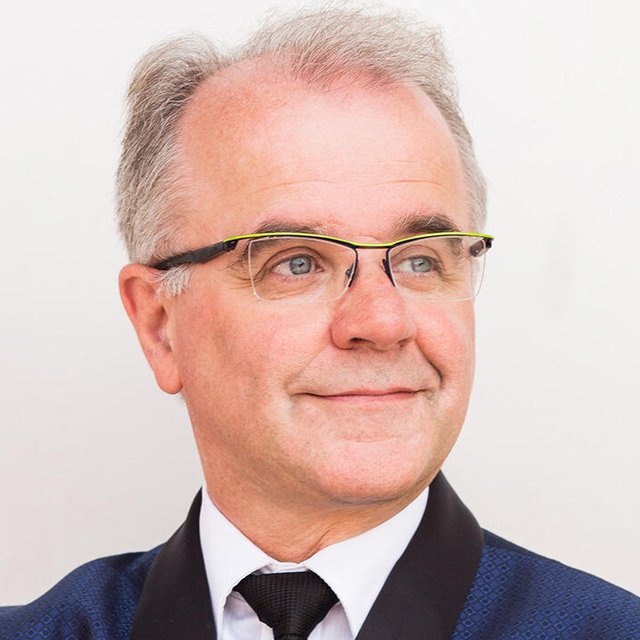
Carlos Kalmar, conductor
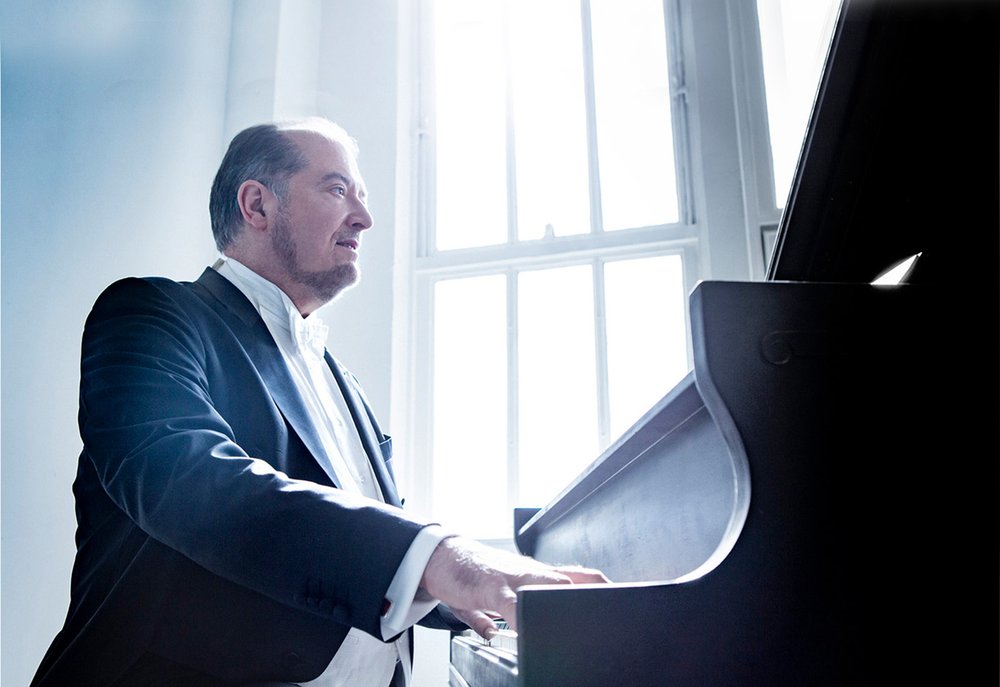
Garrick Ohlsson, piano
Program Notes
Robert Schumann (1810-1856)
Concerto in A minor, for Piano & Orchestra, op.54 (1841)
Scored for: two flutes, two oboes, two clarinets, two bassoons, two French horns, two trumpets, timpani, strings, and solo piano
Performance time: 31 minutes
First Grant Park Orchestra performance: September 1, 1942; Richard Czerwonky, conductor and Rudolph Reuter, piano
The impact Clara Schumann had on her husband’s life and career cannot be overstated. Not only did she give birth to his eight children and use her international reputation as a piano virtuoso to champion his works, but she also encouraged him to set his compositional sights higher and helped him craft one of his most beloved works, his Piano Concerto in A minor. Robert Schumann recognized the immense value of this partnership, writing to Clara in 1839, “You complete me as a composer, as I do you. Every thought of yours comes from my soul, just as I have to thank you for all my music.”
First, a little background: Robert met Clara when he was a nineteen-year-old piano student of Clara’s father, Friedrich Wieck. Clara was only nine years old at the time but already had a burgeoning career as a pianist and composer. Their friendship turned to love when Clara was sixteen, but Friedrich vehemently opposed the relationship, even sending Clara away on extended recital tours to keep them apart. After a protracted legal battle against Friedrich, the couple finally married in 1840, the day before Clara’s twenty-first birthday.
Clara was an important creative adviser, especially when it came to Schumann’s piano music. Schumann had lost much of the feeling in the middle finger of his right hand from over-practicing and experimenting with a finger-strengthening device called a chiroplast. No longer able to do his piano works justice, he composed them for Clara’s hands. (She was the better player anyway.) In addition, before 1841, most of Schumann’s compositional output consisted of small-scale works such as lieder and solo piano pieces. With Clara’s encouragement, he turned to composing for orchestra and entered an intense period of creativity for the first five years of their marriage.
Schumann struggled with the piano concerto genre, leaving behind four fragmented attempts between 1827 and 1839. In 1839, frustrated with how separate the soloist and orchestra often were in concertos, he wrote, “We must await the genius who will show us in a newer and more brilliant way how orchestra and piano may be combined, how the soloist, dominant at the keyboard, may unfold the wealth of his instrument and his art, while the orchestra, no longer a mere spectator, may interweave its manifold facets into the scene.” He finally found the right balance in 1841, completing a one-movement “Phantasie” for piano and orchestra. He reworked the Phantasie in 1845 and composed two more movements—the slow Intermezzo and the finale—to create the Piano Concerto in A minor.
Now, Clara had written a piano concerto ten years prior, also in A minor. Schumann was intimately acquainted with it, having orchestrated the finale himself, and there are striking similarities between the two. Demonstrating the reciprocity of their creative relationship, Schumann incorporates a four-note motive from the third movement of her concerto into the coda of his Allegro, acting almost like a secret code between them. Also, the first movements of both concertos feature a slow, A-flat minor bridge section between the exposition and development. Plus, the second movements both feature duets between the piano and cellos. As well as collaborating behind the scenes, Clara helped to promote the concerto once completed, premiering the work in Dresden on December 4, 1845, and playing it frequently throughout her career.
Sergei Prokofiev (1891-1953)
Symphony No.6 in E-flat minor, op.111 (1945)
Scored for: three flutes including piccolo, three oboes including English Horn, four clarinets including bass clarinet, three bassoons including contrabassoon, four French horns, three trumpets, three trombones, tuba, timpani, percussion, harp, celesta, piano, and strings
Performance time: 43 minutes
First Grant Park Orchestra performance: July 12, 1972; Jorge Mester, conductor
Sergei Prokofiev’s Symphony No. 6 was the composer’s last unmitigated success. When it premiered in Leningrad on October 11, 1947, critics and bureaucrats were enthusiastic. But soon after its Moscow premiere on Christmas Day, Prokofiev and his symphony became a target of official criticism like never before. On February 10, 1948, Prokofiev attended a ceremony at the Kremlin in which he was elevated to the status of People’s Artist of the Russian Soviet Federative Socialist Republic. That same day, Politburo member Andrey Zhdanov was finalizing a Central Committee Resolution that would accuse Prokofiev and other prominent composers of promoting “formalist distortions and antidemocratic tendencies . . . foreign to the Soviet people and its artistic tastes.” Artists during Stalin’s regime were used to this cognitive dissonance of being officially celebrated one day and condemned the next, seemingly with no rhyme or reason. As Prokofiev scholar Simon Morrison puts it, “The power of the regime was absolute in the sense that it followed no consistent rules.” But this time was different. Prior to 1948, Prokofiev was able to feign indifference to the government’s vagaries and claim his music was above real-world concerns; now he was afraid.
Though Prokofiev submitted a public letter atoning for his musical sins a few days later, nervous concert managers soon pulled his works from programs. His career entered freefall, rattling his confidence, sapping his creative energy, and endangering his already precarious health. Wisely, he cleared his dacha of foreign books and letters to Russian expats. Had these materials been found when the residence was indeed searched, he would have been detained. Though his international reputation shielded him somewhat, his history of having lived in the West for twenty years marked him as an outsider. Others around him weren’t as lucky. His estranged wife, Lina, was arrested for treason and sentenced to twenty years in a labor camp (she served eight years).
What, if anything, was it so threatening about the Sixth Symphony? Publicly, Prokofiev used the same terms to describe his Sixth Symphony as he had his much-lauded Fifth, emphasizing their affirming, victorious outlooks to comport with the demands of Socialist Realism. Prokofiev rarely expounded at length on any programmatic intent behind his compositions, leaving them up to interpretation. Morrison writes, “one could posit that, while the melodic and harmonic patterns have immanent narrative potential, the somewhat intangible character of their assemblage denies programmatic interpretation—and this may have been the composer’s point. The Sixth Symphony embraces much of the surface rhetoric of a socialist realist narrative but little of its cohesiveness.”
Composed between June 1945 and February 1947, the Sixth Symphony is tinged with darkness, the human cost of World War II looming large. After a stern descending figure in low brass, the lilting theme in the muted violins and violas is still somewhat menacing. The oboes in octaves introduce a dreamy secondary theme before giving way to a violent outburst and a sinister march. The unsettled nature of the first movement continues into the second, which opens with a desperate cry in the woodwinds. Lyrical themes reminiscent of Prokofiev’s ballet music break through and lower the temperature. Though the finale tries to convey a joyful celebration of victory, the constant interruptions from the timpani suggest evil lurking under the surface or nagging existential questions. The ending recalls material from the first movement but in fractured form and with chromatic inflections. Despite the triumphant end of the symphony, it is still shaded by this late recollection.
Program Notes by Katherine Buzard
Event Sponsors
This program is graciously made possible by David H. Whitney and Juliana Y. Chyu.
Sponsorship support is generously provided by The Salvino Team of Performance Wealth.
Artistic Leadership

Support The Festival
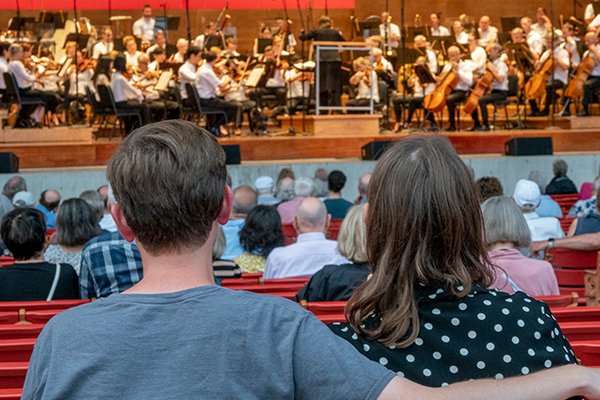
Grant Park Orchestra
* denotes leave-of-absence † one-year position
Jeremy Black, concertmaster
Jennifer Cappelli
Injoo Choi
Dima Dimitrova
Erica Hudson
Hyewon Kim
Matthew Lehmann
Jayna Park
Rika Seko
Karen Sinclair
Bonnie Terry
Trista Wong
Jonathan Yi
Krzysztof Zimowski
Liba Shacht, principal
Laura Miller, assistant principal
Ying Chai
Ran Cheng
Karl Davies
Likai He
Tiffany Kang
Ann Lehmann
Cristina Muresan
Kjersti Nostbakken
Irene Radetzky
Jeanine Wynton
Thomas Yang
Terri Van Valkinburgh, principal
Yoshihiko Nakano, assistant principal
Patrick Brennan*
Elizabeth Breslin
Beatrice Chen
Amy Hess
Christopher McKay†
Rebecca Swan
Chloé Thominet
Walter Haman, principal
Peter Szczepanek, assistant principal
Calum Cook
Larry Glazier
Steven Houser
Eric Kutz
Eran Meir
Linc Smelser*
Colin Corner, principal
Peter Hatch, assistant principal
Andrew Anderson
Alexander Horton
Christian Luevano†
Isaac Polinksy†
Timothy Shaffer*
Chunyang Wang
Chris White
Mary Stolper, principal
Jennifer Debiec Lawson, assistant principal
Jennifer Debiec Lawson
Alyce Johnson
Mitchell Kuhn, principal
Alex Liedtke
Anne Bach, assistant principal
Anne Bach
Dario Brignoli, principal
Trevor O’Riordan
Eric Hall, principal
Nicole Haywood, assistant principal
William Ramos
Jonathan Boen, principal
Stephanie Blaha, assistant principal*
Fritz Foss†
Samuel Hamzem†
Brett Hodge*
Neil Kimel
David Gordon, principal
Mike Brozick, acting assistant principal
Michael Brozick
William Denton
Daniel Cloutier, principal*
Jeremy Moeller, acting principal
Alexander Mullins
Andrew Smith, principal
Daniel Karas, principal
Josh Jones, principal
Joel Cohen, assistant principal
Doug Waddell
Kayo Ishimaru-Fleisher, principal
Christopher Guzman
Alba Layana Izurieta, Violin
Janani Sivakumar, Violin
Harper Randolph, Viola
Gabriel Hightower, Cello
Grant Park Chorus
* denotes leave-of-absence † one-year position
Taylor Adams
Summer Aebker
Kristina Bachrach
Madalynn Baez
Megan E. Bell
Alyssa Bennett
Anna Joy Buegel
Laura Bumgardner
Elisabeth Burmeister
Katherine Buzard
Bethany Clearfield
Nathalie Colas
Corinne Costell
Carolyne DalMonte
Rebecca Fitzpatrick
Megan Fletcher
Kaitlin Foley
Saira Frank
Katherine Gray-Noon
Kimberly Gunderson
Alexandra Ioan
Alexandra Kassouf
Darlene Kelsey
Olivia Knutsen
Marybeth Kurnat
Catherine Larson
Katelyn Lee
Rosalind Lee
Rena Maduro
Hannah Dixon McConnell
Marie McManama
Meganna Miller
Kathleen Monson
Emily Mwila
Susan Nelson
Evangeline Ng
Karen R. Nussbaum
Máire O’Brien
Laura Perkett
Molly Phelan
Angela Presutti Korbitz
Alexia Rivera
Veronica Samiec
Whitney Shurtliff
Emily Sinclair
Tiana Sorenson
Christine Steyer
Diana Stoic
Karlie Traversa
Sarah van der Ploeg
Lydia Walsh-Rock
Sherry Watkins
Tara Wheeker
Emily Lyday Yiannias
Christina Adams
Melissa Arning
Christina Bernardoni
Christine Boddicker
Bethany Brewer
Jean Broekhuizen
Anna De Ocampo Kain
Julie DeBoer
Leah Dexter
Katrina Dubbs
Stacy Eckert
Margaret Fox
Elizabeth Frey
Liana German
Catarine Hancock
Ruth Ginelle Heald
Nina Heebink
Miya Higashiyama
Carla Janzen
Amy Allyssa Johnson
Kathryn Kinjo Duncan
Amanda Koopman
Jeannette Lee
Hannah Little
Thereza Lituma
Chelsea Lyons
Victoria Marshall
Jessica McCarthy
Greta McNamee
Quinn Middleman
Sarah Ponder
Emily Price
Lauren Randolph
Grace Ryan
Stephanie Schoenhofer
Suzanne A. Shields
Emlynn Shoemaker
Cassidy Smith
Emma Sorenson
Aidan Spencer
Alannah Spencer
Carolyn Sundlof Boudreau
Gabrielle Timofeev López
Corinne Wallace-Crane
A.J. Wester
Debra Wilder
Pamela Williams
Avery Winick
Enrico Giuseppe Bellomo
Justin Berkowitz
Madison Bolt
Eric Botto
Hoss Brock
Steven Caldicott Wilson
Joseph Cloonan
Damon Cole
John J. Concepción
Matthew Cummings
Micah A. Dingler
Howard Eckdahl
Jared V. Esguerra
Andrew Fisher
Ryan Frenk
Ace Gangoso
Klaus Georg
Nikhil Harle
Jianghai Ho
Max Hosmer
Cameo T. Humes
Paul Hunter
Garrett Johannsen
William Johnson
James Judd
Tejas Kishan Gururaja
Tim Lambert
Tyler Lee
Mason Montuoro
Stephen D. Noon
Brett Potts
Nicholas Pulikowski
Brian Rasmussen
Patrick Reardon
Peder Reiff
Matthew W. Schlesinger
Silfredo Serrano
Joe Shadday
Aaron Short
Matthew Sink
Brian Skoog
Michael St. Peter
Ryan Townsend Strand
Brett Sweeney
Alan Taylor
Keven Washburn
Sean J. Watland
Walter Aldrich
Evan Bravos
Matthew Brennan
Tabes Bridges
Michael Cavalieri
Stephen Clark
David Corlew
Michael D. Costello
Philip Courington
Ryan J. Cox
Ed Frazier Davis
Wesley Diener
Chris DiMarco
Christopher Filipowicz
Gabriel Garcia
Dimitri German
Dominic German
David Govertsen
David Hartley
Matthew Hunt
Brian Hupp
Jan Jarvis
Jess Koehn
Zachary Mendenhall
Eric Miranda
Ron Mitchell
Ian Morris
Ian Murrell
Chiemerie Obianom
John E. Orduña
Wilbur Pauley
Douglas Peters
Jackson Pierzina
Anthony Pilcher
Martin Lowen Poock
Ian Prichard
Gabriel Reitemeier
Dan Richardson
Stephen Richardson
Benjamin D. Rivera
Joseph Ryan
Ivo Suarez
Avery Sujkowski
Scott Uddenberg
Vince Wallace
Nicholas Ward
Aaron Wardell
Ronald Watkins
Jonathon Weller
Peter Wesoloski
Max Wier
Jonathan Wilson
Chuck Foster
John Goodwin
Veronica Mak, soprano
Emily Amesquita, alto
Alexi Ortega Chavez, tenor
Lifan Deng, bass