Stravinsky Petrushka
Program
Igor Stravinsky Petruska (1947)
The Shrove-Tide Fair
Petrushka’s Cell
The Moor’s Cell
The Shrove-Tide Fair (Towards Evening)
INTERMISSION
Johannes Brahms Song of Destiny
Zoltán Kodály Psalmus hungaricus
Mikoron Dávid nagy búsultában (When as King David sore was afflicted) Keserüségem annyi nem volna (I could have borne so sore an affliction)
Te azért lelkem, gondolatodat (So in Jehovah I will put my trust)
Featuring
Grant Park Orchestra
Grant Park Chorus
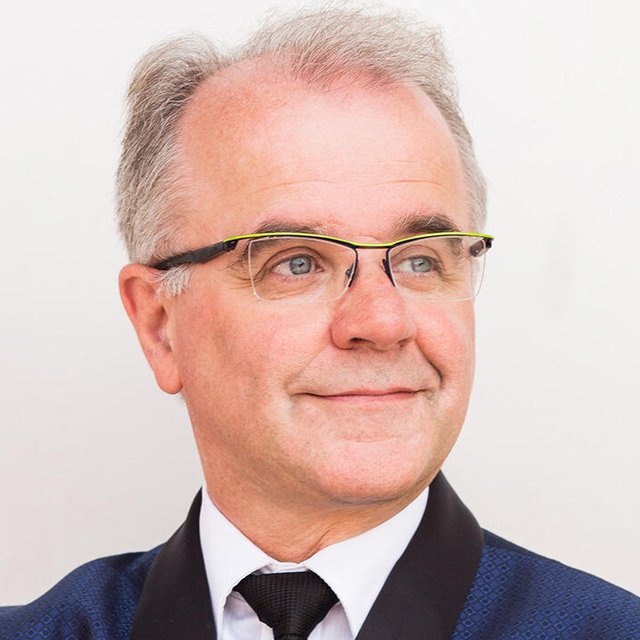
Ludovic Morlot, conductor
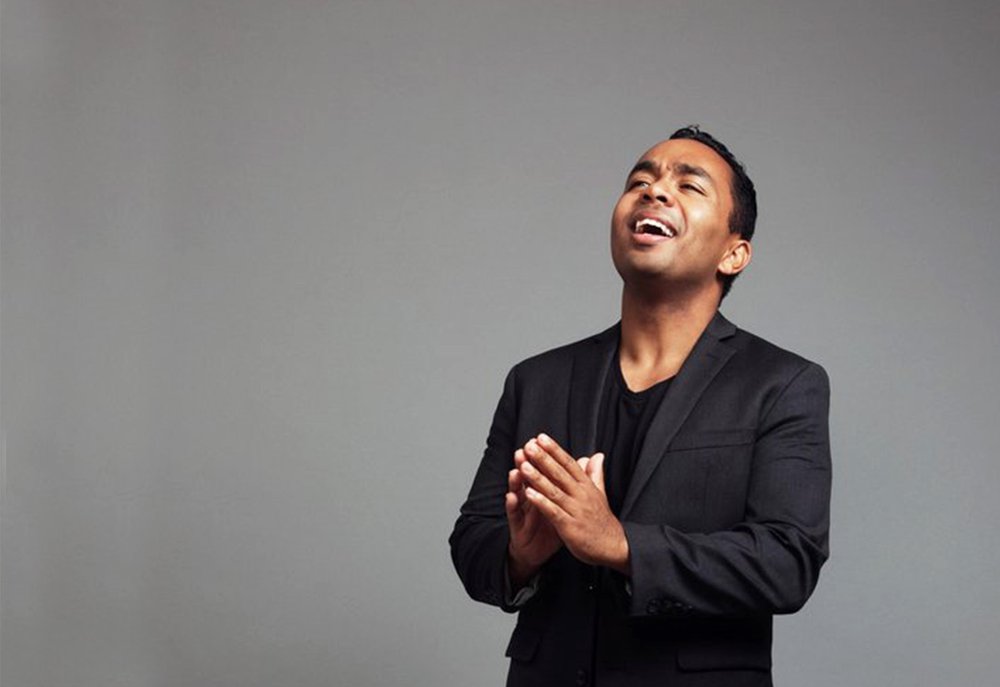
Martin Bakari, tenor
Program Notes
Igor Stravinsky (1882-1971)
Petrushka (1947 version) (1910)
Scored for: three flutes including piccolo, three oboes including English Horn, three clarinets including bass clarinet, three bassoons including contrabassoon, four French horns, three trumpets, three trombones, tuba, timpani, percussion, harp, celesta, piano, and strings
Performance time: 34 minutes
First Grant Park Orchestra performance: August 10, 1955; Joseph Rosenstock, conductor
In 1909, the impresario of the Ballets Russes, Sergei Diaghilev, took a chance on a young, relatively unknown composer named Igor Stravinsky. He commissioned him to write a ballet for the Parisian company’s 1910 season, resulting in Stravinsky’s first mature work, The Firebird. Its success catapulted Stravinsky to fame and placed him firmly within Diaghilev’s orbit and elite Parisian circles. That summer, Diaghilev approached Stravinsky about collaborating on another ballet, and the two agreed on a scenario involving a pagan girl who dances herself to death as a sacrifice. When Diaghilev later visited the composer on vacation in Lausanne, Switzerland, he was surprised to find that Stravinsky was not working on the agreed-upon ballet but had started on a concert work for piano and orchestra as a creative palate cleanser. When Stravinsky played what he had written so far for Diaghilev, the impresario recognized its dramatic potential and encouraged him to turn it into a ballet. (Stravinsky would come back to the other ballet, The Rite of Spring, in due course.)
In composing the initial concert piece, Stravinsky had imagined a Petrushka puppet, a mischievous ne’er-do-well character popular at Russian fairs, who had come to life and was taunting the orchestra with devilish runs up and down the piano. To turn this idea into a ballet scenario for Petrushka, Stravinsky worked with Alexandre Benois, who also designed the costumes and scenery for the premiere production in 1911. Stravinsky reworked the ballet score in 1947 to make it more appropriate for the concert stage, substantially changing the orchestration and tempo markings and extending the piano part. This is the version you will hear tonight.
Petrushka is cast in four scenes or tableaus. The outer scenes take place in the “real” world, whereas the inner two scenes depict the “fantasy” world of the three puppets—Petrushka, the Ballerina, and the Moor. Stravinsky demarcates these worlds sonically by employing extant Russian folksongs in the outer scenes to ground them in reality. In contrast, the music of the inner scenes is more disjunct and built on unusual scales or multiple concurrent tonalities. In this work, we hear Stravinsky turning away from traditional thematic development and toward using contrasting blocks of orchestral colors, truncated melodies, and unbalanced rhythmic groupings—a technique likened to cubism in visual art that would become his hallmark style.
The first scene of Petrushka opens on Admiralty Square in 1830s St. Petersburg during a pre-Lenten festival. Stravinsky’s exuberant score captures the hustle and bustle of the busy fair full of diverse sights and sounds, including street dancers, a music box, an organ grinder, and a drummer. An old magician plays the flute to summon the crowd to his puppet theater. Brought to life by the magician, the puppets stun the audience when they step outside the theater and dance among the crowd. In the second scene, we find Petrushka in his cage. Downcast, he laments his fate as a grotesque outsider who is beholden to his master and hopelessly in love with the Ballerina. He dances to try to win over the Ballerina, but frightened by his uncouth performance, she runs off to be with the Moor. In scene three, the jealous Petrushka storms into the Moor’s room, interrupting the couple’s tryst, and the Moor tosses him out. Scene four returns to the fairgrounds at night and presents a parade of eclectic characters, including a peasant with a trained bear, a drunk merchant, gypsy girls, and masqueraders. The revelers stop dancing when they hear a commotion coming from the puppet theater. Suddenly, Petrushka emerges with the Moor hot on his heels. The Moor catches him and strikes him dead with his saber, horrifying the human onlookers. As the magician takes Petrushka’s body away, the puppet’s ghost appears on the roof of the theater, thumbing his nose at the sorcerer.
Johannes Brahms (1833-1897)
Schicksalslied (Song of Destiny), op.54 (1868)
Scored for: two flutes, two oboes, two clarinets, two bassoons, two French horns, two trumpets, three trombones, timpani, strings, and chorus
Performance time: 18 minutes
First Grant Park Orchestra performance: August 5, 1995; Maximiano Valdes, conductor
Johannes Brahms was perhaps not the most fun travel companion. On a trip to the North German coast town of Wilhelmshaven in the summer of 1868, the usually cheerful German composer was sullen and sitting off to himself while his friends relaxed at the beach. He had picked up a book of poetry by Friedrich Hölderlin earlier that morning and discovered a poem that really affected him. The poem, “Schicksalslied” or “Song of Destiny,” contrasts the lives of immortals enjoying heavenly bliss above with those of humans restlessly toiling in uncertainty below. While on the beach, he began sketching what would become Schicksaslied, a one-movement work for mixed chorus and orchestra. Forgoing a planned excursion with his friends later that week, Brahms returned home early to continue working on the piece.
Schicksalslied opens in E-flat major with a sumptuous melody in the muted violins over the soft, fateful beating of the timpani. When the altos of the choir finally enter, they usher in some of Brahms’ most luscious vocal writing. The first two stanzas are set in simple four-part choral harmony, lending a hymn-like feel to the heavenly music. Then, a pianissimo chord in the woodwinds heralds a dramatic shift in mood to an anguished C minor to evoke the humans’ cruel fate. Brahms would struggle with the ending of the piece, however. Hölderlin’s poem concludes with mortals suffering in the abyss of uncertainty. Brahms didn’t want to end with this dark image. Instead, he ultimately decided to return to the heavenly music of the opening, but this time cast in a pure C major, with the main theme played by the solo flute. At first, he was unsure of how audiences would react to such a long instrumental postlude, but after scrapping alternate endings that repeated the opening text, he reverted to his initial plan. Though Brahms’ interpretation of Schicksalslied differs from the original poem, it doesn’t necessarily contradict Hölderlin’s intent. Instead, it gives the audience space to contemplate the fate of humankind in a space of peace.
Zoltán Kodály (1882-1967)
Psalmus hungaricus, op.13 (1923)
Scored for: three flutes, two oboes, two clarinets, two bassoons, four French horns, three trumpets, three trombones, timpani, percussion, harp, strings, chorus, and solo tenor
Performance time: 22 minutes
First Grant Park Orchestra performance: July 21, 1984; Paul Strauss, conductor and Jon Fredric West, tenor
Psalmus hungaricus, a one-movement piece for tenor soloist, choir, children’s chorus, and orchestra, was Hungarian composer Zoltán Kodály’s first significant large-scale work. Written in 1923 to celebrate the fiftieth anniversary of the unification of Buda, Óbuda, and Pest into the modern city of Budapest, Psalmus hungaricus takes a uniquely Hungarian translation of Psalm 55 as its text. Following the conventions of his time, sixteenth-century Protestant priest and poet Mihály Kecskeméti Veg intersperses into his translation lamentations about the troubles of his own country, then under Turkish occupation. As musicologist Aladár Tóth writes in the preface to the first edition of the score, “His version of the Psalm is therefore replete with personal and national associations. His free translation thus assumes the significance of a new and independent piece of poetry—a truly ‘Hungarian’ Psalm.”
Understandably, this poem resonated with Kodály, who had recently experienced political persecution himself. When the Hungarian Soviet Republic fell in 1919 after just 133 days, Kodály, then deputy director of the Academy of Music, faced disciplinary action and was barred from teaching for two years. This defamation by the new regime greatly curtailed the composer’s burgeoning international career. Psalmus hungaricus reflects Kodály’s personal hardships as well as the political turbulence his country faced during and after World War I. Psalm 55 is an appropriate choice of text for voicing these feelings. In it, King David rails against a friend who has wronged him. Though beginning with anger and despair, the psalm ends more optimistically with an affirmation of faith in God’s divine retribution. This change in tone is reflected in the structure of Psalmus hungaricus. Although arguably in rondo form, given the chorus’ recurring unison chant, the overall two-part structure is the more important formal aspect of the piece. Kodaly marks the poem’s shift in tone with an ethereal orchestral interlude played by the strings, harps, and woodwinds. As Tóth writes, “His musical setting exhausts both the national and subjective elements of the poem and molds them into the one perfect and homogenous unit of great visionary beauty and of tremendous lyric and dramatic strength.”
Program Notes by Katherine Buzard
Event Sponsor
This program is generously supported as part of the Dehmlow Choral Music Series.
Artistic Leadership

Support The Festival

Grant Park Orchestra
* denotes leave-of-absence † one-year position
Jeremy Black, concertmaster
Jennifer Cappelli
Injoo Choi
Dima Dimitrova
Erica Hudson
Hyewon Kim
Matthew Lehmann
Jayna Park
Rika Seko
Karen Sinclair
Bonnie Terry
Trista Wong
Jonathan Yi
Krzysztof Zimowski
Liba Shacht, principal
Laura Miller, assistant principal
Ying Chai
Ran Cheng
Karl Davies
Likai He
Tiffany Kang
Ann Lehmann
Cristina Muresan
Kjersti Nostbakken
Irene Radetzky
Jeanine Wynton
Thomas Yang
Terri Van Valkinburgh, principal
Yoshihiko Nakano, assistant principal
Patrick Brennan*
Elizabeth Breslin
Beatrice Chen
Amy Hess
Christopher McKay†
Rebecca Swan
Chloé Thominet
Walter Haman, principal
Peter Szczepanek, assistant principal
Calum Cook
Larry Glazier
Steven Houser
Eric Kutz
Eran Meir
Linc Smelser*
Colin Corner, principal
Peter Hatch, assistant principal
Andrew Anderson
Alexander Horton
Christian Luevano†
Isaac Polinksy†
Timothy Shaffer*
Chunyang Wang
Chris White
Mary Stolper, principal
Jennifer Debiec Lawson, assistant principal
Jennifer Debiec Lawson
Alyce Johnson
Mitchell Kuhn, principal
Alex Liedtke
Anne Bach, assistant principal
Anne Bach
Dario Brignoli, principal
Trevor O’Riordan
Eric Hall, principal
Nicole Haywood, assistant principal
William Ramos
Jonathan Boen, principal
Stephanie Blaha, assistant principal*
Fritz Foss†
Samuel Hamzem†
Brett Hodge*
Neil Kimel
David Gordon, principal
Mike Brozick, acting assistant principal
Michael Brozick
William Denton
Daniel Cloutier, principal*
Jeremy Moeller, acting principal
Alexander Mullins
Andrew Smith, principal
Daniel Karas, principal
Josh Jones, principal
Joel Cohen, assistant principal
Doug Waddell
Kayo Ishimaru-Fleisher, principal
Christopher Guzman
Alba Layana Izurieta, Violin
Janani Sivakumar, Violin
Harper Randolph, Viola
Gabriel Hightower, Cello
Grant Park Chorus
* denotes leave-of-absence † one-year position
Taylor Adams
Summer Aebker
Kristina Bachrach
Madalynn Baez
Megan E. Bell
Alyssa Bennett
Anna Joy Buegel
Laura Bumgardner
Elisabeth Burmeister
Katherine Buzard
Bethany Clearfield
Nathalie Colas
Corinne Costell
Carolyne DalMonte
Rebecca Fitzpatrick
Megan Fletcher
Kaitlin Foley
Saira Frank
Katherine Gray-Noon
Kimberly Gunderson
Alexandra Ioan
Alexandra Kassouf
Darlene Kelsey
Olivia Knutsen
Marybeth Kurnat
Catherine Larson
Katelyn Lee
Rosalind Lee
Rena Maduro
Hannah Dixon McConnell
Marie McManama
Meganna Miller
Kathleen Monson
Emily Mwila
Susan Nelson
Evangeline Ng
Karen R. Nussbaum
Máire O’Brien
Laura Perkett
Molly Phelan
Angela Presutti Korbitz
Alexia Rivera
Veronica Samiec
Whitney Shurtliff
Emily Sinclair
Tiana Sorenson
Christine Steyer
Diana Stoic
Karlie Traversa
Sarah van der Ploeg
Lydia Walsh-Rock
Sherry Watkins
Tara Wheeker
Emily Lyday Yiannias
Christina Adams
Melissa Arning
Christina Bernardoni
Christine Boddicker
Bethany Brewer
Jean Broekhuizen
Anna De Ocampo Kain
Julie DeBoer
Leah Dexter
Katrina Dubbs
Stacy Eckert
Margaret Fox
Elizabeth Frey
Liana German
Catarine Hancock
Ruth Ginelle Heald
Nina Heebink
Miya Higashiyama
Carla Janzen
Amy Allyssa Johnson
Kathryn Kinjo Duncan
Amanda Koopman
Jeannette Lee
Hannah Little
Thereza Lituma
Chelsea Lyons
Victoria Marshall
Jessica McCarthy
Greta McNamee
Quinn Middleman
Sarah Ponder
Emily Price
Lauren Randolph
Grace Ryan
Stephanie Schoenhofer
Suzanne A. Shields
Emlynn Shoemaker
Cassidy Smith
Emma Sorenson
Aidan Spencer
Alannah Spencer
Carolyn Sundlof Boudreau
Gabrielle Timofeev López
Corinne Wallace-Crane
A.J. Wester
Debra Wilder
Pamela Williams
Avery Winick
Enrico Giuseppe Bellomo
Justin Berkowitz
Madison Bolt
Eric Botto
Hoss Brock
Steven Caldicott Wilson
Joseph Cloonan
Damon Cole
John J. Concepción
Matthew Cummings
Micah A. Dingler
Howard Eckdahl
Jared V. Esguerra
Andrew Fisher
Ryan Frenk
Ace Gangoso
Klaus Georg
Nikhil Harle
Jianghai Ho
Max Hosmer
Cameo T. Humes
Paul Hunter
Garrett Johannsen
William Johnson
James Judd
Tejas Kishan Gururaja
Tim Lambert
Tyler Lee
Mason Montuoro
Stephen D. Noon
Brett Potts
Nicholas Pulikowski
Brian Rasmussen
Patrick Reardon
Peder Reiff
Matthew W. Schlesinger
Silfredo Serrano
Joe Shadday
Aaron Short
Matthew Sink
Brian Skoog
Michael St. Peter
Ryan Townsend Strand
Brett Sweeney
Alan Taylor
Keven Washburn
Sean J. Watland
Walter Aldrich
Evan Bravos
Matthew Brennan
Tabes Bridges
Michael Cavalieri
Stephen Clark
David Corlew
Michael D. Costello
Philip Courington
Ryan J. Cox
Ed Frazier Davis
Wesley Diener
Chris DiMarco
Christopher Filipowicz
Gabriel Garcia
Dimitri German
Dominic German
David Govertsen
David Hartley
Matthew Hunt
Brian Hupp
Jan Jarvis
Jess Koehn
Zachary Mendenhall
Eric Miranda
Ron Mitchell
Ian Morris
Ian Murrell
Chiemerie Obianom
John E. Orduña
Wilbur Pauley
Douglas Peters
Jackson Pierzina
Anthony Pilcher
Martin Lowen Poock
Ian Prichard
Gabriel Reitemeier
Dan Richardson
Stephen Richardson
Benjamin D. Rivera
Joseph Ryan
Ivo Suarez
Avery Sujkowski
Scott Uddenberg
Vince Wallace
Nicholas Ward
Aaron Wardell
Ronald Watkins
Jonathon Weller
Peter Wesoloski
Max Wier
Jonathan Wilson
Chuck Foster
John Goodwin
Veronica Mak, soprano
Emily Amesquita, alto
Alexi Ortega Chavez, tenor
Lifan Deng, bass