Tchaikovsky Symphony No. 6
Program
ANGÉLICA NEGRÓN Color Shape Transmission
ARTURO MÁRQUEZ Fandango
Folia Tropical
Plegaria (Prayer) (Chaccone)
Fandanguit
INTERMISSION
PYOTR ILYICH TCHAIKOVSKY Symphony No. 6, Pathétique
Adagio – Allegro non troppo
Allegro con grazia
Allegro molto vivace
Finale: Adagio lamentoso
Featuring
Grant Park Orchestra
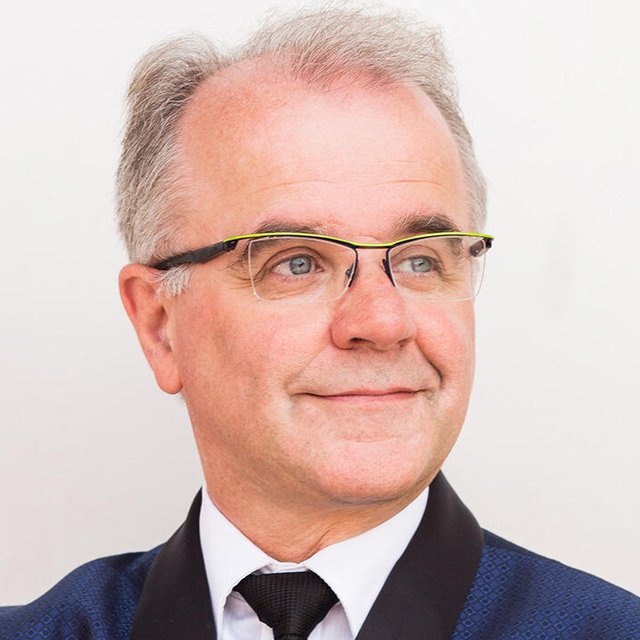
Ludovic Morlot, conductor
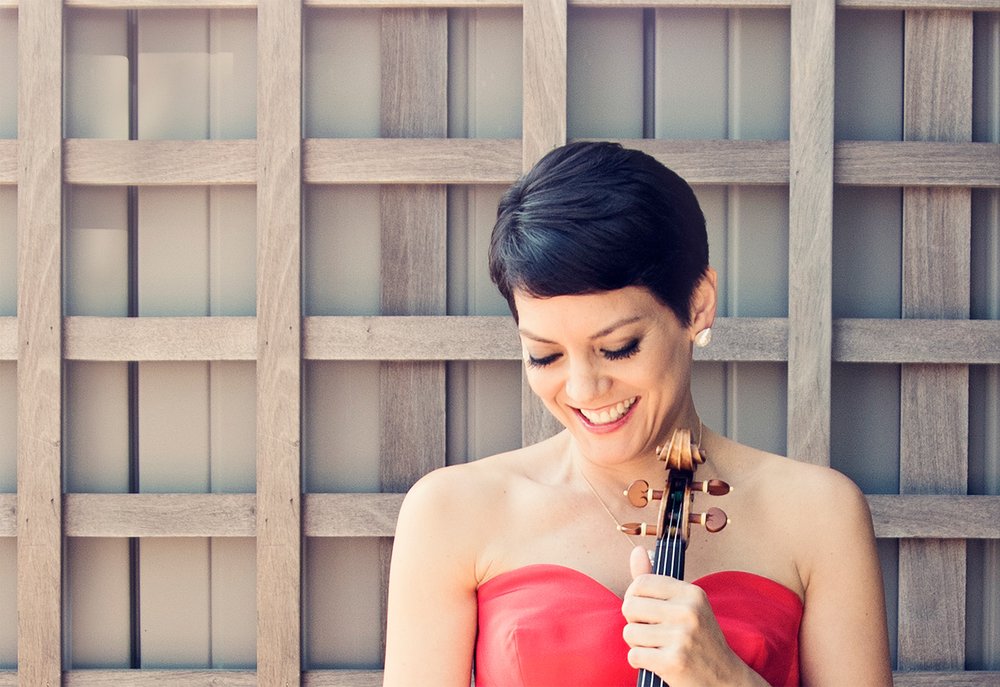
Anne Akiko Meyers, violin
Program Notes
Angélica Negrón (1981-)
Color Shape Transmission
Scored for: three flutes including piccolo, three oboes, three clarinets, three bassoons, four French horns, three trumpets, three trombones, tuba, timpani, percussion, harp, and strings
Performance time: 10 minutes
First Grant Park Orchestra performance
Puerto Rican-born composer Angelica Negrón is known for writing for unusual instruments, such as accordions, toys, robotic instruments, and electronics. This sonic adventurousness gives her a fresh approach to scoring for orchestra. In 2022, the Seattle Symphony commissioned Negrón to compose Color Shape Transmission as part of their Sibelius Companions series, where a new work was intended to respond to one of the Finnish composer’s seven complete symphonies. Negrón’s piece appeared alongside Sibelius’ Symphony No. 2, one of his most beloved works.
Color Shape Transmission employs a small selection of sounds, which Negrón transforms through echo and delay effects. In addition to synthesized MIDI samples, she adds two relatively unusual instruments to the orchestra: a vibraphone with its resonators covered in aluminum foil and a melodica, a handheld reed instrument with a piano keyboard. Regarding the brief, Negrón said she finds kindship with Sibelius in their shared use of “entrancing, hypnotic textures” and their ability to make space for joy while retaining emotional weight. Negrón also drew inspiration from ceramic artist Linda Nguyen Lopez for this work. When she saw Lopez’s pieces, she said, “I just saw a lot of personality and almost empathy. I felt like they were trying to communicate with each other.” In Color Shape Transmission, she imagines the sculptures “trying to communicate through colors and textures and shapes” in a huge, resonant space.
Arturo Márquez (1950-)
Fandango
Scored for: three flutes including piccolo, two oboes, two clarinets, two bassoons, four French horns, three trombones, tuba, timpani, percussion, harp, strings, and solo violin
Performance time: 30 minutes
First Grant Park Orchestra performance
Mexican composer Arturo Márquez had wanted to compose a piece based on the Mexican fandango for decades. Fate called when violinist Anne Akiko Meyers approached him in 2018 about writing her a violin concerto based on Mexican music. “I had known this music since I was a child, listening to it in the cinema, on the radio and listening to my father, a mariachi violinist, (Arturo Márquez Sr.) interpret huastecos and mariachi music,” Márquez writes. The Los Angeles Philharmonic premiered Fandango in 2021 under Venezuelan conductor Gustavo Dudamel, who said of the piece, “He’s created a wonderful journey through the history of the violin as a Latin folk instrument…After each note, you feel like you’re touching the beauty of the folk music that Arturo Márquez has written.”
Fandango is a traditional three-movement concerto for violin and orchestra. The first movement, “Folia Tropical,” recalls the baroque minor-mode chord progression called “La Folia,” which originated on the Iberian Peninsula. Márquez calls the introduction a “call to the remote history of the fandango.” The fandango, a fundamental part of flamenco, first appeared in eighteenth-century Spain and soon made its way to the Americas, where it was imbued with a new personality based on the people who adopted it. As such, Márquez incorporates multiple stylistic influences within the movement. The first theme is based on the Caribbean clave rhythmic pattern, while the second theme recalls an expressive bolero. The second movement, “Plegaria (Prayer),” is a free treatment of a chaconne, another baroque dance with Spanish roots. This meditative movement “pays tribute to the huapango mariachi together with the Spanish Fandango, both in its rhythmic and emotional parts,” Márquez explains. Finally, “Fandanguito” elaborates on the Huasteco Fandanguito. It also employs a fast Venezuelan dance called a pajarillo, which involves extensive introductory improvisation. This improvisatory spirit characterizes the finale, underpinned by the rhythmic vitality of the instruments native to the Huasteca region.
Pyotr Ilyich Tchaikovsky (1840-1893)
Symphony No.6 in B minor, op.74, TH 30 (1893)
Scored for: three flutes including piccolo, two oboes, two clarinets, two bassoons, four French horns, two trumpets, three trombones, tuba, timpani, percussion, and strings
Performance time: 46 minutes
First Grant Park Orchestra performance: July 21, 1935; Ebba Sundstrom, conductor
As early as 1889, Pyotr Ilyich Tchaikovsky was thinking about his legacy. That year, he wrote to his friend Grand Duke Konstantin Romanov, “I want terribly to write a somewhat grandiose symphony, which would crown my artistic career.” It would take him until 1893 to realize this dream, however. He began sketching a symphony in E-flat major in 1892 with this intent, but he ultimately destroyed it after a wave of self-doubt. In February of 1893, Tchaikovsky had the idea for what would become his final masterpiece: Symphony No. 6, “Pathétique.” He worked furiously on the symphony, sketching it in only 24 days and orchestrating it later that summer.
The nickname “Pathétique,” or “Pateticheskaya” in Russian, was ascribed to the symphony after the premiere, likely by Tchaikovsky’s brother Modest. Although this symphony is often referred to by the French term in the West, “Patetichskaya” has a slightly different connotation, meaning full of passionate emotion instead of necessarily sorrowful. Tchaikovsky had been of two minds when it came to attaching a program, or story, to his symphonic music. He had provided a detailed synopsis for his Fourth Symphony, but this time he decided that, while there was a program behind the symphony, it would “remain an enigma to everyone—let them guess.” And guess we have.
Tchaikovsky’s emotionally turbulent Sixth Symphony cries out for dramatic interpretation. This inclination, spurred by Tchaikovsky’s suggestion, is only further intensified by the speculation surrounding Tchaikovsky’s death just nine days after the symphony’s premiere. While the official cause of death—and most widely accepted by modern scholars—is that Tchaikovsky died of cholera due to drinking unboiled water during an outbreak in St. Petersburg, the rumor has persisted that he poisoned himself under threat that his affair with a young nobleman would be made public if he didn’t. Although we may never know for certain Tchaikovsky’s cause of death, Tchaikovsky’s complicated personal life as a gay man in Tsarist Russia and his sudden death have nonetheless influenced our interpretation of this symphony as especially tragic, like a suicide note or requiem. In reality, Symphony No. 6 follows a pattern in Tchaikovsky’s late works of alternating between joyful, fantastical compositions, such as Sleeping Beauty and The Nutcracker, and darker pieces occupied by themes of fate, such as The Queen of Spades. Plus, Tchaikovsky had finalized the symphony’s musical material seven months before his death.
The first movement opens with a dark bassoon solo, which foreshadows the agitated first subject introduced by the strings. The lyrical second theme bears a striking resemblance to Don José’s “Flower Song” from one of Tchaikovsky’s favorite operas, Carmen. After a woodwind interlude, the reprise of this theme fades to an impossibly quiet “pppppp” marking, which erupts into a ferocious fugue. The whole symphony can be characterized by these sudden and extreme shifts in dynamics, intensifying the nervous energy that pervades the work.
The inner two movements provide some emotional respite. The Allegro con grazia is cast as a flowing yet slightly off-kilter dance in 5/4 time, whereas the Allegro molto vivace is an aggressive march. Joyful on the outside, the third movement rings hollow in the context of the wider symphony, as if Tchaikovsky is parodying the bombastic finales for which he was known. Flouting symphonic convention, Tchaikovsky then concludes not with fireworks but with a long drawn-out Adagio in B minor. After the opening theme, marked “lamentoso,” comes a steady crescendo to a thundering climax. However, the lamentoso melody returns, sinking ever further in the low strings before gradually fading to nothing. As tempting as it is to read personal tragedy into this ending, Tchaikovsky was optimistic about the future while composing this symphony, writing to his nephew, “You can’t imagine how blissful I feel in the conviction that my time is not yet passed, and to work is still possible. Of course, I might be mistaken, but I don’t think so.”
Event Sponsor
The appearance of Anne Akiko Meyers is generously underwritten by Jeannette and Jerry Goldstone.
Artistic Leadership

Support The Festival
Grant Park Orchestra
* denotes leave-of-absence † one-year position
Jeremy Black, concertmaster
Jennifer Cappelli
Injoo Choi
Dima Dimitrova
Erica Hudson
Hyewon Kim
Matthew Lehmann
Jayna Park
Rika Seko
Karen Sinclair
Bonnie Terry
Trista Wong
Jonathan Yi
Krzysztof Zimowski
Liba Shacht, principal
Laura Miller, assistant principal
Ying Chai
Ran Cheng
Karl Davies
Likai He
Tiffany Kang
Ann Lehmann
Cristina Muresan
Kjersti Nostbakken
Irene Radetzky
Jeanine Wynton
Thomas Yang
Terri Van Valkinburgh, principal
Yoshihiko Nakano, assistant principal
Patrick Brennan*
Elizabeth Breslin
Beatrice Chen
Amy Hess
Christopher McKay†
Rebecca Swan
Chloé Thominet
Walter Haman, principal
Peter Szczepanek, assistant principal
Calum Cook
Larry Glazier
Steven Houser
Eric Kutz
Eran Meir
Linc Smelser*
Colin Corner, principal
Peter Hatch, assistant principal
Andrew Anderson
Alexander Horton
Christian Luevano†
Isaac Polinksy†
Timothy Shaffer*
Chunyang Wang
Chris White
Mary Stolper, principal
Jennifer Debiec Lawson, assistant principal
Jennifer Debiec Lawson
Alyce Johnson
Mitchell Kuhn, principal
Alex Liedtke
Anne Bach, assistant principal
Anne Bach
Dario Brignoli, principal
Trevor O’Riordan
Eric Hall, principal
Nicole Haywood, assistant principal
William Ramos
Jonathan Boen, principal
Stephanie Blaha, assistant principal*
Fritz Foss†
Samuel Hamzem†
Brett Hodge*
Neil Kimel
David Gordon, principal
Mike Brozick, acting assistant principal
Michael Brozick
William Denton
Daniel Cloutier, principal*
Jeremy Moeller, acting principal
Alexander Mullins
Andrew Smith, principal
Daniel Karas, principal
Josh Jones, principal
Joel Cohen, assistant principal
Doug Waddell
Kayo Ishimaru-Fleisher, principal
Christopher Guzman
Alba Layana Izurieta, Violin
Janani Sivakumar, Violin
Harper Randolph, Viola
Gabriel Hightower, Cello
Grant Park Chorus
* denotes leave-of-absence † one-year position
Taylor Adams
Summer Aebker
Kristina Bachrach
Madalynn Baez
Megan E. Bell
Alyssa Bennett
Anna Joy Buegel
Laura Bumgardner
Elisabeth Burmeister
Katherine Buzard
Bethany Clearfield
Nathalie Colas
Corinne Costell
Carolyne DalMonte
Rebecca Fitzpatrick
Megan Fletcher
Kaitlin Foley
Saira Frank
Katherine Gray-Noon
Kimberly Gunderson
Alexandra Ioan
Alexandra Kassouf
Darlene Kelsey
Olivia Knutsen
Marybeth Kurnat
Catherine Larson
Katelyn Lee
Rosalind Lee
Rena Maduro
Hannah Dixon McConnell
Marie McManama
Meganna Miller
Kathleen Monson
Emily Mwila
Susan Nelson
Evangeline Ng
Karen R. Nussbaum
Máire O’Brien
Laura Perkett
Molly Phelan
Angela Presutti Korbitz
Alexia Rivera
Veronica Samiec
Whitney Shurtliff
Emily Sinclair
Tiana Sorenson
Christine Steyer
Diana Stoic
Karlie Traversa
Sarah van der Ploeg
Lydia Walsh-Rock
Sherry Watkins
Tara Wheeker
Emily Lyday Yiannias
Christina Adams
Melissa Arning
Christina Bernardoni
Christine Boddicker
Bethany Brewer
Jean Broekhuizen
Anna De Ocampo Kain
Julie DeBoer
Leah Dexter
Katrina Dubbs
Stacy Eckert
Margaret Fox
Elizabeth Frey
Liana German
Catarine Hancock
Ruth Ginelle Heald
Nina Heebink
Miya Higashiyama
Carla Janzen
Amy Allyssa Johnson
Kathryn Kinjo Duncan
Amanda Koopman
Jeannette Lee
Hannah Little
Thereza Lituma
Chelsea Lyons
Victoria Marshall
Jessica McCarthy
Greta McNamee
Quinn Middleman
Sarah Ponder
Emily Price
Lauren Randolph
Grace Ryan
Stephanie Schoenhofer
Suzanne A. Shields
Emlynn Shoemaker
Cassidy Smith
Emma Sorenson
Aidan Spencer
Alannah Spencer
Carolyn Sundlof Boudreau
Gabrielle Timofeev López
Corinne Wallace-Crane
A.J. Wester
Debra Wilder
Pamela Williams
Avery Winick
Enrico Giuseppe Bellomo
Justin Berkowitz
Madison Bolt
Eric Botto
Hoss Brock
Steven Caldicott Wilson
Joseph Cloonan
Damon Cole
John J. Concepción
Matthew Cummings
Micah A. Dingler
Howard Eckdahl
Jared V. Esguerra
Andrew Fisher
Ryan Frenk
Ace Gangoso
Klaus Georg
Nikhil Harle
Jianghai Ho
Max Hosmer
Cameo T. Humes
Paul Hunter
Garrett Johannsen
William Johnson
James Judd
Tejas Kishan Gururaja
Tim Lambert
Tyler Lee
Mason Montuoro
Stephen D. Noon
Brett Potts
Nicholas Pulikowski
Brian Rasmussen
Patrick Reardon
Peder Reiff
Matthew W. Schlesinger
Silfredo Serrano
Joe Shadday
Aaron Short
Matthew Sink
Brian Skoog
Michael St. Peter
Ryan Townsend Strand
Brett Sweeney
Alan Taylor
Keven Washburn
Sean J. Watland
Walter Aldrich
Evan Bravos
Matthew Brennan
Tabes Bridges
Michael Cavalieri
Stephen Clark
David Corlew
Michael D. Costello
Philip Courington
Ryan J. Cox
Ed Frazier Davis
Wesley Diener
Chris DiMarco
Christopher Filipowicz
Gabriel Garcia
Dimitri German
Dominic German
David Govertsen
David Hartley
Matthew Hunt
Brian Hupp
Jan Jarvis
Jess Koehn
Zachary Mendenhall
Eric Miranda
Ron Mitchell
Ian Morris
Ian Murrell
Chiemerie Obianom
John E. Orduña
Wilbur Pauley
Douglas Peters
Jackson Pierzina
Anthony Pilcher
Martin Lowen Poock
Ian Prichard
Gabriel Reitemeier
Dan Richardson
Stephen Richardson
Benjamin D. Rivera
Joseph Ryan
Ivo Suarez
Avery Sujkowski
Scott Uddenberg
Vince Wallace
Nicholas Ward
Aaron Wardell
Ronald Watkins
Jonathon Weller
Peter Wesoloski
Max Wier
Jonathan Wilson
Chuck Foster
John Goodwin
Veronica Mak, soprano
Emily Amesquita, alto
Alexi Ortega Chavez, tenor
Lifan Deng, bass