
Beethoven Symphony No. 9
Program
Julia Wolfe Liberty Bell (10 mins)
Michael Daugherty Mount Rushmore (32 mins)
George Washington
Thomas Jefferson
Theodore Roosevelt
Abraham Lincoln
Intermission (20 mins)
Ludwig van Beethoven Symphony No.9 in D minor, op.125, Choral (1 hour, 5 mins)
Allegro ma non troppo; un poco maestoso
Molto vivace
Adagio molto e cantabile
Presto - Allegro assai - Allegro assai vivace
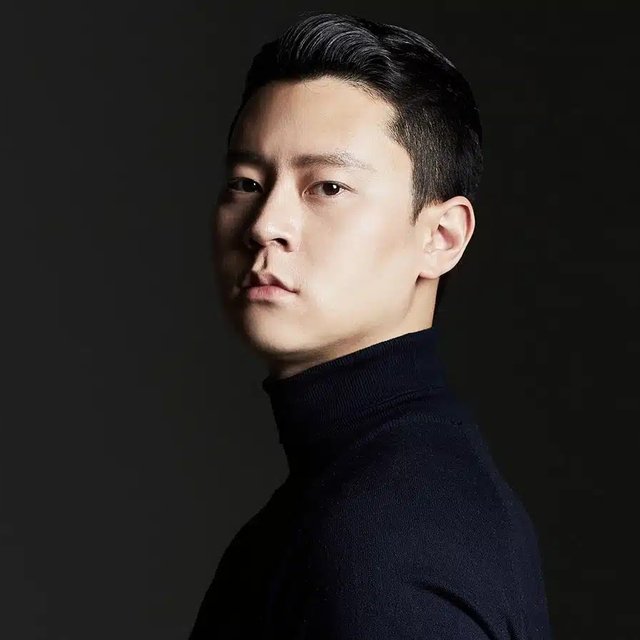
Featuring
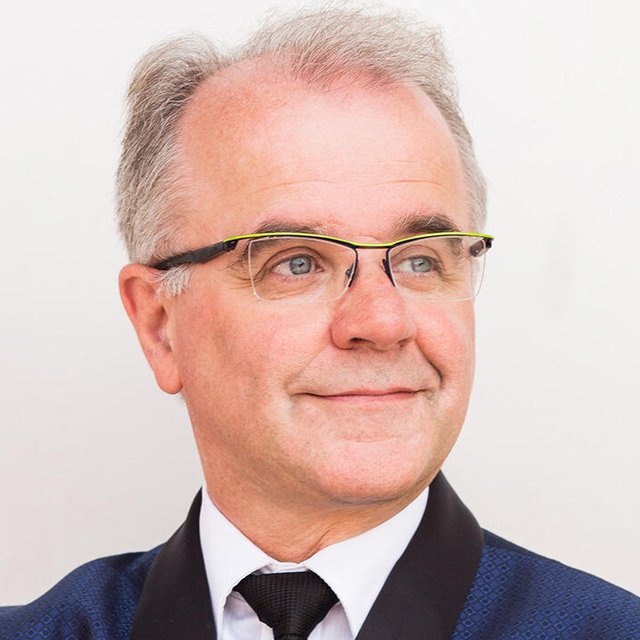
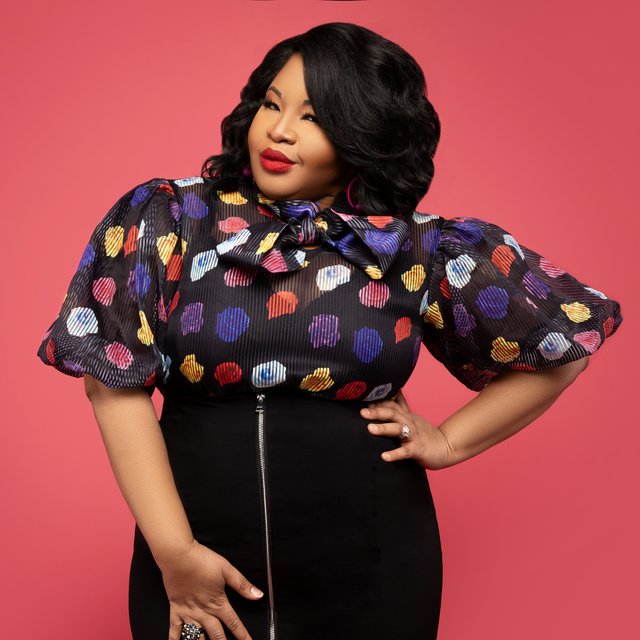
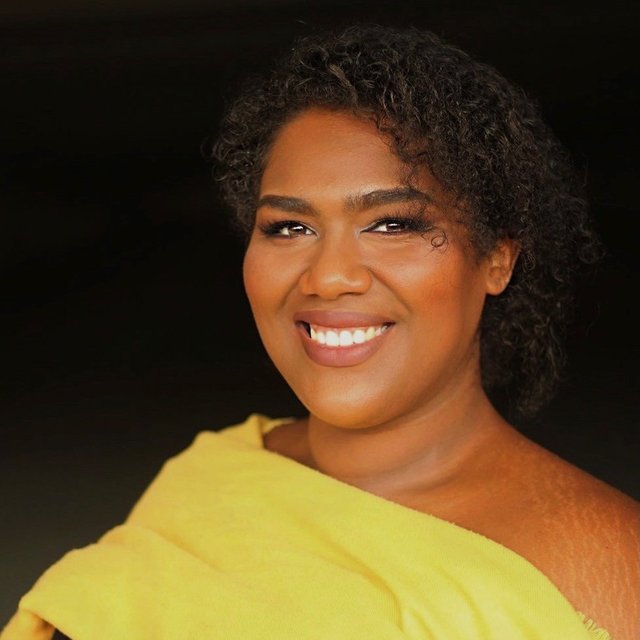
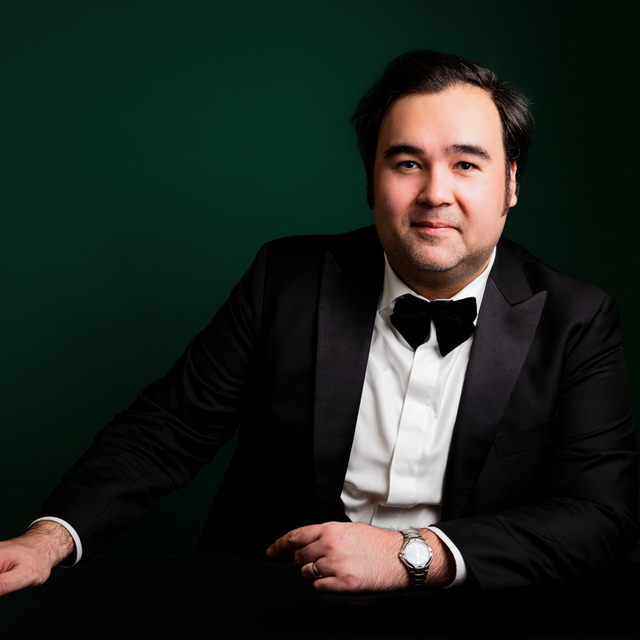
Program Notes
Julia Wolfe (b. 1958)
Liberty Bell (2026)
Scored for: two flutes, two oboes, two clarinets, two bassoons, four French horns, two trumpets, three trombones, tuba, timpani, percussion, harp, piano, and strings
Performance time: 10 minutes
First Grant Park Orchestra performance.
On February 23, 1846, the Liberty Bell rang for the last time. Already damaged from its tumultuous history, the bell was rendered dumb when it was struck to commemorate George Washington’s birthday, and the preexisting crack spread to an irreparable degree. Unlike the iconic bell, Julia Wolfe’s orchestral overture Liberty Bell is far from silent. Calling for a large orchestra of 100 musicians, with competing rhythmic lines and the clamor of metal chimes and pitched bell plates, Liberty Bell captures what Wolfe calls the “messy, boisterous, ongoing, interlocking struggle” of obtaining liberty.
“How can a piece of music embody and communicate the elusive reach for the most basic tenet of the founding of the country?” Wolfe asks in her program note. “The idea of liberty is everywhere—imprinted on coins, decorating postage stamps, declared in poetry and song, sprinkled through speeches. Music is my way of adding to the clamor. I shout out perseverance, grab tight to optimism, and search for a way forward. Taking the bell’s inscription literally, ‘unto all the inhabitants thereof,’ the proclamation speaks to all who reach for the promise of liberty.”
Juraj Valčuha conducted the world premiere of Liberty Bell with the Houston Symphony on September 19, 2025. The Grant Park Festival Orchestra is proud to be among the orchestras that co-commissioned the work to commemorate the 250th anniversary of the signing of the Declaration of Independence.
—Katherine Buzard
Michael Daugherty (b. 1954)
Mount Rushmore (2010)
Scored for: three flutes including piccolo, three oboes including English Horn, three clarinets including bass clarinet, three bassoons including contrabassoon, four French horns, three trumpets, three trombones, tuba, timpani, percussion, harp, organ, chorus, and strings
Performance time: 32 minutes
First Grant Park Orchestra performance.
Set in the Black Hills of South Dakota, Mount Rushmore immortalizes four of the most influential presidents in American history: George Washington, Thomas Jefferson, Theodore Roosevelt, and Abraham Lincoln, chosen for the monument for their roles in the foundation, expansion, development, and preservation of our country. Designed and overseen by sculptor Gutzon Borglum, Mount Rushmore was carved by a small team between 1927 and 1941. The presidents’ faces, standing at 60 feet tall, are carved into a mountain known as the Six Grandfathers, a sacred mountain for the Arapaho, Cheyenne, and Lakota Sioux peoples.
Michael Daugherty’s dramatic oratorio Mount Rushmore (2010) was inspired by this iconic American landmark and the presidents it honors. Understanding the fraught history behind the monument, Daugherty draws from a variety of texts and American music in an effort to “[echo] the resonance and dissonance of Mount Rushmore as a complex icon of American history.”
Each movement presents a musical portrait of one of the presidents carved into Mount Rushmore, using their own words. The first movement, “George Washington,” sets a line from Washington’s letter to General Marquis de Lafayette on February 1, 1784, in which he reflects on his retirement from his military career and public life: “I will move gently down the stream of life until I sleep with my Fathers.” (Washington’s retirement was short-lived, as a few years later he would be called to serve as the nation’s first president.) These touching words are mixed with the popular Revolutionary War songs “Yankee Doodle” and William Billings’s “Chester.” Sung by a semichorus in the style of shape-note music, “Chester” invokes the determination of the American Revolutionaries with the text, “Let tyrants shake their iron rod, / And Slav’ry clank her galling chains, / We fear them not, we trust in God, / New England’s God forever reigns.”
Next comes Thomas Jefferson, who, alongside his political career, was an accomplished violinist. While serving as America’s envoy to France in the late 1780s, the recently widowed Jefferson had a brief love affair with Maria Cosway, an Anglo-Italian musician, painter, and society figure. Daugherty interweaves a song Cosway wrote for Jefferson in 1786 called “Ogni dolce aura” with extracts from Jefferson’s letters and words from the Declaration of Independence. Strains of “La Marseillaise” nod to his time in France, while the opening violin solo references Jefferson’s instrument of choice.
The third movement honors Theodore Roosevelt, the pioneering outdoorsman who saved 234 million acres of land from development by founding the National Parks Service. The text draws from a speech Roosevelt gave at the Grand Canyon in 1903 and a book he wrote on hunting. Daugherty’s music attempts to capture Roosevelt’s “delight in the hardy life of the open” and “the hidden spirit of the wilderness.” Declamatory vocal writing and percussion feature heavily, alongside paraphrases of the 18th-century hymn “Rock of Ages”—an apt choice to depict a rugged man chiseled in granite.
Finally, in “Abraham Lincoln,” Daugherty sets the entirety of the Gettysburg Address to music that “resonates with echoes of period music from the Civil War,” he explains in his program note. “I create a musical portrait of the 16th President of the United States, who expressed his vision with eloquence, and with hope that the human spirit could overcome prejudice and differences of opinion in order to create a better world.”
—Katherine Buzard
Ludwig van Beethoven (1770-1827)
Symphony No.9 in D minor, op.125, Choral (1822)
Scored for: three flutes including piccolo, two oboes, two clarinets, three bassoons including contrabassoon, four French horns, two trumpets, three trombones, timpani, percussion, solo soprano, solo mezzo-soprano, solo tenor, solo bass-baritone, chorus, and strings
Performance time: 65 minutes
First Grant Park Orchestra performance: Jun 25, 1955; Nicolai Malko, conductor; Alice Riley, soprano; Rosemary Anoe, mezzo-soprano; Harold Brindell, tenor; Andrew Foldi, bass
It’s difficult to imagine the last two hundred years of music history without Ludwig van Beethoven’s Ninth Symphony. As Beethoven biographer Lewis Lockwood puts it, “Every German composer of symphonies after Beethoven, from Mendelssohn and Schumann to Brahms, Bruckner, and Mahler, understood that the Ninth had come to be a central bulwark of musical experience that each would have to confront in carving out a personal path as a symphonist.”
Beethoven’s Ninth redefined what a symphony could be, not only in its sheer scale and unprecedented use of voices in the final movement, but also in its extra-musical striving toward triumph or transcendence. He achieves this dramatic arc through an organic unity of musical design across the entire symphony, with themes, harmonies, key relationships, and instrumentation evolving and recurring from movement to movement. Beethoven had been perfecting this “symphonic ideal” since his Third Symphony (Eroica), composed twenty years before; in the Ninth, it reaches its apotheosis.
Compositional innovations aside, it’s the Ninth’s enduring message of unity, peace, and joy that has moved generations of audiences worldwide. Beethoven’s masterstroke was his choice of text for the human voice’s first foray into the symphonic sphere. He turned to a poem that he had wanted to set to music since at least 1793: Friedrich Schiller’s An die Freude (“To Joy”). Written in 1785, Schiller’s ode is ostensibly a drinking song, but it conveys a strong humanistic message, offering an Edenic vision of human brotherhood. Beethoven molds Schiller’s poem to suit his own musical and ideological needs, omitting lines about drinking to excess and freely reordering verses. In so doing, Beethoven is proclaiming his political views, just as Missa Solemnis, completed the year before, was a deeply personal expression of his religious beliefs.
While Beethoven had been ruminating on An die Freude for thirty years, the first sketch of music for the Ninth Symphony dates from 1815—a fugue subject that would become the scherzo’s main theme. In 1818, Beethoven began sketching a D-minor symphony and outlined his vision for another symphony that would include voices in one or more movements. These two symphonies eventually merged. After completing Missa Solemnis, he dedicated the bulk of 1823 to working on the Ninth Symphony, completing it in March 1824.
The brilliance of Beethoven’s Ninth Symphony lies in more than just its finale. The first movement opens with mysterious string tremolos and falling fourths and fifths, as if Beethoven is trying to pull the theme out of the primordial ooze. Some scholars have likened this opening to the birth of sound or order emerging from chaos. The theme eventually breaks forth in a menacing D minor. While many of the movement’s melodic gestures are declamatory, any sense of heroism is undermined by constant harmonic flux.
Beethoven reverses the traditional order of the slow movement and scherzo for maximum dramatic impact. The scherzo, building on the energy of the Allegro, is a contrapuntal whirlwind punctuated by timpani, contrasted with a more pastoral trio section. The Adagio is a time-stopping set of variations on two themes, which unfolds in an atmosphere of transcendent beauty. The tranquility is broken periodically by fanfares, as if telling the listener to pay attention because something exciting is about to happen.
The finale’s dissonant opening chord (which Wagner called the “fanfare of terror”) signals the dawn of a new age, as if with this chord Beethoven is tearing up the compositional rule book. The cellos and basses imitate operatic recitative. The orchestra recalls music of the previous movements, but the low strings dismiss their entreaties each time. That is, until a new theme emerges—one so sublimely simple that it could be an old hymn or folk song. Finally, we hear the full “Ode to Joy” theme pianissimo in the cellos and basses, before other instruments gradually take up the melody.
Relatively late in the work’s composition, Beethoven was still unsure about how to introduce the singers, even going so far as to sketch a completely instrumental finale in late 1823. He eventually arrived at a solution: prefacing Schiller’s poem with his own words. After another “fanfare of terror,” the bass soloist enters, taking up the low strings’ earlier recitative. “Oh friends, no more of these sounds!” he pleads. “Let us sing more cheerful and joyful songs!” He then takes up the “Ode to Joy” tune, ushering in a set of variations on the theme by the chorus and other soloists. The finale is so vast and full of contrasting musical material, it’s almost a symphony within a symphony. Alongside the “Ode to Joy,” we hear a Turkish march, powerful unison vocal declamations, a prayerful section about the Creator who “dwells beyond the stars,” an intricate cadenza for the four soloists, and a hulking double fugue.
Symphony No. 9 was received enthusiastically at its premiere on May 7, 1824, even if Beethoven, now almost completely deaf, could not hear the audience’s thunderous applause. Although Beethoven “conducted” the concert, the musicians on stage were instructed to watch the concertmaster for cues instead. According to multiple accounts from those in attendance, when applause broke out at the end of the piece (or after the scherzo, in some sources), the contralto soloist had to tap Beethoven on the shoulder so he would stop shuffling pages on his music stand and turn around to acknowledge his adoring public.
—Katherine Buzard
Event Sponsors
This concert is generously sponsored by Latham & Watkins, LLP.
Lead support for this program is provided through the Dehmlow Choral Music Series.
The appearances of Imara Miles and Jongwon Han are graciously underwritten through the David H. Whitney and Juliana Y. Chyu Next Generation Vocalist Fund.
Artistic Leadership
Support The Festival
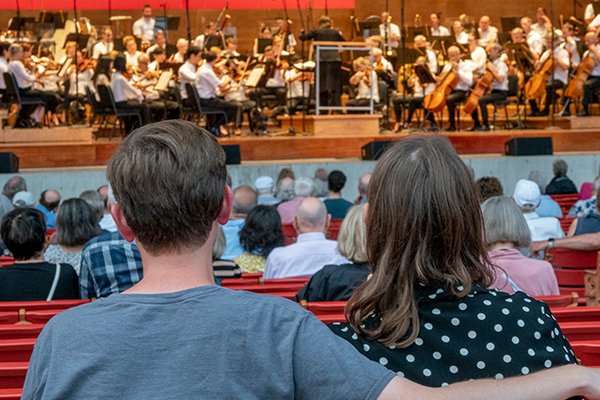
Grant Park Orchestra
* denotes leave-of-absence † one-year position
Jeremy Black, concertmaster
Dima Dimitrova, acting assistant concertmaster
Trista Wong
Zulfiya Bashirova
Jennifer Cappelli
Injoo Choi
Erica Hudson
Hyewon Kim
Matthew Lehmann
Jayna Park
Rika Seko
Karen Sinclair
Bonnie Terry*
Krzysztof Zimowski
Liba Shacht, principal
Likai He, acting assistant principal
Ying Chai
Karl Davies
Ann Lehmann
Laura Miller
Cristina Muresan
Kjersti Nostbakken
Irene Radetzky
Jeanine Wynton
Thomas Yang
Bing Jing Yu†
Terri Van Valkinburgh, principal
Yoshihiko Nakano, assistant principal
Elizabeth Breslin
Beatrice Chen
Georgi Dimitrov
Amy Hess
Rebecca Swan
Chloé Thominet
Walter Haman, principal
Peter Szczepanek, assistant principal
Calum Cook
Larry Glazier
Steven Houser
Eric Kutz*
Eran Meir
Shinae Ra
Colin Corner, principal
Peter Hatch, assistant principal
Andrew Anderson
Christian Luevano
Samuel Rocklin
Chunyang Wang
Chris White
Elvin Schlanger, principal
Alyce Johnson
Jennifer Lawson, assistant principal
Jennifer Lawson
Mitchell Kuhn, principal
Gwendolyn Goble
Anne Bach, assistant principal
Anne Bach
Dario Brignoli, principal
Trevor O’Riordan, assistant principal
Besnik Abrashi
Besnik Abrashi
Eric Hall, principal
Nicole Haywood Vera Tenorio, assistant principal
Matthew Melillo
Matthew Melillo
Patrick Walle, acting principal†
Stephanie Blaha, assistant principal
Neil Kimel
Brett Hodge
Paul Clifton
David Gordon, principal
Mike Brozick
Rebecca Oliverio, assistant principal
Jeremy Moeller, acting principal
Lee Rogers, acting assistant principal†
Alexander Mullins
Andrew Smith, principal
Daniel Karas, principal
Josh Jones, principal
Sean Edwards, acting assistant principal†
Doug Waddell
Lynn Williams, acting principal†
Christopher Guzman
Eliza Bangert, principal
Carlos Chacón, violin
Valentina Guillen Menesello, violin
Steven Baloue, viola
Miquel Fuentes, cello
Grant Park Chorus
* denotes leave-of-absence † 2025 Vocal Fellow
Katy Avery
Kristina Bachrach
Madalynn Baez
Megan E. Bell
Alyssa Bennett
Tamara Bodnar
Kylie Buckham
Anna Joy Buegel
Laura Bumgardner
Katherine Buzard
Bethany Clearfield
Nathalie Colas
Carolyne DalMonte
Megan Fletcher
Kaitlin Foley
Hayley Fox
Saira Frank
Katherine Gray-Noon
Kimberly Gunderson
Alexandra Ioan
Alexandra Kassouf
Darlene Kelsey
Olivia Knutsen
Katelyn Lee
Rosalind Lee
Lauren Maho
Veronica Mak
Hannah Dixon McConnell
Marie McManama
Sarah Elise Navy+
Susan Nelson
Evangeline Ng
Alexandra Olsavsky
Laura Perkett
Angela Presutti Korbitz
Alexia Rivera
Veronica Samiec
Tiana Sorenson
Sarah van der Ploeg
Lydia Walsh-Rock
Sherry Watkins
Melissa Arning
Angela Born
Amanda Cabán
Julie DeBoer
Leah Dexter
Katrina Dubbs
Stacy Eckert
Margaret Fox
Elizabeth Frey
Liana German
Savannah Gordon
Ruth Ginelle Heald
Miya Higashiyama
Sophia Hunt
Carla Janzen
Amy Allyssa Johnson
Zoë Kales
Kathryn Kinjo Duncan
Amanda Koopman
Thereza Lituma
Chelsea Lyons
Victoria Marshall
Quinn Middleman
Ella Peters
Sarah Ponder
Emily Price
Stephanie Schoenhofer
Suzanne A. Shields
Marissa Simmons
Cassidy Smith
Alannah Spencer
Carolyn Sundlof Boudreau
Ruoxuan Nola Tan+
Gabrielle Timofeeva López
Elizabeth Vaughan
Corinne Wallace-Crane
A.J. Wester
Debra Wilder
Isabel Yang
Charles Anderson
Enrico Giuseppe Bellomo
Justin Berkowitz
Madison Bolt
Hoss Brock
Steven Caldicott Wilson
Matthew Callahan
John J. Concepción
Matthew Cummings
Jared V. Esguerra
Alec Fore
Ace Gangoso
Tejas Gururaja+
Paul Hunter
Garrett Johannsen
William Johnson
James Judd
Tim Lambert
Tyler Lee
Mason Montuoro
Stephen D. Noon
Marcos Ochoa
Brett Potts
Peder Reiff*
Samuel Rosner
Matthew W. Schlesinger
Trevor Scott
Silfredo Serrano
Joe Shadday
Aaron Short
Michael St. Peter
Ryan Townsend Strand
Alan Taylor
Walter Aldrich
Evan Bravos
Matthew Brennan
Michael Cavalieri
Brennan Cockey
Ryan J. Cox
Ed Frazier Davis
Matthew Dexter
Wesley Diener
Chris DiMarco
Christopher Filipowicz
Dimitri German
Dominic German
Owen Gonzalez+
David Govertsen
Seth Hobi
Zachary Kurzenberger
Ian Martin
Dorian McCall
Eric Miranda
Ian Morris
Ian Murrell
John E. Orduña
Wilbur Pauley
Douglas Peters
Martin Lowen Poock
Ian Prichard
Alexander Quackenbush
Dan Richardson
Stephen Richardson
Austin Sanders
Scott Uddenberg
Schyler Vargas
Vince Wallace
Aaron Wardell
Ronald Watkins
Jonathon Weller
Peter Wesoloski
Jonathan Wilson
Chuck Foster
Sarah Elise Navy
Ruoxuan Nola Tan
Tejas Kishan Gururaja
Owen Gonzalez
Benjamin Rivera