
Brahms Symphony No. 4
Program
Charles Ives (orch. William Schuman) Variations on America (8 mins)
Johannes Brahms Symphony No. 4 in E minor (39 mins)
Allegro no troppo
Andante moderato
Allegro giocoso
Allegro energico e passionato
Intermission (20 mins)
Gabriela Lena Frank Conquest Requiem (38 mins)
Introit: Cuicatl de Malinche
Judex ergo cum sedebit
Dies Irae: Cuicatl de Martin
Recordare, Jesu pie
Rex Tremendae: El aullido de Malinche
Confutatis maledictis
In Paradisum: Benedicion de Malinche y Martin
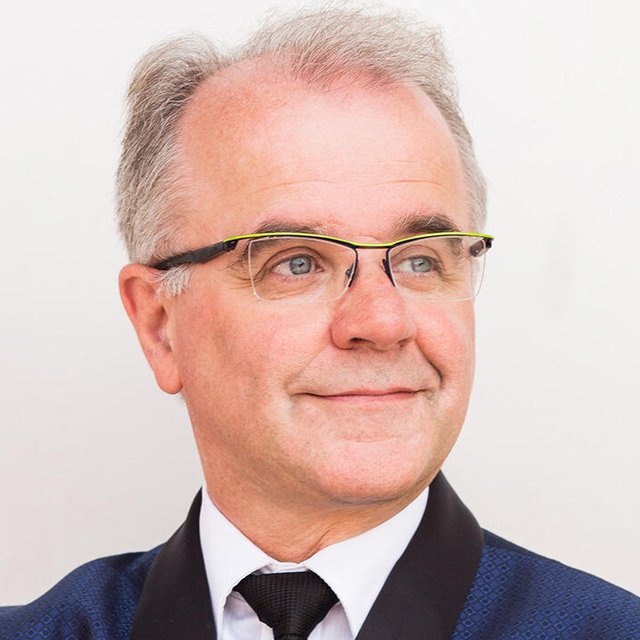
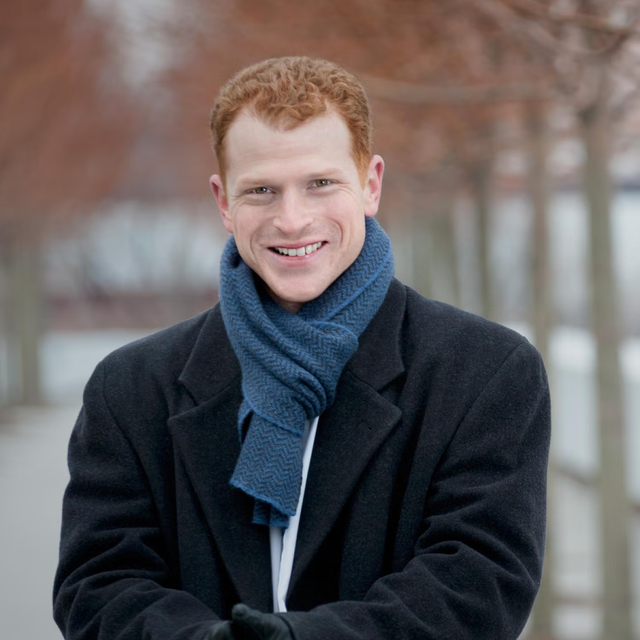
Featuring

Program Notes
Charles Ives (orch. William Schumann) (1874-1954)
Variations on America (1891)
Scored for: three flutes including piccolo, two oboes, two clarinets, two bassoons, four French horns, three trumpets, three trombones, tuba, timpani, percussion, and strings
Performance time: 8 minutes
First Grant Park Orchestra performance: Jul 4, 1973; Skitch Henderson, conductor
Variations on “America” is one of Charles Ives’s earliest compositions, written while he was working as an organist at a Methodist church in Brewster, New York. The teenage composer prepared the work, originally for solo organ, for the church’s Fourth of July celebration in 1892 but continued to tinker with the piece until he matriculated at Yale in 1894. Divided into nine sections, the work presents a theme and variations on the tune “America,” also known as “My Country ’Tis of Thee.”
Later in life, Ives described Variations on “America” as “but a boy’s work, partly serious and partly in fun.” (In fact, his father forbade him from playing it too often at church as it made the boys in the congregation laugh.) That said, it demonstrates Ives’s advanced organ technique with its difficult pedal lines, which Ives described as “almost as fun as playing baseball.” The work also foreshadows his mature compositional style, characterized by an eclectic mix of American vernacular music, European Romanticism, and experimentations with tonality, as demonstrated in the two bitonal interludes.
Ives submitted the piece for publication with the help of his father, a former US Army band leader during the Civil War, but was turned down. In 1948, concert organist E. Power Biggs rediscovered Ives’s work of juvenilia and published his own edition. Composer William Schuman later orchestrated Variations on “America” in 1962.
—Katherine Buzard
Johannes Brahms (1833-1897)
Symphony No. 4 in E minor (1884)
Scored for: two flutes including piccolo, two oboes, two clarinets, three bassoons including contrabassoon, four French horns, two trumpets, three trombones, timpani, percussion, and strings
Performance time: 39 minutes
First Grant Park Orchestra performance: Aug 4, 1937; Richard Czerwonky, conductor
In the summer of 1885, Johannes Brahms took to the Austrian Alps to write the bulk of his Fourth Symphony. As was often the case, he was anxious about how his new work would be received. Conscious of the symphony’s dark tone, he wrote to his friends, “I’m really afraid that it tastes like the climate here. The cherries don’t ripen in these parts; you wouldn’t eat them.”
Turns out, he needn’t have worried. On October 25, 1885, Brahms conducted the premiere of his Fourth Symphony with the court orchestra at Meiningen to great acclaim. After this successful first outing, the orchestra took the symphony on tour across Germany and the Netherlands. It was well received wherever it went and quickly entered the orchestral repertoire. It has come to represent the pinnacle of Brahms’s achievement in the symphonic genre. Although he lived another 12 years, Brahms did not pen another symphony. Perhaps he knew he didn’t have another one in him, as he packs the Fourth with dense counterpoint and melodic development, driven by an inexorable energy from beginning to end.
The first movement (Allegro non troppo) opens with a sighing motif in the violins. From this simple, lilting figure of descending thirds, the rest of the monumental movement unfolds. Woodwinds adorn the theme with perpetually moving notes, driving the motion forward. A noble fanfare in the woodwinds and brass introduces a lyrical second theme in the cellos, which is soon taken up by the violins. The fanfare motif punctuates the movement throughout, while the sighing theme becomes increasingly troubled with each variation. The movement ends with an exuberant, tension-filled coda complete with decisive drum strokes.
The Andante opens with a solo horn call, joined by the oboes and flutes in unison. As opposed to a major or minor key, the movement is set in the Phrygian mode, which lends it an ancient feel—as if one stepped into a medieval fairy tale. The woodwinds intone a hushed melody over delicate pizzicato strings, which rolls along like a funeral cortège. Insistent triplets briefly disrupt the peaceful atmosphere before the cellos introduce a sensuous second melody, accompanied by a countermelody in the bassoons and sighing violins. The mood continues to fluctuate between contemplative and tense, ending ominously with softly beating drums.
The rollicking energy of the ensuing scherzo (Allegro giocoso) breaks the reverie of the Andante, the key of C major providing a stark contrast amid the predominantly minor-mode symphony. In the finale, Brahms—an ardent scholar of music history—synthesizes the ancient and the modern. He adapts the repeated bassline from the final movement of Bach’s Cantata 150, “Nach dir, Herr, verlanget mich,” to form the basis of a set of variations known as a passacaglia. The eight chords that open the finale present the ascending bassline theme, which then undergoes 30 variations of different textures, harmonies, and affects. The repetitive structure of the passacaglia adds to the symphony’s overarching feeling of hurtling toward an inevitable, tragic fate.
—Katherine Buzard
Gabriela Lena Frank (b. 1972)
Conquest Requiem (2017)
Scored for: three flutes including piccolo, three oboes including English Horn, three clarinets including bass clarinet, three bassoons, two French horns, two trumpets, two trombones, tuba, timpani, percussion, harp, piano, solo baritone, solo soprano, chorus, and strings
Performance time: 38 minutes
First Grant Park Orchestra performance.
For Gabriela Lena Frank, the child of a Peruvian/Chinese mother and Lithuanian/Jewish father, identity has always been central to her works. A musical anthropologist of sorts, Frank has traveled extensively throughout South America, often incorporating Latin American folklore, poetry, and musical styles into her compositions. Conquest Requiem is no different.
Conquest Requiem was inspired by the true story of Malinche, a Nahua woman from the Gulf Coast of present-day Mexico, who was given to the Spaniards as a slave in the early 16th century. Through her skills as an interpreter of Nahuatl, various Mayan dialects, and Spanish, she rose above her circumstances, eventually converting to Christianity and becoming the advisor and mistress of Hernán Cortés during the Spanish conquest of the Aztec Empire. They had a son together, Martín, considered one of the first mestizo, or mixed-race, people.
Malinche is a complex figure, simultaneously viewed as “a feminist hero who saved countless lives, treacherous villain who facilitated genocide, conflicted victim of forces beyond her control, or as symbolic mother of the new mestizo people,” Frank writes in her program note. The work confronts these complexities and the lasting consequences of colonization. As Frank describes, “At the same time that entire societies were decimated, we witnessed the birth of new music, literature, food, political philosophies and, yes, even religions.”
In telling the story of Malinche and her son, Martín, Conquest Requiem juxtaposes the traditional Latin Requiem Mass text with Nahua poetry written by Aztec nobility, tied together by original Spanish lyrics by Pulitzer Prize-winning playwright and poet Nilo Cruz. The tension among the three languages and texts speaks to the universal dimensions of conflict as well as the complexities of Malinche’s situation.
Like a traditional Requiem Mass, Conquest Requiem is structured in seven movements. The soprano and baritone soloists represent the voices of Malinche and Martín, respectively. The choir comments on the drama as it unfolds, acting as a sort of Greek chorus throughout. The orchestra plays a critical role in the storytelling as well, with Frank deploying unusual orchestral colors and textures to paint the landscape of the New World. Her compositional language, marked by moments of atonality, extreme registers and dynamics, decisive rhythmic patterns, and unusual instrumental combinations, all contribute to this complex picture, which is at times terrifying and at other times beautiful, as in the cathartic final “In paradisum.”
—Katherine Buzard
Event Sponsors
This concert is generously sponsored as part of the Dehmlow Choral Music Series.
Artistic Leadership
Support The Festival
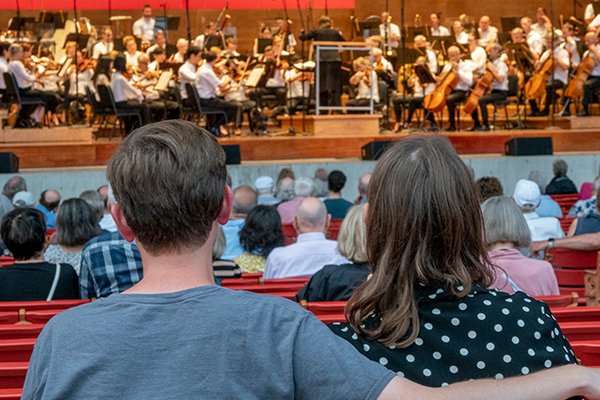
Grant Park Orchestra
* denotes leave-of-absence † one-year position
Jeremy Black, concertmaster
Dima Dimitrova, acting assistant concertmaster
Trista Wong
Zulfiya Bashirova
Jennifer Cappelli
Injoo Choi
Erica Hudson
Hyewon Kim
Matthew Lehmann
Jayna Park
Rika Seko
Karen Sinclair
Bonnie Terry*
Krzysztof Zimowski
Liba Shacht, principal
Likai He, acting assistant principal
Ying Chai
Karl Davies
Ann Lehmann
Laura Miller
Cristina Muresan
Kjersti Nostbakken
Irene Radetzky
Jeanine Wynton
Thomas Yang
Bing Jing Yu†
Terri Van Valkinburgh, principal
Yoshihiko Nakano, assistant principal
Elizabeth Breslin
Beatrice Chen
Georgi Dimitrov
Amy Hess
Rebecca Swan
Chloé Thominet
Walter Haman, principal
Peter Szczepanek, assistant principal
Calum Cook
Larry Glazier
Steven Houser
Eric Kutz*
Eran Meir
Shinae Ra
Colin Corner, principal
Peter Hatch, assistant principal
Andrew Anderson
Christian Luevano
Samuel Rocklin
Chunyang Wang
Chris White
Elvin Schlanger, principal
Alyce Johnson
Jennifer Lawson, assistant principal
Jennifer Lawson
Mitchell Kuhn, principal
Gwendolyn Goble
Anne Bach, assistant principal
Anne Bach
Dario Brignoli, principal
Trevor O’Riordan, assistant principal
Besnik Abrashi
Besnik Abrashi
Eric Hall, principal
Nicole Haywood Vera Tenorio, assistant principal
Matthew Melillo
Matthew Melillo
Patrick Walle, acting principal†
Stephanie Blaha, assistant principal
Neil Kimel
Brett Hodge
Paul Clifton
David Gordon, principal
Mike Brozick
Rebecca Oliverio, assistant principal
Jeremy Moeller, acting principal
Lee Rogers, acting assistant principal†
Alexander Mullins
Andrew Smith, principal
Daniel Karas, principal
Josh Jones, principal
Sean Edwards, acting assistant principal†
Doug Waddell
Lynn Williams, acting principal†
Christopher Guzman
Eliza Bangert, principal
Carlos Chacón, violin
Valentina Guillen Menesello, violin
Steven Baloue, viola
Miquel Fuentes, cello
Grant Park Chorus
* denotes leave-of-absence † 2025 Vocal Fellow
Katy Avery
Kristina Bachrach
Madalynn Baez
Megan E. Bell
Alyssa Bennett
Tamara Bodnar
Kylie Buckham
Anna Joy Buegel
Laura Bumgardner
Katherine Buzard
Bethany Clearfield
Nathalie Colas
Carolyne DalMonte
Megan Fletcher
Kaitlin Foley
Hayley Fox
Saira Frank
Katherine Gray-Noon
Kimberly Gunderson
Alexandra Ioan
Alexandra Kassouf
Darlene Kelsey
Olivia Knutsen
Katelyn Lee
Rosalind Lee
Lauren Maho
Veronica Mak
Hannah Dixon McConnell
Marie McManama
Sarah Elise Navy+
Susan Nelson
Evangeline Ng
Alexandra Olsavsky
Laura Perkett
Angela Presutti Korbitz
Alexia Rivera
Veronica Samiec
Tiana Sorenson
Sarah van der Ploeg
Lydia Walsh-Rock
Sherry Watkins
Melissa Arning
Angela Born
Amanda Cabán
Julie DeBoer
Leah Dexter
Katrina Dubbs
Stacy Eckert
Margaret Fox
Elizabeth Frey
Liana German
Savannah Gordon
Ruth Ginelle Heald
Miya Higashiyama
Sophia Hunt
Carla Janzen
Amy Allyssa Johnson
Zoë Kales
Kathryn Kinjo Duncan
Amanda Koopman
Thereza Lituma
Chelsea Lyons
Victoria Marshall
Quinn Middleman
Ella Peters
Sarah Ponder
Emily Price
Stephanie Schoenhofer
Suzanne A. Shields
Marissa Simmons
Cassidy Smith
Alannah Spencer
Carolyn Sundlof Boudreau
Ruoxuan Nola Tan+
Gabrielle Timofeeva López
Elizabeth Vaughan
Corinne Wallace-Crane
A.J. Wester
Debra Wilder
Isabel Yang
Charles Anderson
Enrico Giuseppe Bellomo
Justin Berkowitz
Madison Bolt
Hoss Brock
Steven Caldicott Wilson
Matthew Callahan
John J. Concepción
Matthew Cummings
Jared V. Esguerra
Alec Fore
Ace Gangoso
Tejas Gururaja+
Paul Hunter
Garrett Johannsen
William Johnson
James Judd
Tim Lambert
Tyler Lee
Mason Montuoro
Stephen D. Noon
Marcos Ochoa
Brett Potts
Peder Reiff*
Samuel Rosner
Matthew W. Schlesinger
Trevor Scott
Silfredo Serrano
Joe Shadday
Aaron Short
Michael St. Peter
Ryan Townsend Strand
Alan Taylor
Walter Aldrich
Evan Bravos
Matthew Brennan
Michael Cavalieri
Brennan Cockey
Ryan J. Cox
Ed Frazier Davis
Matthew Dexter
Wesley Diener
Chris DiMarco
Christopher Filipowicz
Dimitri German
Dominic German
Owen Gonzalez+
David Govertsen
Seth Hobi
Zachary Kurzenberger
Ian Martin
Dorian McCall
Eric Miranda
Ian Morris
Ian Murrell
John E. Orduña
Wilbur Pauley
Douglas Peters
Martin Lowen Poock
Ian Prichard
Alexander Quackenbush
Dan Richardson
Stephen Richardson
Austin Sanders
Scott Uddenberg
Schyler Vargas
Vince Wallace
Aaron Wardell
Ronald Watkins
Jonathon Weller
Peter Wesoloski
Jonathan Wilson
Chuck Foster
Sarah Elise Navy
Ruoxuan Nola Tan
Tejas Kishan Gururaja
Owen Gonzalez
Benjamin Rivera