
Fauré Requiem
Program
James MacMillan Cantos Sagrados (22 mins)
Identity
Virgin of Guadalupe
Sun Stone
Ralph Vaughan Williams Toward the Unknown Region (14 mins)
Intermission (20 mins)
Gabriel Fauré Requiem, op. 48 (36 mins)
Introit and Kyrie
Offertorium
Sanctus
Pie Jesu
Agnus Dei
Libera me
In Paradisum
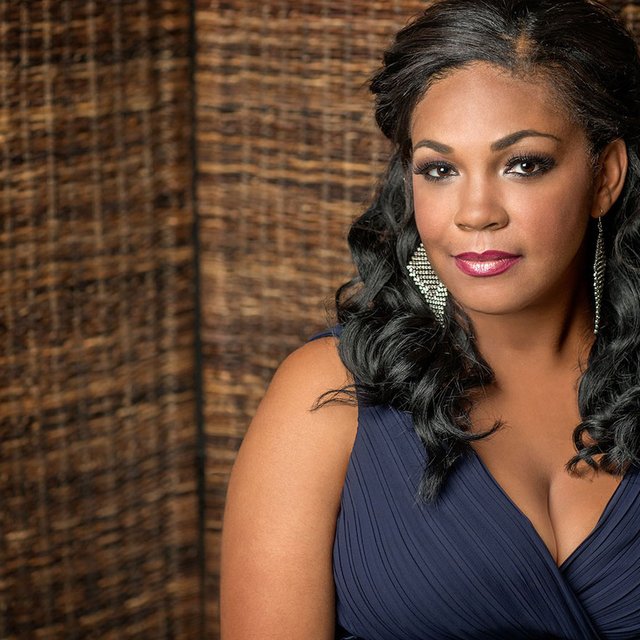
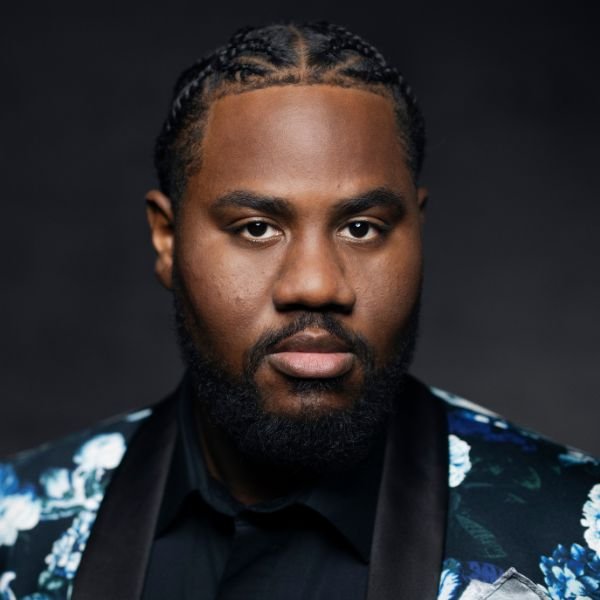
Featuring
Program Notes
James MacMillan (b. 1959)
Cantos Sagrados (1989)
Scored for: three flutes including piccolo and alto flute, three oboes including English Horn, three clarinets including bass clarinet, three bassoons including contrabassoon, four French horns, three trumpets, three trombones, tuba, timpani, percussion, harp, organ, chorus, and strings
Performance time: 22 minutes
First Grant Park Orchestra performance.
In writing Cantos Sagrados (“Sacred Songs”), Scottish composer James MacMillan set out to create something “both timeless and contemporary, both sacred and secular,” he explains in his program note. To achieve this balance, MacMillan weaves together Latin liturgical text with poetry by two Latin American poets—Argentinian writer and human rights activist Ariel Dorman and Ana Maria Mendoza. MacMillan’s works are often inspired by his deep Catholic faith. Here, this textual synthesis was spurred by an interest in Liberation Theology, wherein the gospel is interpreted through the perspective of the poor and oppressed, obliging believers to overturn unjust systems.
The three poems MacMillan chose for his choral drama address the issue of political repression in Latin America. In the outer movements, Dorfman’s poetry confronts the “disappearance” of political prisoners in the 20th century. In the central movement, Mendoza’s poem about the Virgin of Guadalupe takes a more historical view of oppression in the region, exposing the hypocrisy of the Virgin’s double identity as the patron saint of both the Spanish Conquerors and the indigenous people they massacred.
The first movement, “Identity,” opens with a chaotic, horrific scene: a dead body has been found in the river, but no one can or is willing to identify him. Eventually, one woman comes forward to lend her name to the man so he can be buried with dignity. In stark contrast to the opening cacophony, the movement ends with words from the Latin Requiem Mass (“Deliver the souls of all the faithful departed…”), intoned as a hushed chant while the orchestra gradually fades away in rattling heartbeats.
In “Virgin of Guadalupe,” the lower voices sing a Marian antiphon (“Hail, mother, portal of heaven”), while the upper voices appeal to the Virgin of Guadalupe. They ask why, after she appeared to the Indian Juan Diego in Tapeyepac, she commanded the bishop to build her a shrine where thousands of their Indian brothers were killed. The sopranos’ pleading melody shifts from girlish innocence to searing anger when all voices combine to recount the Conquerors’ violent acts.
“Sun Stone” paints a chilling account of a political prisoner executed by firing squad. The parallels with the story of Christ’s crucifixion are heightened by the interweaving of text from the Credo of the Latin Mass (“He became incarnate of the Virgin Mary, and was made man. For our sake he was crucified.”). The movement ends hauntingly with the soldier whispering to the condemned, “Forgive me, compañero.”
Originally scored for organ and chorus in 1990, Cantos Sagrados is heard here in its orchestral version, which was commissioned in 1997 by Christopher Bell. He recorded it with the National Youth Choir of Scotland and Royal Scottish National Orchestra in 2017 for an album released on Signum Records in 2020.
—Katherine Buzard
Ralph Vaughan Williams (1872-1958)
Toward the Unknown Region (1904)
Scored for: three flutes, three oboes including English Horn, three clarinets including bass clarinet, two bassoons, four French horns, three trumpets, three trombones, tuba, timpani, two harps, organ, strings, and chorus
Performance time: 14 minutes
First Grant Park Orchestra performance: Jul 9, 1983; Thomas Peck, conductor and chorus director
“Walt Whitman’s Leaves of Grass, in several editions, from a large volume to a selection small enough for a pocket, was his constant companion.” So wrote Ursula Vaughan Williams about her husband’s lifelong admiration for the American poet. Like other composers of his generation, Ralph Vaughan Williams was inspired by Whitman’s then-radical ideals of egalitarianism and individualism, particularly early in his career as he sought to make a name for himself and break new musical ground.
Vaughan Williams first set Whitman’s poem “Darest thou now, O Soul” in 1904 as part of a friendly competition with fellow composer Gustav Holst. The result was a short song for soprano and piano. As he later recalled to Holst’s daughter, Imogen, “Gustav and I were both stuck—so I suggested we [should] both set the same words in competition—suggesting ‘Darest thou.’ The prize was awarded by us to me.” In 1906, Vaughan Williams revisited the poem for what would become his first major choral work, Toward the Unknown Region.
On October 10, 1907, Vaughan Williams conducted the premiere of Toward the Unknown Region at the Leeds Festival to great acclaim. The Times raved that it was “easily ahead of anything the young composer has yet given us,” marking him as “the foremost of the younger generation.” Vaughan Williams would continue to set Whitman’s poetry throughout his career, notably in his next large-scale success, A Sea Symphony (1910), and later in his anti-war cantata, Dona Nobis Pacem (1936). Although he moved on to other poets, his fondness for Whitman never waned. Shortly before his death, he told biographer Michael Kennedy, “I’ve never got over him, I’m glad to say.”
Toward the Unknown Region progresses from the dark unknown of death to the soul’s transcendence over the bounds of time and space to achieve fulfillment. The piece begins mysteriously and remains relatively intimate until the end of the third verse, when waves of musical excitement begin to crest with the poem’s mounting spiritual ecstasy. An outburst on “Nor any bounds bounding us” at the end of the fourth verse leads to a massive declamation of “Then we burst forth.” Vaughan Williams briefly pares back the musical texture to prepare for another buildup to an even greater climax, interrupted by a dramatic pause before “O joy!” But he’s not done yet—one final push of muscular choral homophony brings the work to a triumphant conclusion.
—Katherine Buzard
Gabriel Fauré (1845-1924)
Requiem, op. 48 (1877)
Scored for: two flutes, two clarinets, two bassoons, four French horns, two trumpets, three trombones, timpani, harp, organ, solo soprano, solo baritone, chorus, and strings
Performance time: 36 minutes
First Grant Park Orchestra performance: Aug 4, 1984, Thomas Peck, conductor and chorus director; Sarah Beatty, soprano; Kurt Link, baritone
Gabriel Fauré said of his Requiem, “It is of a sweet nature, like the composer himself.” Unlike the theatrical Requiems of Verdi or Berlioz, Fauré’s offers solace to those who mourn, viewing death as a gentle release from earthly woes rather than something to fear. While many Requiems are composed in response to the death of a loved one, Fauré embarked on his Requiem in 1887 for no particular reason other than to write one. Sadly, the work gained personal significance when his mother died suddenly just weeks before its premiere at La Madeleine in Paris on January 16, 1888.
The first version of Fauré’s Petite Requiem, as he called it, was even more intimate than the version we know today. It was scored for a much smaller orchestra of solo violin, divided violas, divided cellos and basses, harp, timpani, and organ. This emphasis on low, divided strings was to create a warmer, more consoling sound, reserving the gleaming solo violin for the “Sanctus.” The 1888 version was also shorter, with only five movements. In 1893, Fauré added the “Offertoire” and “Libera me,” which introduced a baritone soloist into the mix. He also augmented the chamber orchestra by adding four horns, two bassoons, and two trumpets, while still keeping the string sonorities mellow. Finally, in 1900, Fauré caved to pressures from his publisher and created an arrangement for full orchestra.
Requiems often shed light on their composers’ religious beliefs and attitudes toward death. Although Fauré was raised Catholic and worked as a church musician throughout much of his career, he considered himself a “gentle agnostic.” Fauré wrote, “Everything I managed to entertain by way of religious illusion I put into my Requiem, which moreover is dominated from beginning to end by a very human feeling of faith in eternal rest.”
In addition to the tenderness of Fauré’s musical setting, the texts he chose to omit or include offer insight into his beliefs, or lack thereof. In the 1888 version, there is no mention of the Day of Judgment or the horrors of hell—a sacrilegious omission in the eyes of the Catholic Church at the time. Only in the “Libera me,” added in 1893, is there a passing reference to the “Dies Irae.” However, the fury is brief and understated compared to Verdi’s harrowing setting, for instance. In addition, Fauré makes a textual edit in the “Offertoire,” extending deliverance not just to the faithful departed but to all. The work then concludes with a setting of “In paradisum,” an antiphon not from the Latin Mass for the Dead but from the burial service. The peaceful rippling accompaniment and the sopranos’ angelic melody leave the listener with Fauré’s blissful vision of eternal rest, offering comfort to all who listen, regardless of belief.
—Katherine Buzard
Event Sponsors
This concert is generously sponsored as part of the Dehmlow Choral Music Series.
The appearance of Sankara Harouna is graciously underwritten through the David H. Whitney and Juliana Y. Chyu Next Generation Vocalist Fund.
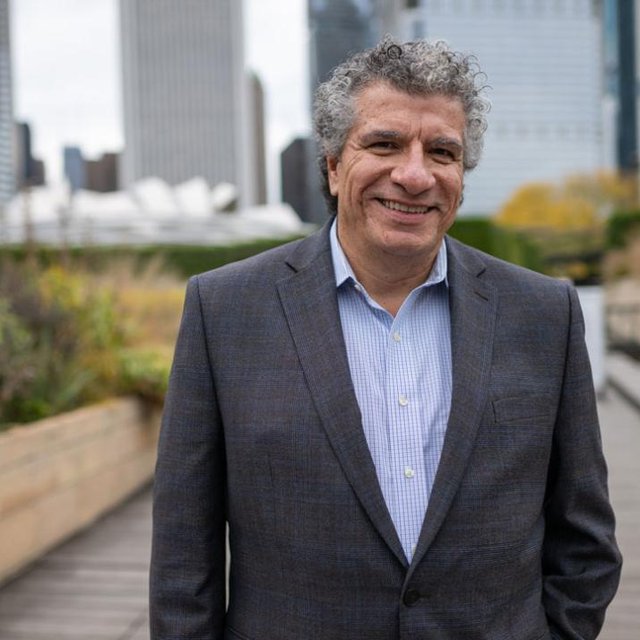
Artistic Leadership
Support The Festival

Grant Park Orchestra
* denotes leave-of-absence † one-year position
Jeremy Black, concertmaster
Dima Dimitrova, acting assistant concertmaster
Trista Wong
Zulfiya Bashirova
Jennifer Cappelli
Injoo Choi
Erica Hudson
Hyewon Kim
Matthew Lehmann
Jayna Park
Rika Seko
Karen Sinclair
Bonnie Terry*
Krzysztof Zimowski
Liba Shacht, principal
Likai He, acting assistant principal
Ying Chai
Karl Davies
Ann Lehmann
Laura Miller
Cristina Muresan
Kjersti Nostbakken
Irene Radetzky
Jeanine Wynton
Thomas Yang
Bing Jing Yu†
Terri Van Valkinburgh, principal
Yoshihiko Nakano, assistant principal
Elizabeth Breslin
Beatrice Chen
Georgi Dimitrov
Amy Hess
Rebecca Swan
Chloé Thominet
Walter Haman, principal
Peter Szczepanek, assistant principal
Calum Cook
Larry Glazier
Steven Houser
Eric Kutz*
Eran Meir
Shinae Ra
Colin Corner, principal
Peter Hatch, assistant principal
Andrew Anderson
Christian Luevano
Samuel Rocklin
Chunyang Wang
Chris White
Elvin Schlanger, principal
Alyce Johnson
Jennifer Lawson, assistant principal
Jennifer Lawson
Mitchell Kuhn, principal
Gwendolyn Goble
Anne Bach, assistant principal
Anne Bach
Dario Brignoli, principal
Trevor O’Riordan, assistant principal
Besnik Abrashi
Besnik Abrashi
Eric Hall, principal
Nicole Haywood Vera Tenorio, assistant principal
Matthew Melillo
Matthew Melillo
Patrick Walle, acting principal†
Stephanie Blaha, assistant principal
Neil Kimel
Brett Hodge
Paul Clifton
David Gordon, principal
Mike Brozick
Rebecca Oliverio, assistant principal
Jeremy Moeller, acting principal
Lee Rogers, acting assistant principal†
Alexander Mullins
Andrew Smith, principal
Daniel Karas, principal
Josh Jones, principal
Sean Edwards, acting assistant principal†
Doug Waddell
Lynn Williams, acting principal†
Christopher Guzman
Eliza Bangert, principal
Carlos Chacón, violin
Valentina Guillen Menesello, violin
Steven Baloue, viola
Miquel Fuentes, cello
Grant Park Chorus
* denotes leave-of-absence † 2025 Vocal Fellow
Katy Avery
Kristina Bachrach
Madalynn Baez
Megan E. Bell
Alyssa Bennett
Tamara Bodnar
Kylie Buckham
Anna Joy Buegel
Laura Bumgardner
Katherine Buzard
Bethany Clearfield
Nathalie Colas
Carolyne DalMonte
Megan Fletcher
Kaitlin Foley
Hayley Fox
Saira Frank
Katherine Gray-Noon
Kimberly Gunderson
Alexandra Ioan
Alexandra Kassouf
Darlene Kelsey
Olivia Knutsen
Katelyn Lee
Rosalind Lee
Lauren Maho
Veronica Mak
Hannah Dixon McConnell
Marie McManama
Sarah Elise Navy+
Susan Nelson
Evangeline Ng
Alexandra Olsavsky
Laura Perkett
Angela Presutti Korbitz
Alexia Rivera
Veronica Samiec
Tiana Sorenson
Sarah van der Ploeg
Lydia Walsh-Rock
Sherry Watkins
Melissa Arning
Angela Born
Amanda Cabán
Julie DeBoer
Leah Dexter
Katrina Dubbs
Stacy Eckert
Margaret Fox
Elizabeth Frey
Liana German
Savannah Gordon
Ruth Ginelle Heald
Miya Higashiyama
Sophia Hunt
Carla Janzen
Amy Allyssa Johnson
Zoë Kales
Kathryn Kinjo Duncan
Amanda Koopman
Thereza Lituma
Chelsea Lyons
Victoria Marshall
Quinn Middleman
Ella Peters
Sarah Ponder
Emily Price
Stephanie Schoenhofer
Suzanne A. Shields
Marissa Simmons
Cassidy Smith
Alannah Spencer
Carolyn Sundlof Boudreau
Ruoxuan Nola Tan+
Gabrielle Timofeeva López
Elizabeth Vaughan
Corinne Wallace-Crane
A.J. Wester
Debra Wilder
Isabel Yang
Charles Anderson
Enrico Giuseppe Bellomo
Justin Berkowitz
Madison Bolt
Hoss Brock
Steven Caldicott Wilson
Matthew Callahan
John J. Concepción
Matthew Cummings
Jared V. Esguerra
Alec Fore
Ace Gangoso
Tejas Gururaja+
Paul Hunter
Garrett Johannsen
William Johnson
James Judd
Tim Lambert
Tyler Lee
Mason Montuoro
Stephen D. Noon
Marcos Ochoa
Brett Potts
Peder Reiff*
Samuel Rosner
Matthew W. Schlesinger
Trevor Scott
Silfredo Serrano
Joe Shadday
Aaron Short
Michael St. Peter
Ryan Townsend Strand
Alan Taylor
Walter Aldrich
Evan Bravos
Matthew Brennan
Michael Cavalieri
Brennan Cockey
Ryan J. Cox
Ed Frazier Davis
Matthew Dexter
Wesley Diener
Chris DiMarco
Christopher Filipowicz
Dimitri German
Dominic German
Owen Gonzalez+
David Govertsen
Seth Hobi
Zachary Kurzenberger
Ian Martin
Dorian McCall
Eric Miranda
Ian Morris
Ian Murrell
John E. Orduña
Wilbur Pauley
Douglas Peters
Martin Lowen Poock
Ian Prichard
Alexander Quackenbush
Dan Richardson
Stephen Richardson
Austin Sanders
Scott Uddenberg
Schyler Vargas
Vince Wallace
Aaron Wardell
Ronald Watkins
Jonathon Weller
Peter Wesoloski
Jonathan Wilson
Chuck Foster
Sarah Elise Navy
Ruoxuan Nola Tan
Tejas Kishan Gururaja
Owen Gonzalez
Benjamin Rivera