
Mozart Requiem
Program
John Corigliano Symphony No. 1 (41 mins)
Intermission (20 mins)
Wolfgang Amadeus Mozart / arr. Robert Levin Requiem (48 mins)
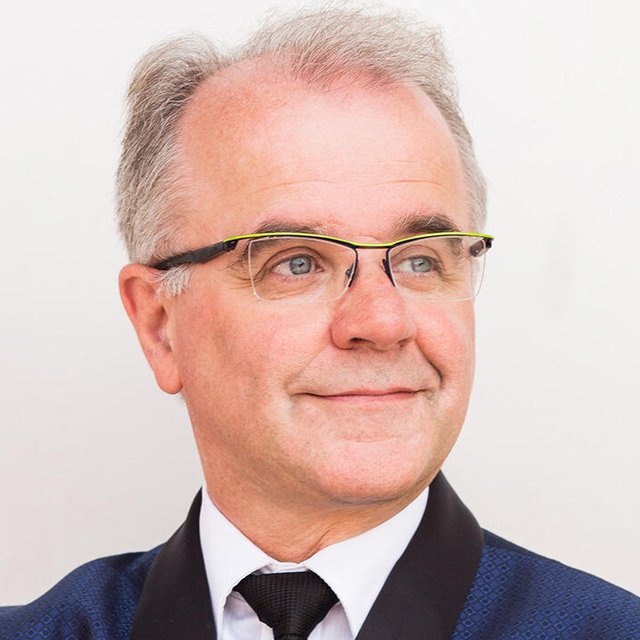
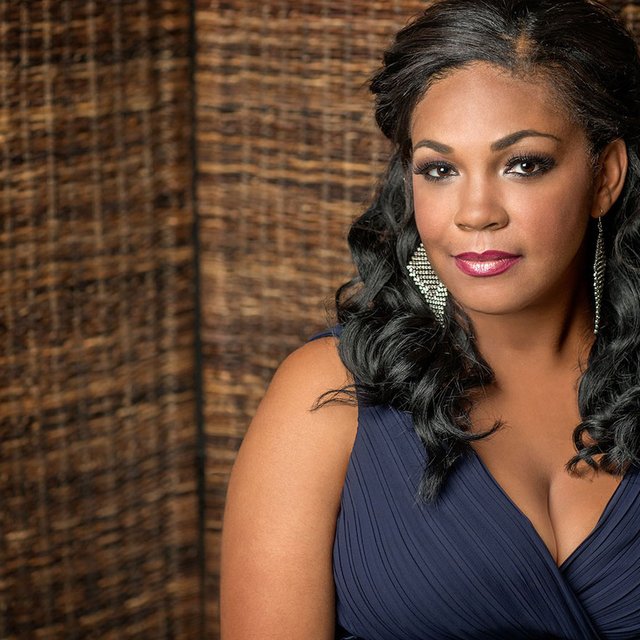
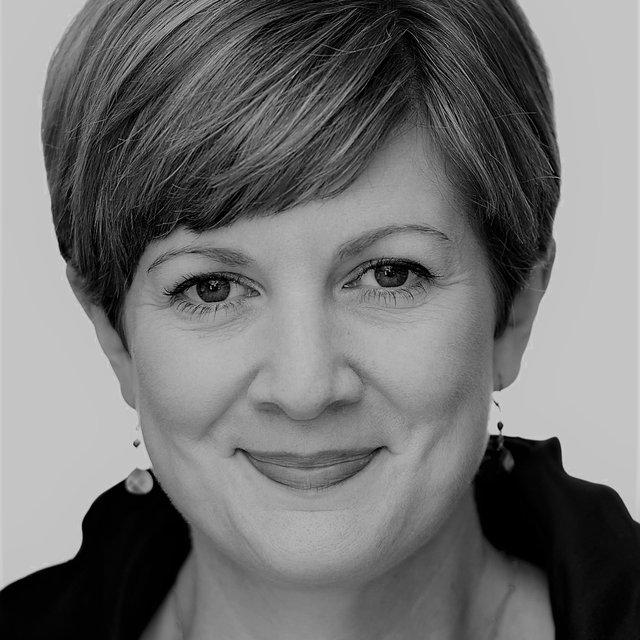
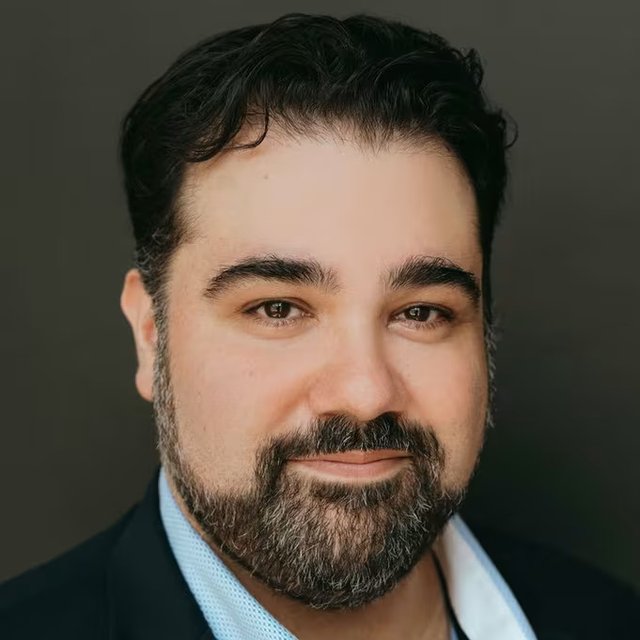
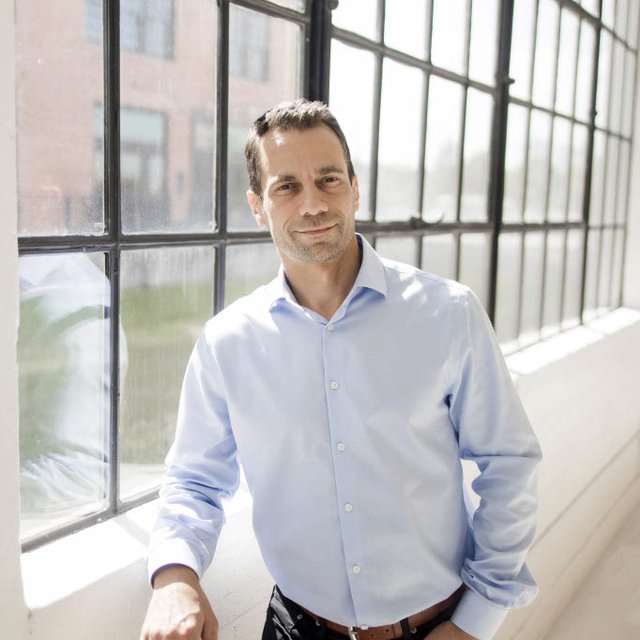
Featuring
Program Notes
John Corigliano (b. 1938)
Symphony No. 1 (1988)
Scored for: four flutes including piccolo, four oboes including English Horn, four clarinets including bass clarinet, four bassoons including contrabassoon, six French horns, five trumpets, four trombones, two tubas, timpani, percussion, harp, piano, mandolin, and strings
Performance time: 41 minutes
First Grant Park Orchestra performance: Jun 28, 2000; Carlos Kalmar, conductor
As a young composer, John Corigliano proclaimed he would never write a symphony. He felt the form too often served the composer’s ego at the expense of the audience and performers. That all changed when he was confronted with the tragedy of the AIDS pandemic. “Only the death of countless friends from AIDS prompted me to write in our largest orchestral form,” he writes. “Mahler once described writing a symphony as creating a world. My Symphony No. 1 was about world-scale tragedy and, I felt, needed a comparably epic form.”
Corigliano wrote Symphony No. 1 in 1988 while serving as the Chicago Symphony Orchestra’s first-ever Composer-in-Residence. Daniel Barenboim led the CSO in the work’s premiere on March 15, 1990. The live recording from that performance won two Grammy Awards in 1991 for Best Orchestral Performance and Best Contemporary Composition.
The symphony was inspired by the NAMES Project AIDS Memorial Quilt—a community art project that interweaves thousands of panels memorializing those who have died of AIDS, often designed and constructed by their loved ones. Since the project began in 1985, the quilt has grown into a 54-ton tapestry made up of about 50,000 panels dedicated to over 110,000 individuals. Corigliano was so moved by this project that he decided to use a similar approach to memorialize in music those he had lost to the disease. He dedicates the first three movements to lifelong musician-friends and recalls other friends in a “quilt-like interweaving of motific melodies,” he explains in his program note.
The first movement, “Apologue: Of Rage and Remembrance,” alternates between anger and nostalgia. A unison open A in the violas and violins crescendos fiercely to a G-sharp resolution and percussive thwack. This motive recurs throughout the symphony—the A representing perseverance and survival, or perhaps a persistent grief. After a cacophony of angry antiphonal brass and squealing violins, a haunting violin melody emerges. Soon, a ghostly piano can be heard offstage playing Isaac Albéniz’s Tango, a favorite piece of the pianist friend for whom the movement is dedicated. Fragments of the tango are taken up by sections of the orchestra, but agony and grief ultimately win out. The first violins offer a desolate high A as the pianist fades out mid-phrase.
The second movement, “Tarantella,” memorializes a friend who was a music executive and amateur pianist. In 1970, Corigliano had dedicated the tarantella movement of a set of dances for piano four hands to this friend. A tarantella is a southern Italian folk dance that, according to legend, is a cure for spider-bite-induced hysteria. “The association of madness and my piano piece proved both prophetic and bitterly ironic when my friend . . . became insane as a result of AIDS dementia,” Corigliano writes. To capture this descent into madness, schizophrenic and hallucinatory images mix with moments of devastating lucidity.
“Chaconne: Giulio’s Song” is dedicated to a cellist friend from college. Corigliano found a tape recording of them improvising together, as they often did, and turned this musical material into the extended cello solo. Eventually, a second solo cello joins, representing Giulio’s teacher, who also tragically died of AIDS. Interspersed within these cello dialogues are musical representations of other friends lost to AIDS. Corigliano asked librettist William M. Hoffmann to write short sentences eulogizing each friend, which he turned into musical fragments for various solo instruments. Running underneath this tapestry is a slow, 12-note chaconne, which eventually turns into an inexorable funeral march.
The “Epilogue” recalls the music of each memorialized friend: the solo piano of the first movement, the tarantella of the second (played here by the clarinet), and the solo cellos of “Giulio’s Song.” To convey a sense of timelessness, Corigliano creates sonic ocean waves by partially encircling the orchestra with brass instruments. “The waves begin with a high note in the solo trumpet; then they move outward and around the orchestra, so that the descending brass notes form chords,” he explains. “A slowly moving pattern of four chords is thus built; this repeated pattern creates sonic waves through the Epilogue.” The movement ends with the insistent A, before finally fading to nothingness.
—Katherine Buzard
Wolfgang Amadeus Mozart (1756-1791) / arr. Robert Levin
Requiem, K. 626 (1791)
Scored for: 2 clarinets including 2 basset horns, two bassoons, two trumpets, three trombones, timpani, solo soprano, solo mezzo-soprano, solo tenor, solo bass, chorus, and strings
Performance time: 46 minutes
First Grant Park Orchestra performance: Aug 10, 1963; Irwin Hoffman, conductor; Anne Perillo, soprano; Evelyn Reynolds, mezzo-soprano; William Woodruff, tenor; Andrew Foldi, bass
The shroud of mystery around the commission of Wolfgang Amadeus Mozart’s Requiem and his death mid-composition have made the work all the more haunting and soul-stirring. Mozart unwittingly helped perpetuate the myths about his death and this piece, immortalized in modern pop culture through the 1984 film Amadeus. No, Salieri did not kill Mozart, nor is there any evidence that he took dictation at Mozart’s bedside, as compelling as that scene is. Rather, hallucinations and paranoia from rheumatic fever likely caused Mozart to believe that someone had poisoned him and that he was writing the Requiem for his own funeral.
The part of the story that is true is that the commission did come by way of an “unknown gray stranger.” In July 1791, an anonymous messenger showed up on Mozart’s doorstep and handed him the commission, along with half of the fee and the promise of the other half upon completion. He warned Mozart that it would be fruitless to try to identify his employer. That was because he was an emissary of Count Franz von Walsegg, a minor Viennese aristocrat who paid large sums to commission works from respected composers, then tried to pass them off as his own. At least the Count had a noble cause on this occasion, as he was commissioning the Requiem to mark the one-year anniversary of his wife’s death.
Occupied with other compositions, including the operas La Clemenza di Tito and Die Zauberflöte, Mozart did not begin work on the Requiem in earnest until October. His letters from this time are upbeat and give no indication that he felt the piece was cursed or burdensome. He became bedridden with illness in late November but was well enough on December 4 for three singer friends to run through parts of the Requiem at his bedside. Unfortunately, he took a turn for the worse that night and died early the next morning.
In desperate need of the other half of the commission, Mozart’s wife, Constanze, enlisted the help of her husband’s pupils and associates to finish the score. Franz Xaver Süssmayr did the lion’s share of the work, composing the “Sanctus,” “Benedictus,” and “Agnus Dei.” It is unclear how much of Süssmayr’s completion is based on now-lost sketches or conversations with Mozart before his death. The last notes in Mozart’s hand are the first eight bars of the “Lacrimosa,” which ends eerily with the text “Judicandus homo reus” (“the guilty man to be judged”).
Although Süssmayr’s completion has become essentially standard, many consider it unsatisfactory, citing its clumsy voice-leading and muddy orchestration. The debate over “authenticity” has raged on for 235 years, with composers and musicologists proposing various “completions” as additional scraps of evidence have come to light. One that has gained traction in recent years is Robert D. Levin’s 1994 completion. Levin, a pianist and Mozart scholar, looks to Mozart’s other sacred choral works as examples for the character, texture, grammar, and structure of his completion.
In addition to making the orchestration more transparent and adjusting some of the voice-leading, Levin follows the “Lacrimosa” with a newly composed “Amen” fugue based on a scrap of music discovered in 1962. He also extends Süssmayr’s “Osanna” fugue by using Mozart’s Mass in C Minor as a model. Levin sought to alter Süssmayr’s traditional completion as little as possible, not in “blind piety” to him, but because “the historical and performance tradition of the Requiem demands respect,” he writes. Consequently, some elements may differ from the version you might be more familiar with, but on the whole, Levin’s completion diplomatically threads the needle between honoring the composer’s intentions—as much as we can know them—and honoring 200 years of performance practice.
—Katherine Buzard
Event Sponsors
This concert is generously sponsored as part of the Dehmlow Choral Music Series.
Artistic Leadership
Support The Festival
Grant Park Orchestra
* denotes leave-of-absence † one-year position
Jeremy Black, concertmaster
Dima Dimitrova, acting assistant concertmaster
Trista Wong
Zulfiya Bashirova
Jennifer Cappelli
Injoo Choi
Erica Hudson
Hyewon Kim
Matthew Lehmann
Jayna Park
Rika Seko
Karen Sinclair
Bonnie Terry*
Krzysztof Zimowski
Liba Shacht, principal
Likai He, acting assistant principal
Ying Chai
Karl Davies
Ann Lehmann
Laura Miller
Cristina Muresan
Kjersti Nostbakken
Irene Radetzky
Jeanine Wynton
Thomas Yang
Bing Jing Yu†
Terri Van Valkinburgh, principal
Yoshihiko Nakano, assistant principal
Elizabeth Breslin
Beatrice Chen
Georgi Dimitrov
Amy Hess
Rebecca Swan
Chloé Thominet
Walter Haman, principal
Peter Szczepanek, assistant principal
Calum Cook
Larry Glazier
Steven Houser
Eric Kutz*
Eran Meir
Shinae Ra
Colin Corner, principal
Peter Hatch, assistant principal
Andrew Anderson
Christian Luevano
Samuel Rocklin
Chunyang Wang
Chris White
Elvin Schlanger, principal
Alyce Johnson
Jennifer Lawson, assistant principal
Jennifer Lawson
Mitchell Kuhn, principal
Gwendolyn Goble
Anne Bach, assistant principal
Anne Bach
Dario Brignoli, principal
Trevor O’Riordan, assistant principal
Besnik Abrashi
Besnik Abrashi
Eric Hall, principal
Nicole Haywood Vera Tenorio, assistant principal
Matthew Melillo
Matthew Melillo
Patrick Walle, acting principal†
Stephanie Blaha, assistant principal
Neil Kimel
Brett Hodge
Paul Clifton
David Gordon, principal
Mike Brozick
Rebecca Oliverio, assistant principal
Jeremy Moeller, acting principal
Lee Rogers, acting assistant principal†
Alexander Mullins
Andrew Smith, principal
Daniel Karas, principal
Josh Jones, principal
Sean Edwards, acting assistant principal†
Doug Waddell
Lynn Williams, acting principal†
Christopher Guzman
Eliza Bangert, principal
Carlos Chacón, violin
Valentina Guillen Menesello, violin
Steven Baloue, viola
Miquel Fuentes, cello
Grant Park Chorus
* denotes leave-of-absence † 2025 Vocal Fellow
Katy Avery
Kristina Bachrach
Madalynn Baez
Megan E. Bell
Alyssa Bennett
Tamara Bodnar
Kylie Buckham
Anna Joy Buegel
Laura Bumgardner
Katherine Buzard
Bethany Clearfield
Nathalie Colas
Carolyne DalMonte
Megan Fletcher
Kaitlin Foley
Hayley Fox
Saira Frank
Katherine Gray-Noon
Kimberly Gunderson
Alexandra Ioan
Alexandra Kassouf
Darlene Kelsey
Olivia Knutsen
Katelyn Lee
Rosalind Lee
Lauren Maho
Veronica Mak
Hannah Dixon McConnell
Marie McManama
Sarah Elise Navy+
Susan Nelson
Evangeline Ng
Alexandra Olsavsky
Laura Perkett
Angela Presutti Korbitz
Alexia Rivera
Veronica Samiec
Tiana Sorenson
Sarah van der Ploeg
Lydia Walsh-Rock
Sherry Watkins
Melissa Arning
Angela Born
Amanda Cabán
Julie DeBoer
Leah Dexter
Katrina Dubbs
Stacy Eckert
Margaret Fox
Elizabeth Frey
Liana German
Savannah Gordon
Ruth Ginelle Heald
Miya Higashiyama
Sophia Hunt
Carla Janzen
Amy Allyssa Johnson
Zoë Kales
Kathryn Kinjo Duncan
Amanda Koopman
Thereza Lituma
Chelsea Lyons
Victoria Marshall
Quinn Middleman
Ella Peters
Sarah Ponder
Emily Price
Stephanie Schoenhofer
Suzanne A. Shields
Marissa Simmons
Cassidy Smith
Alannah Spencer
Carolyn Sundlof Boudreau
Ruoxuan Nola Tan+
Gabrielle Timofeeva López
Elizabeth Vaughan
Corinne Wallace-Crane
A.J. Wester
Debra Wilder
Isabel Yang
Charles Anderson
Enrico Giuseppe Bellomo
Justin Berkowitz
Madison Bolt
Hoss Brock
Steven Caldicott Wilson
Matthew Callahan
John J. Concepción
Matthew Cummings
Jared V. Esguerra
Alec Fore
Ace Gangoso
Tejas Gururaja+
Paul Hunter
Garrett Johannsen
William Johnson
James Judd
Tim Lambert
Tyler Lee
Mason Montuoro
Stephen D. Noon
Marcos Ochoa
Brett Potts
Peder Reiff*
Samuel Rosner
Matthew W. Schlesinger
Trevor Scott
Silfredo Serrano
Joe Shadday
Aaron Short
Michael St. Peter
Ryan Townsend Strand
Alan Taylor
Walter Aldrich
Evan Bravos
Matthew Brennan
Michael Cavalieri
Brennan Cockey
Ryan J. Cox
Ed Frazier Davis
Matthew Dexter
Wesley Diener
Chris DiMarco
Christopher Filipowicz
Dimitri German
Dominic German
Owen Gonzalez+
David Govertsen
Seth Hobi
Zachary Kurzenberger
Ian Martin
Dorian McCall
Eric Miranda
Ian Morris
Ian Murrell
John E. Orduña
Wilbur Pauley
Douglas Peters
Martin Lowen Poock
Ian Prichard
Alexander Quackenbush
Dan Richardson
Stephen Richardson
Austin Sanders
Scott Uddenberg
Schyler Vargas
Vince Wallace
Aaron Wardell
Ronald Watkins
Jonathon Weller
Peter Wesoloski
Jonathan Wilson
Chuck Foster
Sarah Elise Navy
Ruoxuan Nola Tan
Tejas Kishan Gururaja
Owen Gonzalez
Benjamin Rivera