
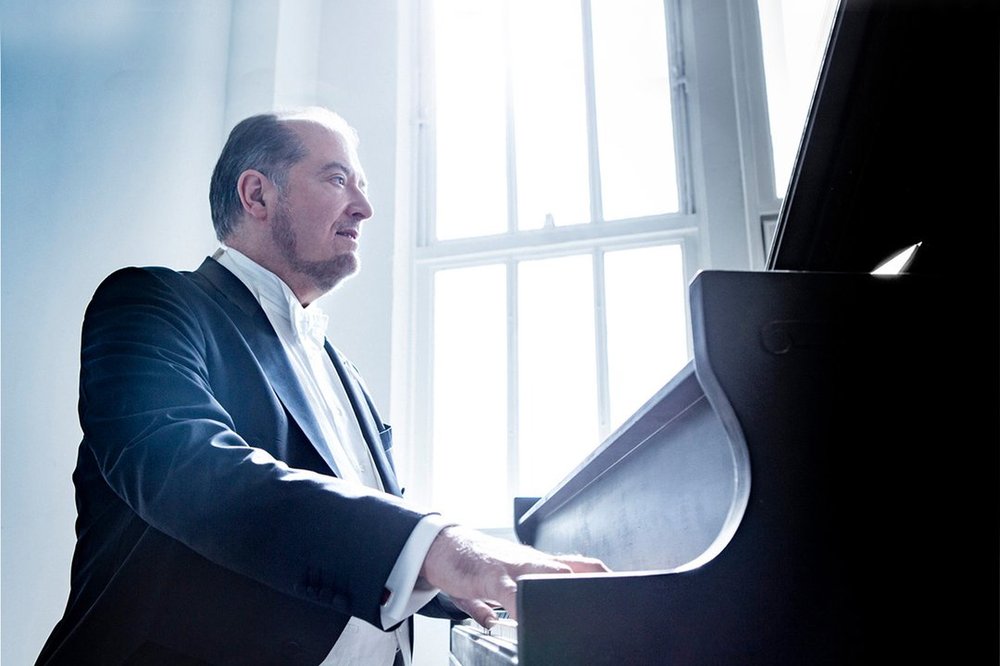
Ohlsson Plays Chopin
Program
Juan Pablo Contereras Mariachitlán (10 mins)
Fryderyk Chopin Concerto No. 2 in F minor for Piano & Orchestra (32 mins)
Maestoso
Larghetto
Allegro vivace
Piotr Ilyich Tchaikovsky Capriccio italien (15 mins)
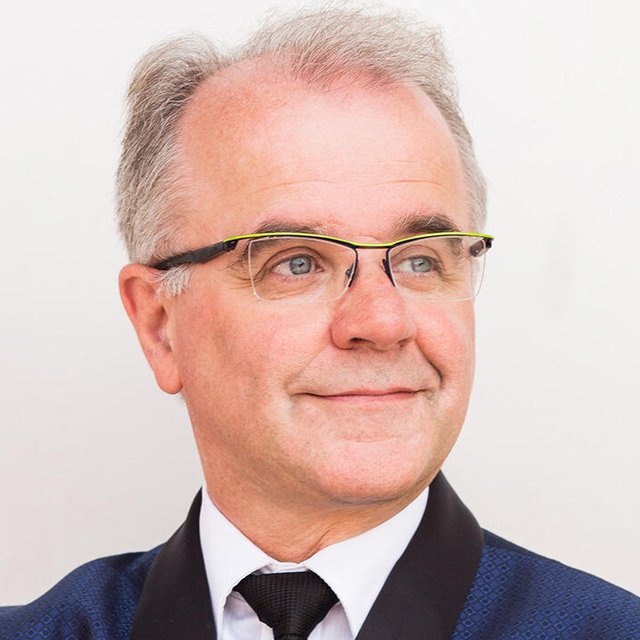
Featuring
Program Notes
Juan Pablo Contereras (b. 1987)
Mariachitlán (2016)
Scored for: three flutes including piccolo, three oboes including English Horn, three clarinets including bass clarinet and e-flat clarinet, three bassoons including contrabassoon, four French horns, three trumpets, three trombones, tuba, timpani, percussion, harp, piano, and strings
Performance time: 10 minutes
First Grant Park Orchestra performance.
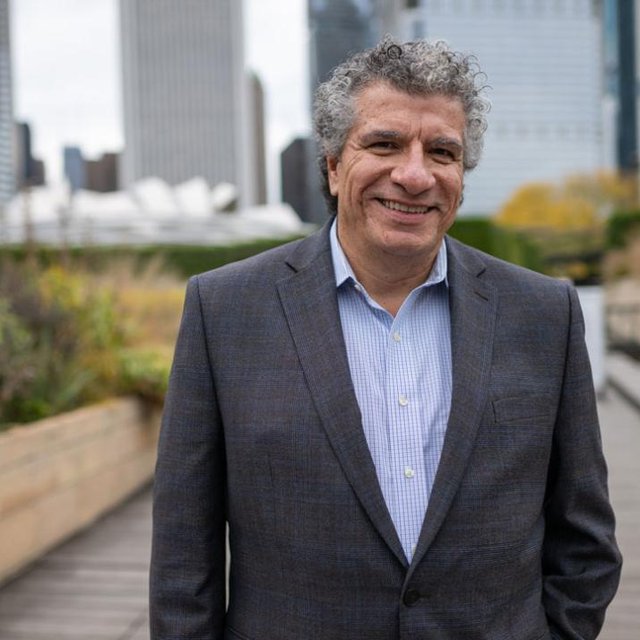
“Mariachitlán (Mariachiland) is an orchestral homage to my birthplace, the Mexican state of Jalisco, where mariachi music originated,” composer Juan Pablo Contreras explains. “The work recounts my experience visiting the Plaza de los Mariachis in Guadalajara, the capital of Jalisco, a place where mariachis play their songs in every corner and interrupt each other to win over the crowd.” To capture this scene, Contreras highlights traditional mariachi instruments such as the trumpet, harp, and violin as soloists, while the strings emulate the strumming of the vihuelas, and the basses evoke the low sonorities of the guitarrones. He also mixes traditional mariachi rhythms, such as the canción ranchera, vals romántico, and son jalisciense. Melodies inspired by the landscapes of Jalisco mingle with city and traffic noises, resulting in a joyful cacophony reminiscent of Charles Ives’s colliding marching bands. At one point, a police whistle attempts to stop the fun, but it’s no use. As the crowd’s chants of “Mariachitlán” grow in intensity, so too does the music, leading to a brilliant finish.
Mariachitlán won the 2016 Jalisco Orchestral Composition Contest and premiered later that year at the Teatro Degollado in Guadalajara, with Miguel Salmon Del Real conducting the Jalisco Philharmonic Orchestra. Nominated for a 2019 Latin Grammy for Best Arrangement, it stands as Contreras’s most popular orchestral piece, with over 120 performances worldwide to date.
—Katherine Buzard
Fryderyk Chopin (1810-1849)
Concerto No. 2 in F minor for Piano & Orchestra, op. 21 (1829)
Scored for: two flutes, two oboes, two clarinets, two bassoons, two French horns, two trumpets, trombone, timpani, solo piano, and strings
Performance time: 32 minutes
First Grant Park Orchestra performance: Aug 17, 1949; Nicolai Malko, conductor; Wanda Paul, piano
Perhaps more than any other composer, Fryderyk Chopin was responsible for the development of modern piano technique and repertoire, exploiting the new capabilities of the instrument as it evolved in the early 19th century. His influence, exemplified by the staying power of his music, is especially remarkable given that he consistently broke the mold of what was expected of a composer at the time. Shirking the model of the virtuoso pianist–composer, Chopin rarely concertized, owing to intense stage fright. He preferred the intimacy of salon concerts to the “inquisitive stare” and “alien faces” of large audiences. Scholars estimate he gave only about 30 public performances in his life, most of them early in his career.
Chopin also wrote no symphonies, ballets, operas, or oratorios—genres considered necessary to secure a place in the pantheon of great composers. Instead, he favored shorter musical forms. All of his over 230 works involve the piano. Of these, only six are scored for piano and orchestra, and all but one of these were written before the age of 21. Chopin composed his Piano Concerto No. 2 in F Minor in the autumn of 1829 and premiered it on March 17, 1830, to a sold-out house. The concert was such a success that a second performance was hastily scheduled for five days later. Although it is referred to as Chopin’s “second” piano concerto, it was actually his first. Spurred by the success of the F minor concerto, he composed what is now known as Piano Concerto No. 1 in E Minor in the summer of 1830. (The numeration was switched due to a mix-up with his publishers.)
Chopin’s reverence for Mozart is manifest in Piano Concerto No. 2 in its balance, formal proportion, and elegance. “If a genius such as Mozart were to appear today,” Robert Schumann mused, “he would write Chopin concertos rather than Mozart ones.” Yet, within this controlled structure, Chopin’s writing still maintains a sense of spontaneity and organicity. In the album booklet for his recording of the complete works of Chopin, pianist Garrick Ohlsson calls this the paradox of Chopin’s music: “[It] is made of iron, yet it sounds heavenly, improvised, even fragile.”
The improvisational character of Chopin’s music belies the struggle behind its creation. “His creativity was spontaneous, miraculous; he found it without seeking it, without expecting it,” his partner, George Sand, recalled in her memoir. “But then would begin the most heartbreaking labor I have ever witnessed . . . He would shut himself up in his room for days at a time, weeping, pacing, breaking his pens, repeating or changing a single measure a hundred times, writing it and erasing it with equal frequency, and beginning again the next day with desperate perseverance. He would spend six weeks on a page, only to end up writing it just as he had done in his first outpouring.”
After an extended orchestral prelude introducing the first movement’s main themes, the piano enters with a dramatic cascading figure. The piano offers a plain statement of the insistent first theme before decorating it with delicate filigree characteristic of Chopin. The orchestra largely takes a back seat as the piano drives the rest of the movement, balancing virtuosic propulsion with restrained elegance. Redolent with the perfume of bel canto, the exquisite larghetto is often considered Chopin’s first nocturne, while the brilliant finale is reminiscent of a Polish mazurka, two forms that would become hallmarks of Chopin’s solo piano output.
—Katherine Buzard
Piotr Ilyich Tchaikovsky (1840-1893)
Capriccio italien, op. 45, TH 47 (1880)
Scored for: three flutes including piccolo, three oboes including English Horn, two clarinets, two bassoons, four French horns, four trumpets, three trombones, tuba, timpani, percussion, harp, and strings
Performance time: 15 minutes
First Grant Park Orchestra performance: Jul 15, 1935; A.F. Thaviu, conductor
We all know the adage: “When in Rome, do as the Romans do.” That’s exactly what Piotr Ilyich Tchaikovsky did in the winter of 1879–1880, as he took in the sights and sounds of the Italian capital with his brother Modest. In early February, he wrote to his patroness, Nadezhda von Meck, “We are now experiencing the peak of the carnival here.” At first, the “wild frenzy” of Roman Carnevale was not to his taste, but he was soon won over by its charms. He described revelers pelting each other with balls of flour and wild horses racing through the streets, with masquerades and illuminations in the evenings and piazze garlanded with flowers and colorful lanterns. “When scrutinizing the crowds frolicking on the Corso,” he continued, “you may be convinced that no matter how strange their revelry may appear, it is sincere and unconstrained; this does not come from vodka or wine—it is from breathing the warm and soothing local air. What wonderful days these are!”
As Tchaikovsky acclimated to his new surroundings, he had the idea to compose an orchestral fantasy based on Italian folk themes, akin to Glinka’s Spanish Fantasy. During his stay, he jotted down music he heard on the streets and pored over anthologies of folk songs and dances to incorporate into the work. He drafted what would become Capriccio Italien while in Rome, completing the orchestration back in Russia that spring.
Capriccio Italien begins with a bugle call that Tchaikovsky heard streaming through his hotel window each morning from the cavalry barracks next door. After this fanfare comes a plaintive folk-like melody in the English horn and bassoon, followed by a blithe tune drawn from the Tuscan folk song Bella ragazza dalle trecce bionde (“Beautiful girl with the blonde tresses”). As the sunny melody is passed around the orchestra, it takes on the character of street band music, complete with oom-pah brass and tambourine. A fleet-footed tarantella further enlivens the scene. Throughout the piece, Tchaikovsky masterfully transforms and weaves together these themes, creating a delightful musical souvenir of his Roman visit for all to enjoy.
—Katherine Buzard
Artistic Leadership
Support The Festival
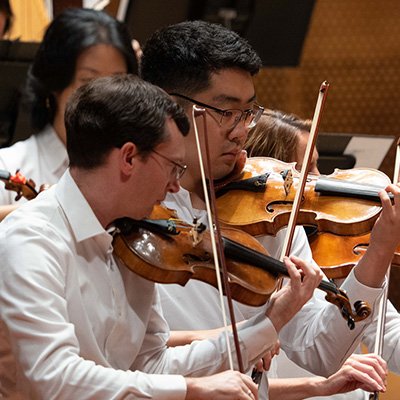
Grant Park Orchestra
* denotes leave-of-absence † one-year position
Jeremy Black, concertmaster
Dima Dimitrova, acting assistant concertmaster
Trista Wong
Zulfiya Bashirova
Jennifer Cappelli
Injoo Choi
Erica Hudson
Hyewon Kim
Matthew Lehmann
Jayna Park
Rika Seko
Karen Sinclair
Bonnie Terry*
Krzysztof Zimowski
Liba Shacht, principal
Likai He, acting assistant principal
Ying Chai
Karl Davies
Ann Lehmann
Laura Miller
Cristina Muresan
Kjersti Nostbakken
Irene Radetzky
Jeanine Wynton
Thomas Yang
Bing Jing Yu†
Terri Van Valkinburgh, principal
Yoshihiko Nakano, assistant principal
Elizabeth Breslin
Beatrice Chen
Georgi Dimitrov
Amy Hess
Rebecca Swan
Chloé Thominet
Walter Haman, principal
Peter Szczepanek, assistant principal
Calum Cook
Larry Glazier
Steven Houser
Eric Kutz*
Eran Meir
Shinae Ra
Colin Corner, principal
Peter Hatch, assistant principal
Andrew Anderson
Christian Luevano
Samuel Rocklin
Chunyang Wang
Chris White
Elvin Schlanger, principal
Alyce Johnson
Jennifer Lawson, assistant principal
Jennifer Lawson
Mitchell Kuhn, principal
Gwendolyn Goble
Anne Bach, assistant principal
Anne Bach
Dario Brignoli, principal
Trevor O’Riordan, assistant principal
Besnik Abrashi
Besnik Abrashi
Eric Hall, principal
Nicole Haywood Vera Tenorio, assistant principal
Matthew Melillo
Matthew Melillo
Patrick Walle, acting principal†
Stephanie Blaha, assistant principal
Neil Kimel
Brett Hodge
Paul Clifton
David Gordon, principal
Mike Brozick
Rebecca Oliverio, assistant principal
Jeremy Moeller, acting principal
Lee Rogers, acting assistant principal†
Alexander Mullins
Andrew Smith, principal
Daniel Karas, principal
Josh Jones, principal
Sean Edwards, acting assistant principal†
Doug Waddell
Lynn Williams, acting principal†
Christopher Guzman
Eliza Bangert, principal
Carlos Chacón, violin
Valentina Guillen Menesello, violin
Steven Baloue, viola
Miquel Fuentes, cello