
Tchaikovsky Piano Concerto No. 1
Program
Jimmy López Loud (8 mins)
Lou Harrison Symphony No. 2, Elegiac (34 mins)
Tears of the Angel Israfel
Allegro, poco presto
Tears of the Angel Israfel
Praises for Michael the Archangel
The Sweetness of Epicurus
Intermission (20 mins)
Amy Woodforde-Finden Kashmiri Song (4 mins)
Piotr Ilyich Tchaikovsky Concerto No. 1 in B-flat minor for Piano & Orchestra, op. 23, TH 55 (32 mins)
Allegro non troppo e molto maestoso
Andantino semplice
Allegro con fuoco
Featuring
Program Notes
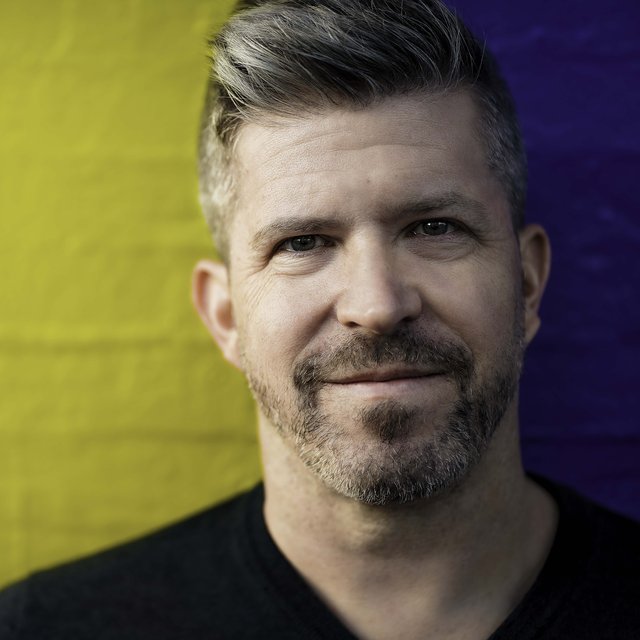
Jimmy López (b. 1978)
Loud (2023)
Scored for: three flutes including piccolo, two oboes, two clarinets, two bassoons including contrabassoon, four French horns, two trumpets, three trombones, tuba, timpani, percussion, harp, and strings
Performance time: 8 minutes
First Grant Park Orchestra performance.
In 2023, composer Jimmy López was commissioned by the International Pride Orchestra, San Francisco Conservatory of Music, and Seattle Youth Symphony Orchestra to compose a piece in honor of Pride. The resulting work, Loud, is a celebration of the contributions of the LGBTQ+ community and the impact of their collectively raised voices. A native of Lima, Peru, López only came out fully when he moved to California in 2007. “It is here where I felt safe and free to be myself; where I was no longer an exception, nor did I need to hide who I was at all,” López writes in his program note. Loud traces the emotional arc of López’s own journey, as well as the journey of many LGBTQ+ youth across the world, who have “fled their birthplaces and biological families in search of a haven where they can flourish and be their true selves,” he explains. Beginning in a place of loneliness and doubt, Loud traverses fraught musical terrain, building in confidence and ending ultimately in a place of “acceptance, community, and love.”
—Katherine Buzard
Lou Harrison (1917-2003)
Symphony No. 2, Elegiac (1975)
Scored for: three flutes including piccolo, three oboes including English Horn, three clarinets, three bassoons including contrabassoon, four French horns, three trumpets, three trombones, tuba, timpani, percussion, two harps, and strings
Performance time: 34 minutes
First Grant Park Orchestra performance.
Mark Morris, renowned choreographer and friend of Lou Harrison, has said, “You either love Lou’s music, or you haven’t heard it yet.” Completed in 1975, Harrison’s Symphony No. 2, or Elegiac Symphony, is a perfect introduction to the composer’s eclectic style, as it combines new material with reworkings of Harrison’s earlier compositions dating back over 30 years. Harrison was just as eclectic and ahead of his time as his music. In addition to composing, he wrote poetry, painted, and designed and built musical instruments with his life partner. Having lived openly as a gay man since the 1930s, Harrison was politically active in the gay rights movement and outspoken about several other causes, including environmental sustainability, pacifism, and multiculturalism.
Elegiac Symphony was the result of a commission from the Koussevitzky Music Foundation to celebrate Serge Koussevitzky’s centenary in 1974. The influential conductor was known for championing new music, particularly by American composers. While Harrison dedicated Elegiac Symphony to the memory of Koussevitzky and his wife, Natalie, the work grew out of a period of personal grief and retrospection for the composer following the loss of his mother and several lifelong friends in 1974.
One such friend was Harry Partch, an experimental composer and theorist whose idea to divide the octave into 43 unequal tones derived from the harmonic series inspired Harrison to explore “just intonation” in his own works. (In just intonation, the spaces between notes are whole number ratios, whereas in equal temperament—the most common tuning system in modern Western music—the octave is divided into 12 equal steps, resulting in slightly acoustically imperfect intervals.) Discovering Partch’s book Genesis of a Music not only inspired Harrison musically and intellectually but also helped him recover from a nervous breakdown, which had landed him in the hospital for nine months in 1947.
For practical reasons, Elegiac Symphony does not employ just tuning, which would have required specially made instruments. However, it bears other hallmarks of Harrison’s style in its emphasis on counterpoint and Asian influences. Like Claude Debussy, Harrison was particularly enamored with the distinctive colors of Javanese gamelan music, which he captures throughout the symphony with the glockenspiel, vibraphone, celesta, piano, tack piano, and harp.
The first movement, “Tears of the Angel Israfel,” is a reworking of an overture from Harrison’s unfinished 1958 work Political Primer. The title refers to the Islamic archangel of music, who “stands with his feet in the earth and his head in the sun,” Harrison writes. “Six times daily he looks down into hell and is so convulsed with grief that his tears would inundate the earth if Allah did not stop their flow.” The second movement, drawn from a 1942 sketch titled Canticle, is the only fast movement of the symphony, providing some respite before “Tears of the Angel Israfel II” returns to the introspection of the opening. The only completely new musical material in the piece, it pays homage to the symphony’s dedicatee with a poignant duet for two solo double basses (Koussevitzky’s instrument).
“Praises of Michael the Archangel” explores the angrier side of grief. It stems from a dark organ work Harrison wrote shortly before his nervous breakdown in 1947. Relief comes in “The Sweetness of Epicurus,” adapted from another orchestral sketch from 1942. The repeated descending bassline and sweet English horn solo provide consolation after the angular atonality of the previous movement. While the grief is not totally resolved by the end, some catharsis has been achieved, both for the listener and the composer. At least, that was Harrison’s hope. In his score, he inscribed an epitaph from Horace, which reads, “Bitter sorrow will grow milder with music.”
—Katherine Buzard
Amy Woodforde-Finden (arr. Carmen Dragon) (1860-1919)
Kashmiri Song (1902)
Scored for: two flutes including piccolo, oboe, English horn, two clarinets, bass clarinet, two bassoons, four French horns, harp, timpani, percussion and strings
Performance time: 4 minutes
First Grant Park Orchestra performance.
“Pale hands I loved beside the Shalimar”—so begins one of the most popular songs of the early 20th century, Amy Woodforde-Finden’s “Kashmiri Song.” It appears in her Four Indian Love Lyrics (1902), which sets poetry from The Garden of Kama (1901) by Laurence Hope (pseudonym of Adela Florence Nicholson). The song, in its depiction of a forbidden liaison enacted in the shelter of an Indian garden, played to the Edwardians’ obsession with “the East” and the erotic images they associated with it. “Kashmiri Song” quickly became a cultural sensation, heard everywhere from parlors and gentleman’s clubs to concert stages and even The British Empire Exhibition.
Part of what spurred the song’s intense popularity was speculation over the composer and the lyricist’s relationship, given the song’s ambiguity regarding not only the lovers’ races but also their genders. “The peculiar fervour generated by the Indian Love Lyrics might be explained by the fact that they were the work of two young women who had journeyed independently to India where each had lived and, it seems, visited Kashmir prior to their respective marriages,” writes Nalini Ghuman in Resonances of the Raj: India in the English Musical Imagination, 1897–1947. In reality, the two never met while living in India. Only after Four Indian Love Lyrics had been published did Nicholson come to visit Woodforde-Finden at her home in England. Nevertheless, the song has still invited homoerotic interpretations—feelings that Edwardians were only able to explore through an orientalist framing and the safety of the parlor song.
—Katherine Buzard
Piotr Ilyich Tchaikovsky (1840-1893)
Concerto No. 1 in B-flat minor for Piano & Orchestra, op. 23, TH 55 (1874)
Scored for: two flutes, two oboes, two clarinets, two bassoons, four French horns, two trumpets, three trombones, timpani, solo piano, and strings
Performance time: 32 minutes
First Grant Park Orchestra performance: Aug 17, 1941; Walter H. Steindel, conductor; Teresa Sterne, piano
Going down in history alongside the publishers that rejected Harry Potter and the record label that turned down the Beatles, Nikolai Rubinstein notoriously condemned what would become one of the most popular pieces in classical music history. On Christmas Eve 1874, Pyotr Ilyich Tchaikovsky brought the score of his first piano concerto to his trusted mentor and friend, Nikolai Rubinstein. Rubinstein was a highly respected pianist, conductor, and founder of the Moscow Conservatory. He had hired Tchaikovsky as a theory teacher for the conservatory, and Tchaikovsky even lived with him for a while. The two butted heads occasionally, but nothing would compare to their falling out over Tchaikovsky’s Piano Concerto No. 1.
Tchaikovsky freely admitted he was no piano virtuoso, so he sought Rubinstein’s feedback to identify any awkwardness or unidiomatic writing in the solo part. The composer’s lack of pianistic chops necessary to do justice to his concerto likely contributed to Rubinstein’s scathing appraisal. Rubinstein reportedly called the concerto unplayable, trite, clumsy, and tawdry. He even asserted that Tchaikovsky had “filched” bits of his concerto from other sources. Tchaikovsky later recalled, “any outsider who chanced to come into the room might have thought that I was an imbecile, an untalented scribbler who understood nothing, who had come to an eminent musician to pester him with his rubbish.” Deeply insulted, Tchaikovsky doubled down and refused to take on any of Rubinstein’s suggestions. He published the score as is, though he would later revise it in 1879 and 1889 (the version we know today).
Tchaikovsky found a more enthusiastic ally in German pianist Hans von Bülow, who praised the concerto for its originality, power, and style and gave the premiere performance in Boston in October 1875. Rubinstein evidently had a change of heart, as he conducted the Moscow premiere the following month and later performed the piano part himself on numerous occasions. Regardless of whether Tchaikovsky had overblown Rubinstein’s initial criticisms in his recollection, the anecdote overshadows the fact that Rubinstein was one of Tchaikovsky’s greatest advocates, conducting the premiere of nearly every one of his major orchestral works until Rubinstein’s death in 1881.
Rubinstein’s claim that Tchaikovsky “filched” parts of his concerto has some merit. Tchaikovsky quotes several folk tunes and dances, which motivically link the concerto. After the famous thundering chords and sweeping D-major melody that open the concerto, the whirling theme that ensues comes from a Ukrainian folksong Tchaikovsky had heard a blind street musician sing. Then, in the central fast section of the second movement, the strings play the refrain of a popular French song, “Il faut s’amuser, danser et rire” (“One must have fun, dance and laugh”). Lastly, the finale’s first theme comes from another Ukrainian folksong (“Go on, go on Ivan”), while the second theme may be derived from the Russian folksong “I’m coming to the capital,” which appears in Tchaikovsky’s set of 50 Russian Folksongs for piano four hands.
—Katherine Buzard
Artistic Leadership
Support The Festival
Grant Park Orchestra
* denotes leave-of-absence † one-year position
Jeremy Black, concertmaster
Dima Dimitrova, acting assistant concertmaster
Trista Wong
Zulfiya Bashirova
Jennifer Cappelli
Injoo Choi
Erica Hudson
Hyewon Kim
Matthew Lehmann
Jayna Park
Rika Seko
Karen Sinclair
Bonnie Terry*
Krzysztof Zimowski
Liba Shacht, principal
Likai He, acting assistant principal
Ying Chai
Karl Davies
Ann Lehmann
Laura Miller
Cristina Muresan
Kjersti Nostbakken
Irene Radetzky
Jeanine Wynton
Thomas Yang
Bing Jing Yu†
Terri Van Valkinburgh, principal
Yoshihiko Nakano, assistant principal
Elizabeth Breslin
Beatrice Chen
Georgi Dimitrov
Amy Hess
Rebecca Swan
Chloé Thominet
Walter Haman, principal
Peter Szczepanek, assistant principal
Calum Cook
Larry Glazier
Steven Houser
Eric Kutz*
Eran Meir
Shinae Ra
Colin Corner, principal
Peter Hatch, assistant principal
Andrew Anderson
Christian Luevano
Samuel Rocklin
Chunyang Wang
Chris White
Elvin Schlanger, principal
Alyce Johnson
Jennifer Lawson, assistant principal
Jennifer Lawson
Mitchell Kuhn, principal
Gwendolyn Goble
Anne Bach, assistant principal
Anne Bach
Dario Brignoli, principal
Trevor O’Riordan, assistant principal
Besnik Abrashi
Besnik Abrashi
Eric Hall, principal
Nicole Haywood Vera Tenorio, assistant principal
Matthew Melillo
Matthew Melillo
Patrick Walle, acting principal†
Stephanie Blaha, assistant principal
Neil Kimel
Brett Hodge
Paul Clifton
David Gordon, principal
Mike Brozick
Rebecca Oliverio, assistant principal
Jeremy Moeller, acting principal
Lee Rogers, acting assistant principal†
Alexander Mullins
Andrew Smith, principal
Daniel Karas, principal
Josh Jones, principal
Sean Edwards, acting assistant principal†
Doug Waddell
Lynn Williams, acting principal†
Christopher Guzman
Eliza Bangert, principal
Carlos Chacón, violin
Valentina Guillen Menesello, violin
Steven Baloue, viola
Miquel Fuentes, cello